Industrial building for Bell Oensingen
November 07, 2023
Industrial construction project with complex building structure
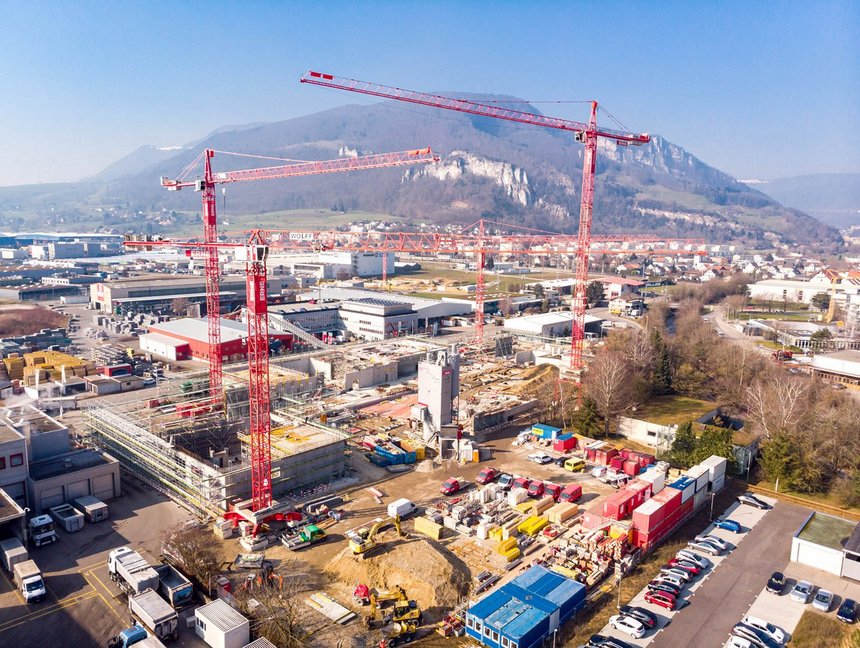
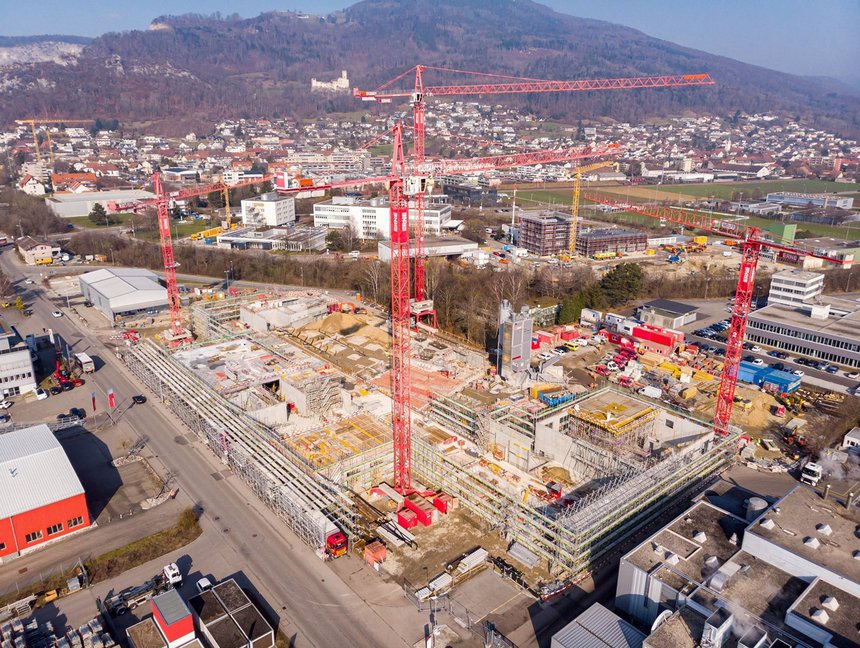
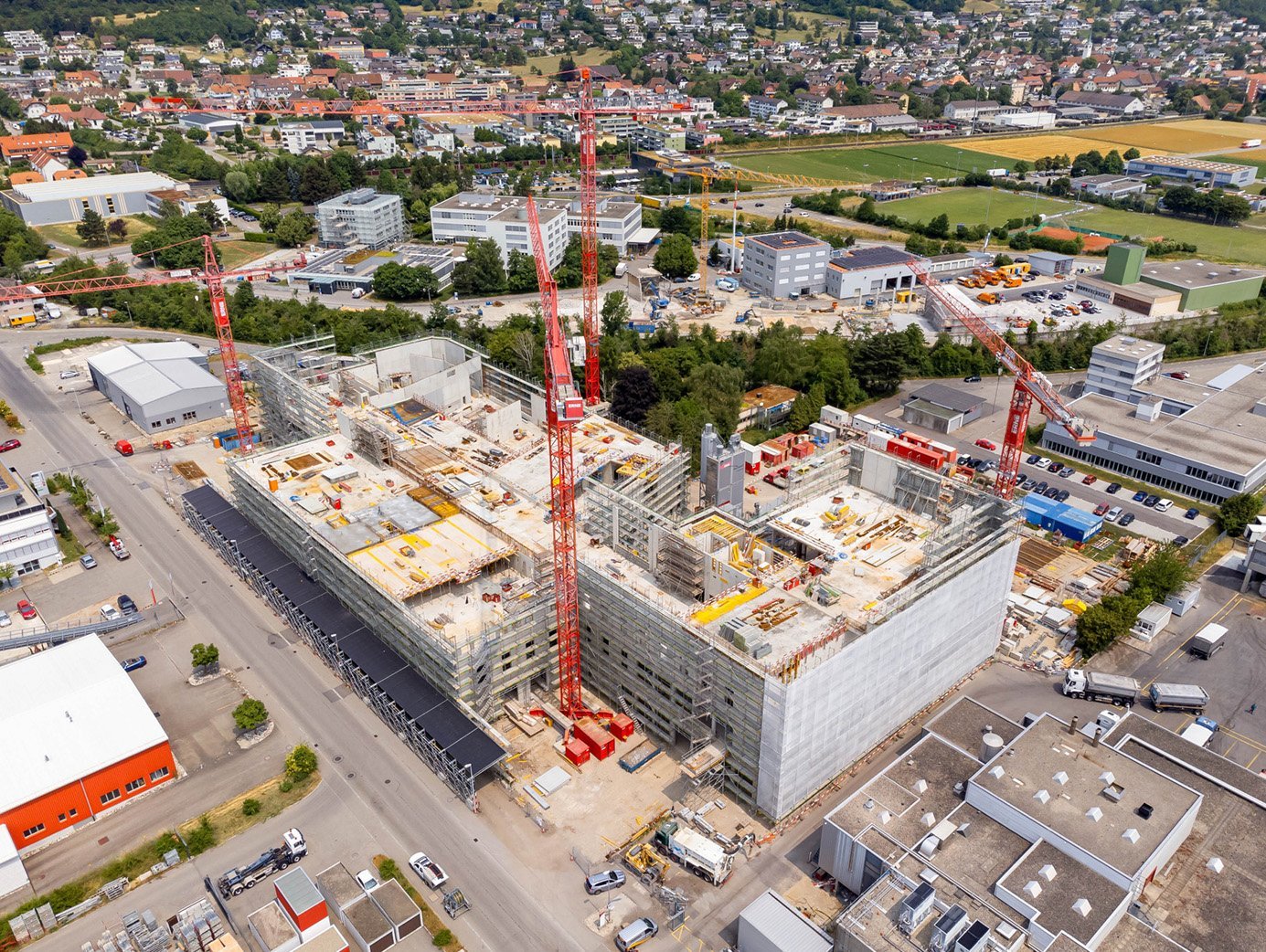
In Oensingen, ERNE realized a complex new building for the traditional company Bell. The new cattle slaughterhouse meets the highest standards currently available on the market in terms of animal welfare, hygiene and productivity and complements the existing plant.
New building with special challenges
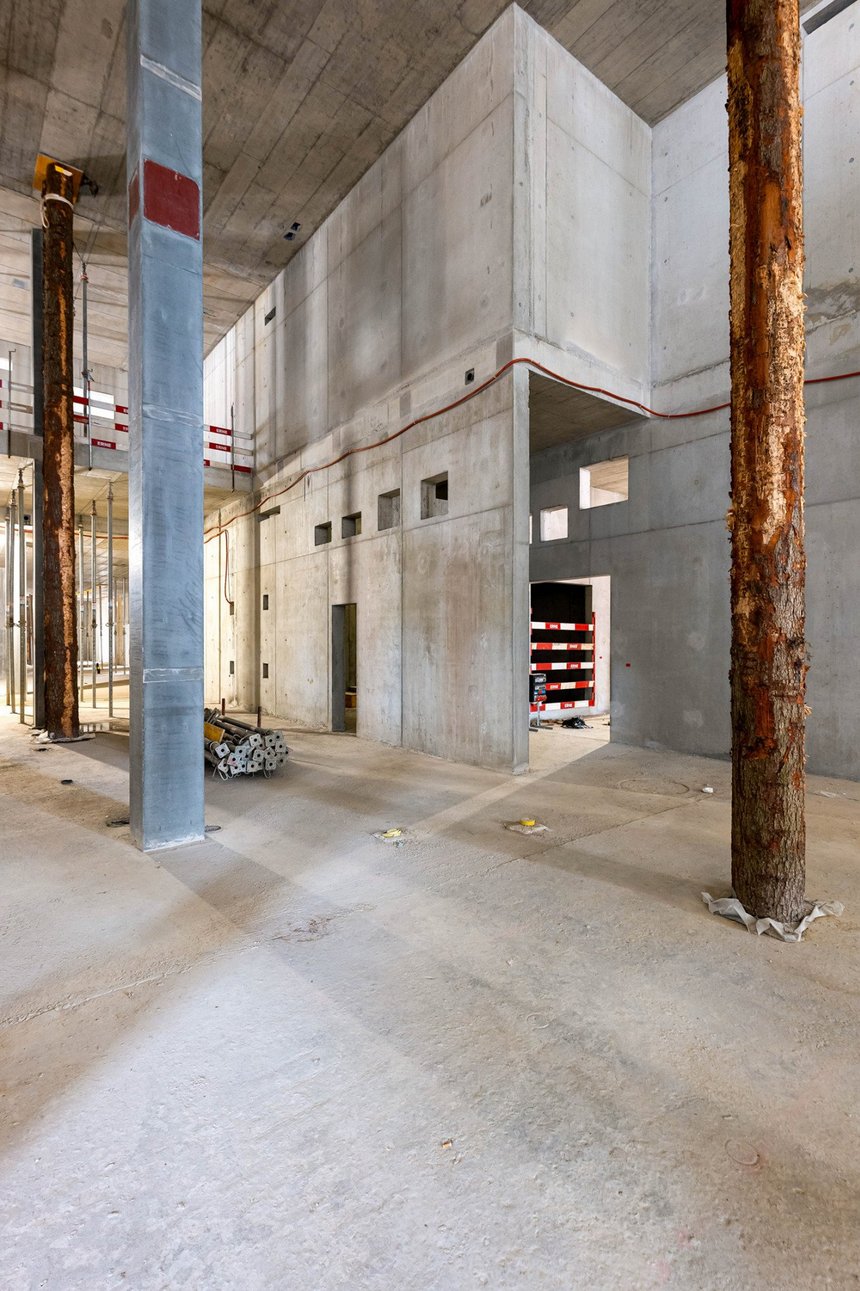
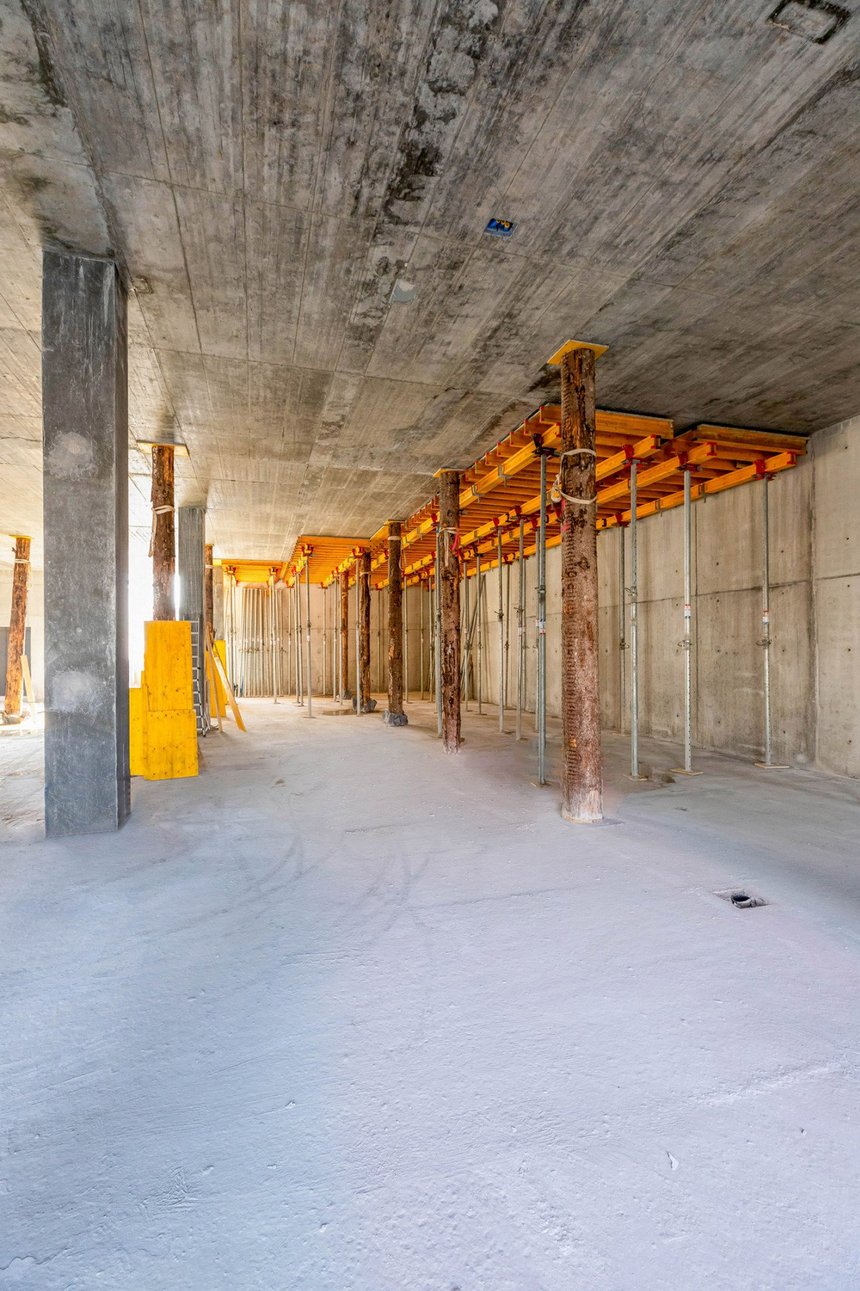
In October 2022, the building construction teams started work on the industrial building, which is divided into the delivery, stable, technical, slaughterhouse, social wing, washing facility and rapid cooling areas. After the excavation for the utility lines and the construction of the foundations and floor slab, the building was constructed. The challenge here was the different room levels and landings.

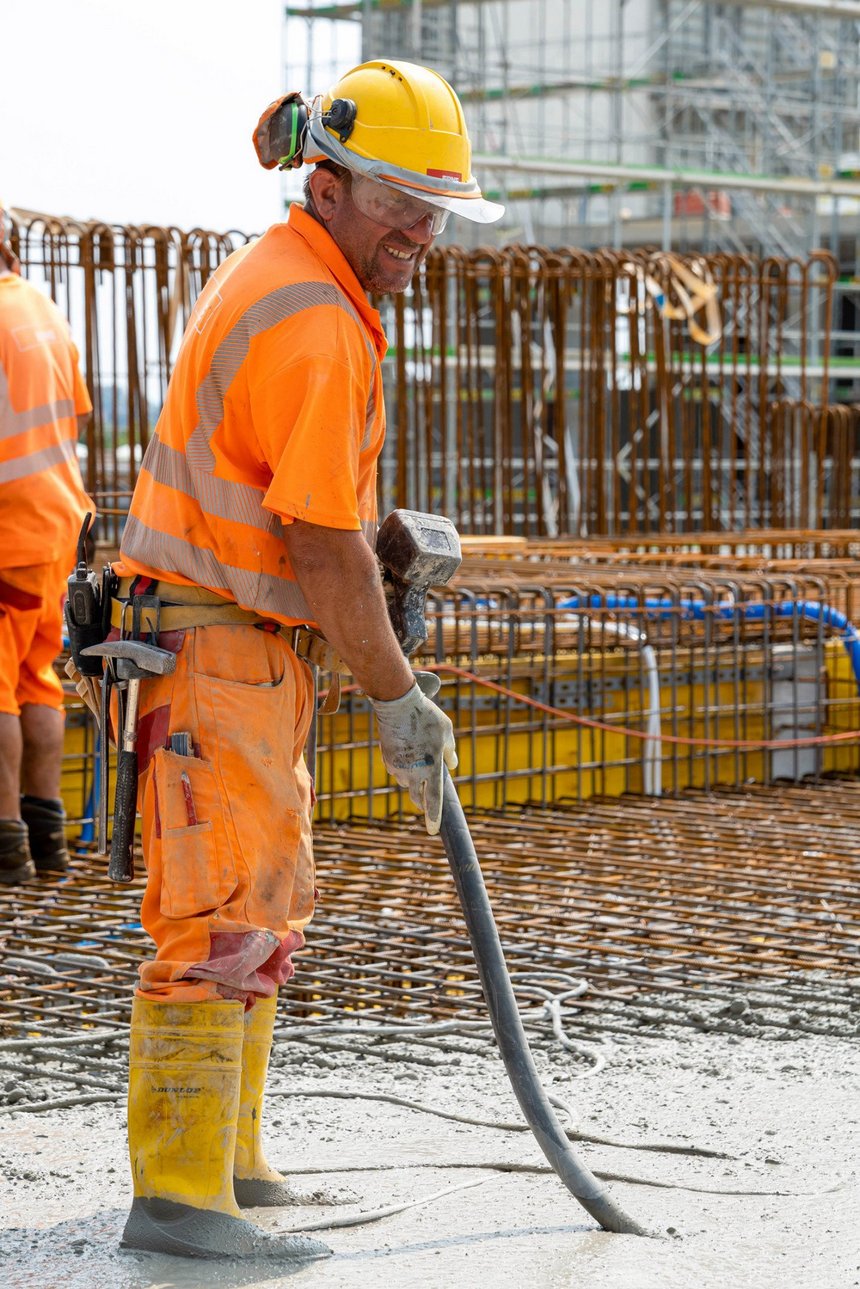
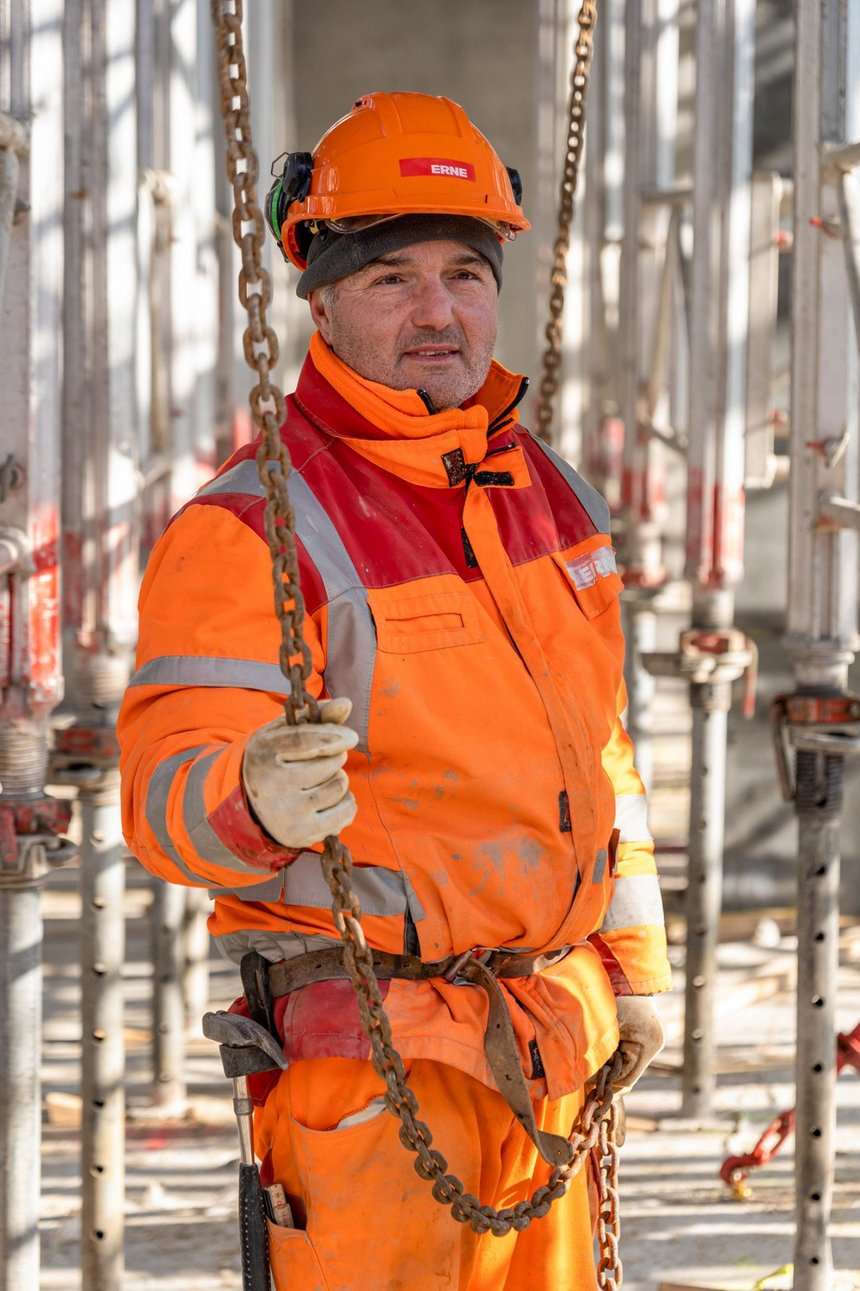
The building is divided into six sectors with different room heights within the floors, which join together to form one building. From normal room heights of 3.50 meters, walls with a height of up to 9.20 meters were created in the technical areas, for example. The floors are connected by six staircases and five lifts. Around 55 to 73 employees, including apprentices, worked on the large construction site every day, concreting walls and ceilings in parallel in the six sectors. The team produced the concrete just in time on the construction site using the mobile concrete plant. A total of around 20,000 cubic meters of concrete and up to 2,700 tons of reinforcing steel, equivalent to almost 15 blue whales, were processed. The enormous coordination effort for a project of these dimensions was mastered by three foremen, who had an overview of the large construction site at all times.

Building digitally with BIM2Field
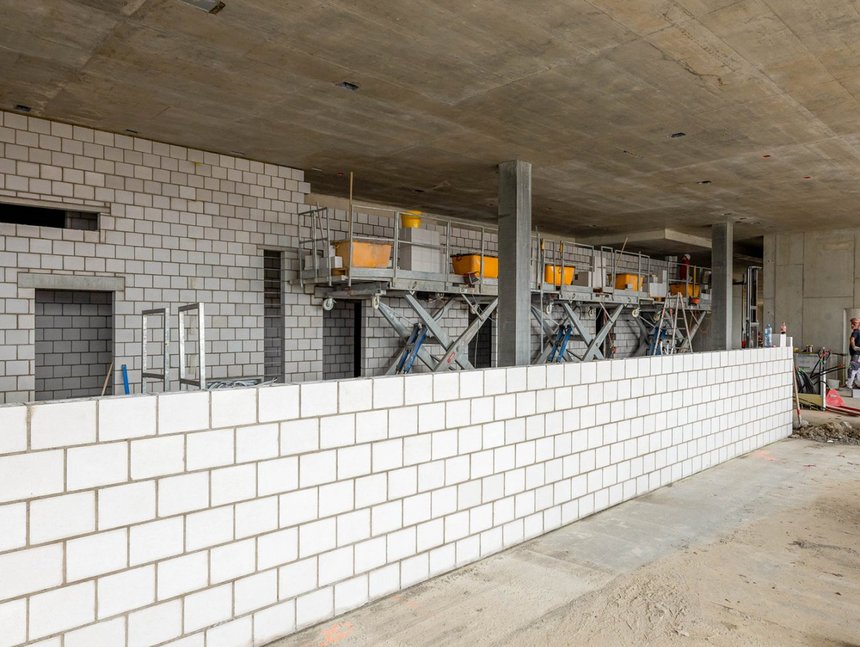
The new building for Bell Switzerland is one of many BIM2Field construction sites for which our VDC department created the three-dimensional execution model based on the 2D plans. The model was accessible to everyone on the construction site via screens in the plan houses. It showed at a glance the slopes of the floor slab in the various areas as well as the positions of the formwork and the steel inserts. The information required for the execution and all components, including the masonry and the type designation of the bricks and the number of pallets to be ordered, were stored in the model.

Cross-group development of the formwork system
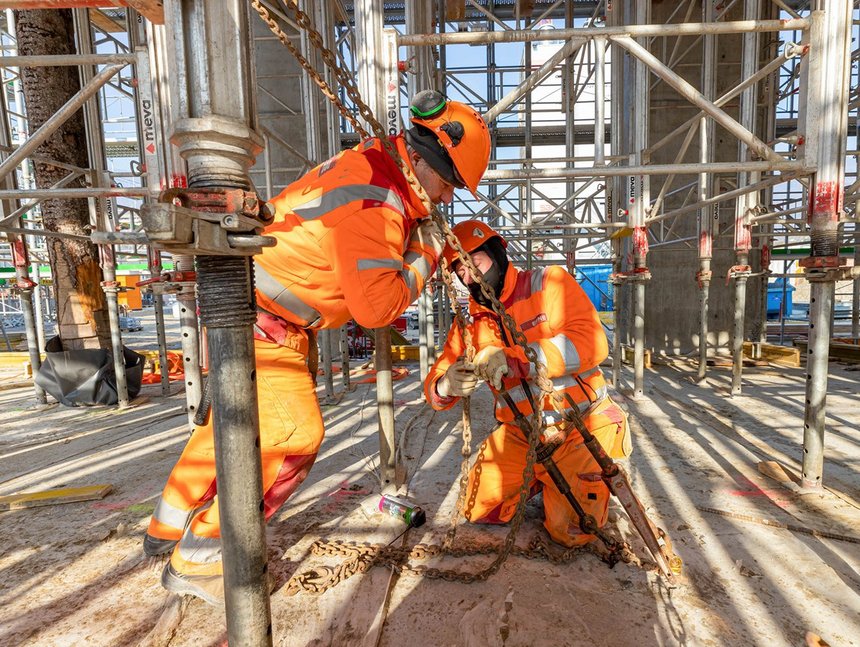
The imposing, over eight-metre-high stable area with massive concrete supports was followed by the dynamically curved passageways, which were challenging to construct. The challenge with the rounded exposed concrete ramp, which forms the passageway, was the variable radii. In collaboration with HUSNER AG Holzbau, the structural engineering team developed a tailor-made formwork system within a very short space of time, with which the walls could be precisely concreted. This cross-group collaboration enabled us to carry out demanding concreting work efficiently as a team.