This is where the action is: Basel main post office conversion
June 26, 2025
Herzog & de Meuron redesign the former main post office
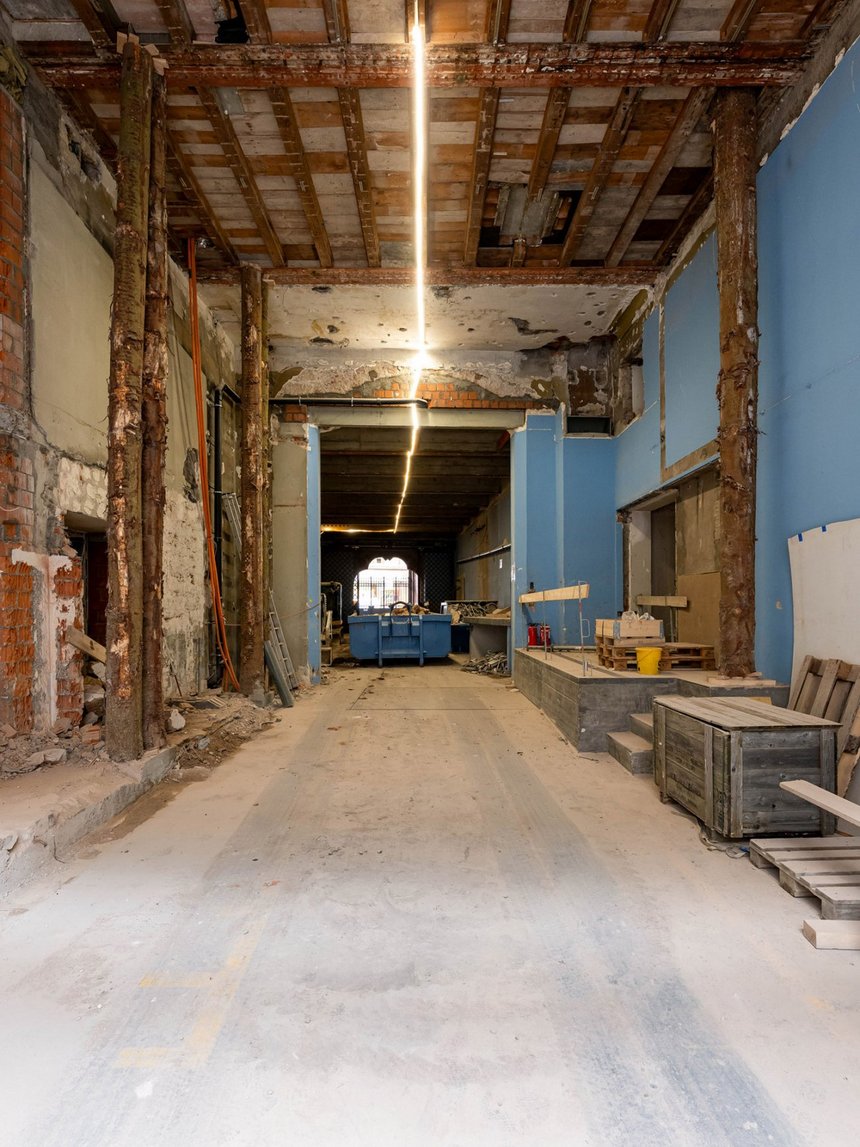
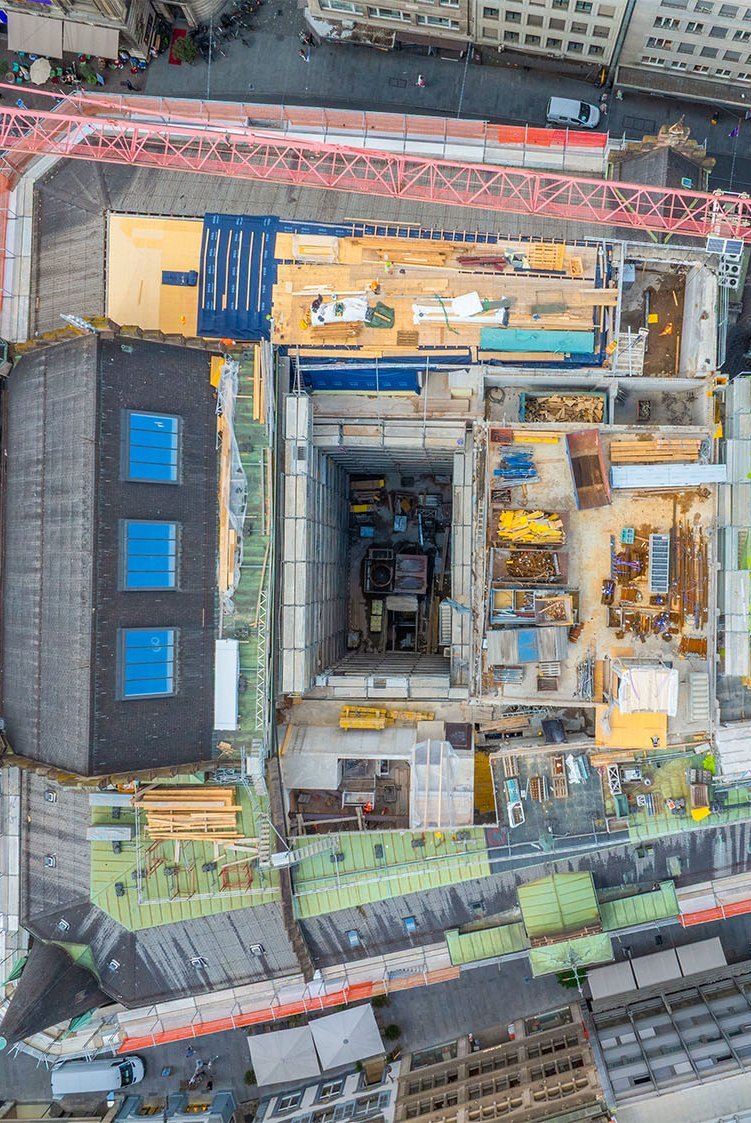
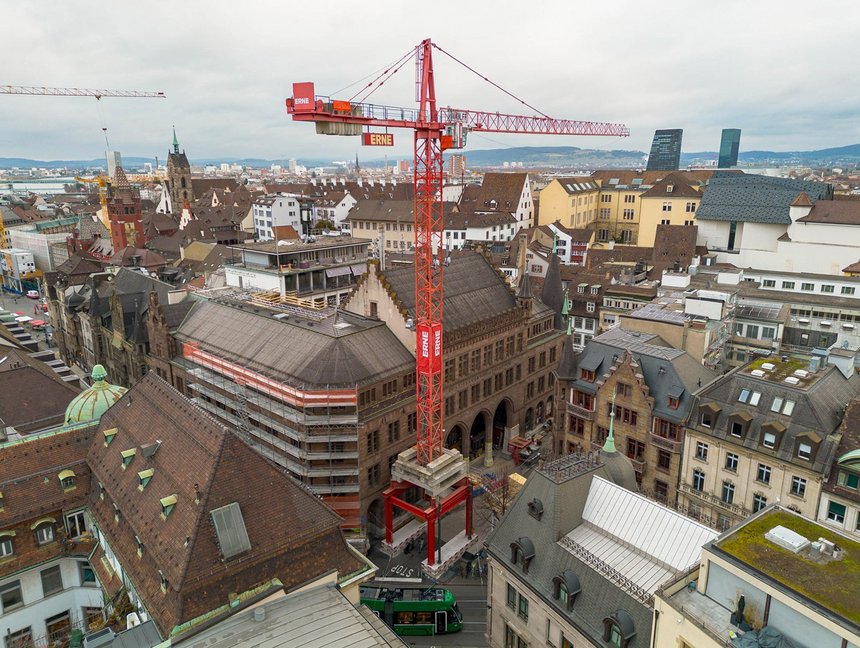
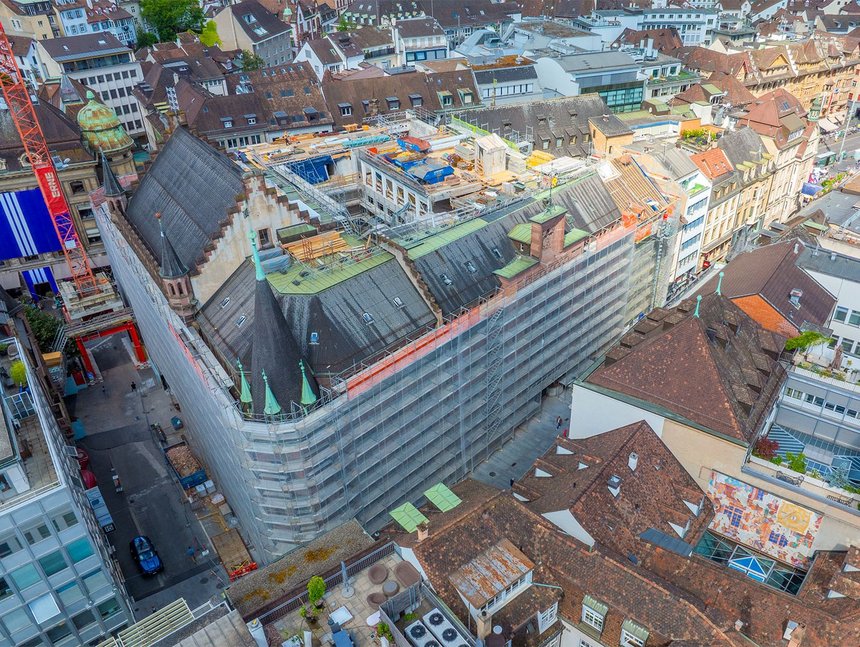
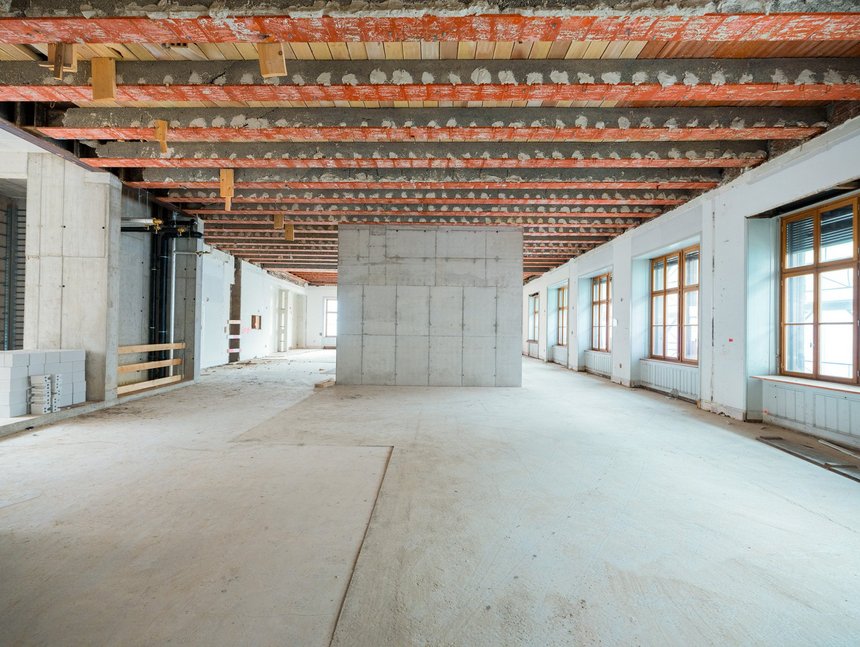
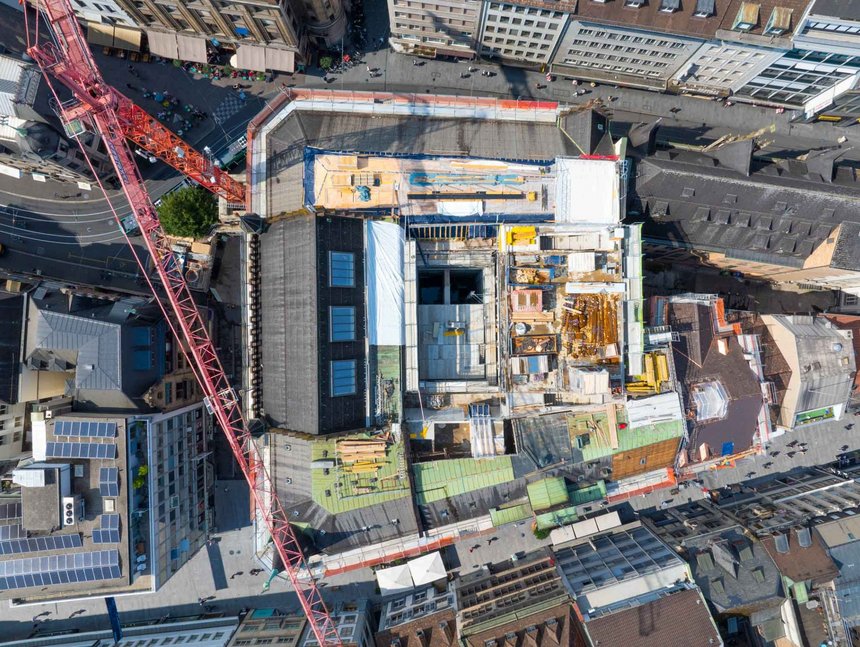
The listed post office building in the heart of Basel's old town will be completely renovated by December 2025 and transformed into a six-storey store and office building. The conversion in the middle of the city is a complex project, and although the space is much larger than a postage stamp, it remains a huge challenge throughout the renovation. A logistical undertaking in a confined space, when demolition, new construction and structural gutting have to take place at the same time.
In the beginning...
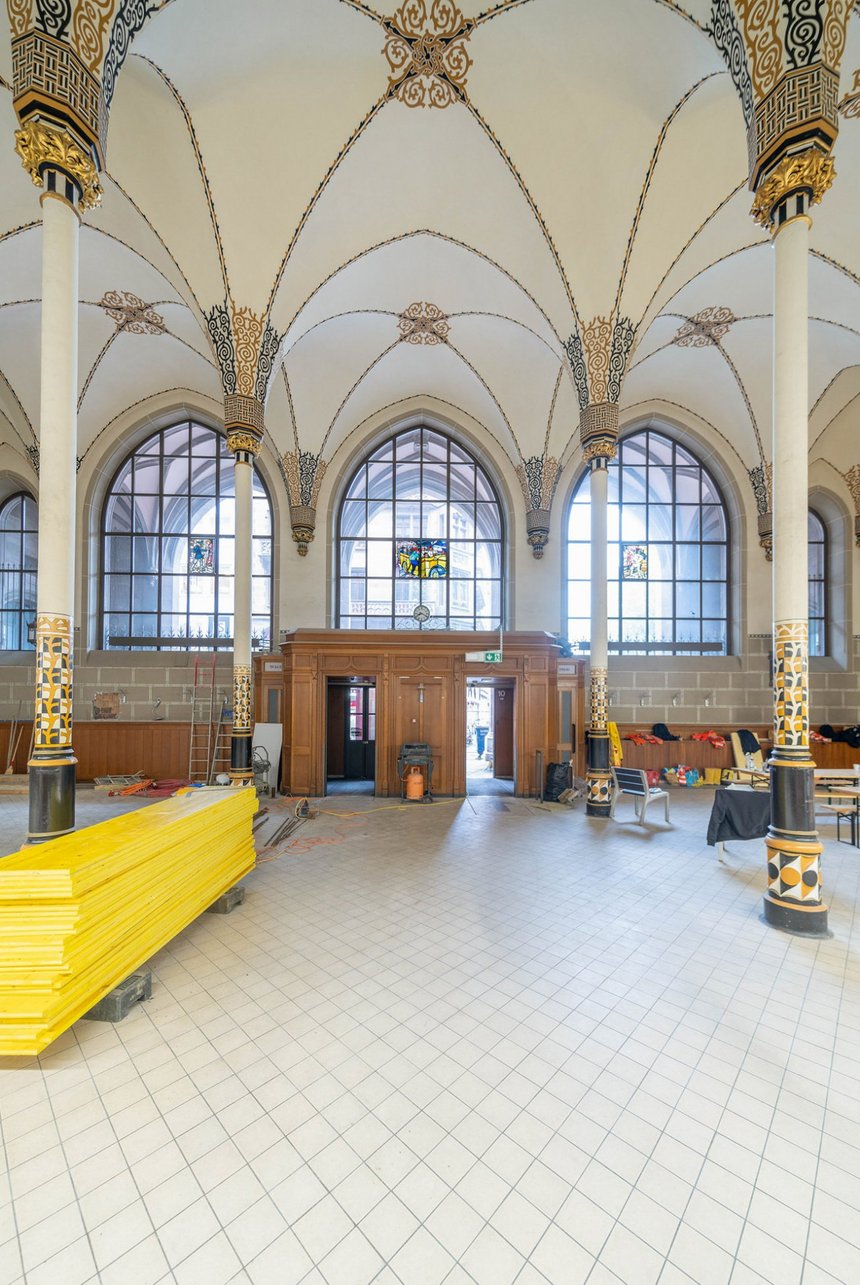
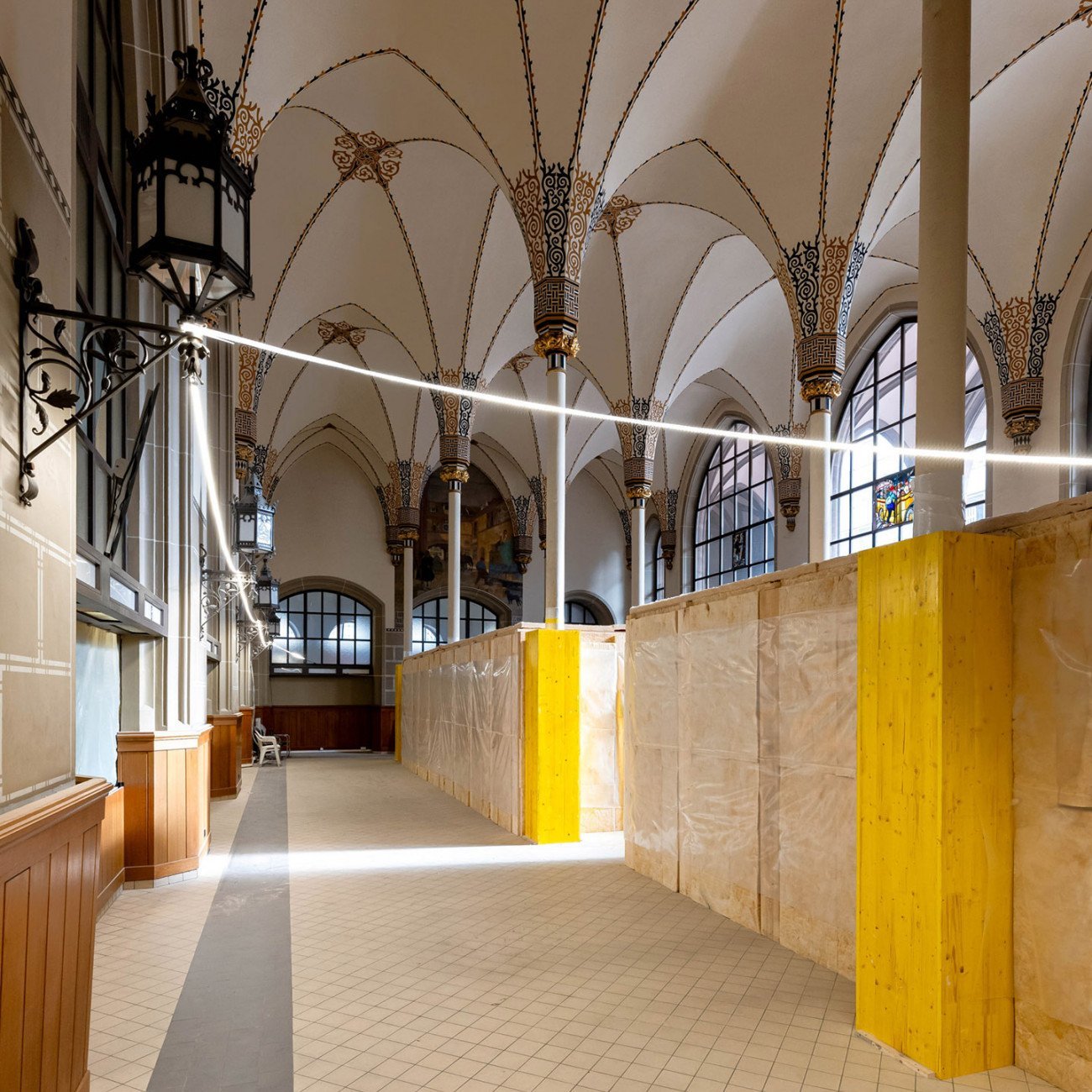
The history goes back a long way: in the 19th century, the imposing Basel main post office was built in place of the department store on Freie Strasse, which was built between 1376 and 1378. Its impressive architecture embodied the self-confident image of the then still young Swiss post office - as was the case in all major Swiss cities. The historic counter hall impresses with its slender iron columns, mute contemporaries from the neo-Gothic era, pictures of pioneers from science and technology and murals by the well-known Basel painter and graphic artist Burkhard Mangold.
Requirements and needs have changed over time, and renovation and redesign are in full swing. In close consultation with the heritage conservation authorities and according to the plans of the renowned architectural firm Herzog & de Meuron, the historic commercial building is now being extensively renovated, extended and taken into the future. The renowned project is being supported by the consulting firm and sustainability pioneer Drees & Sommer and ERNE AG Bauunternehmung.
Millimeter work in the old town
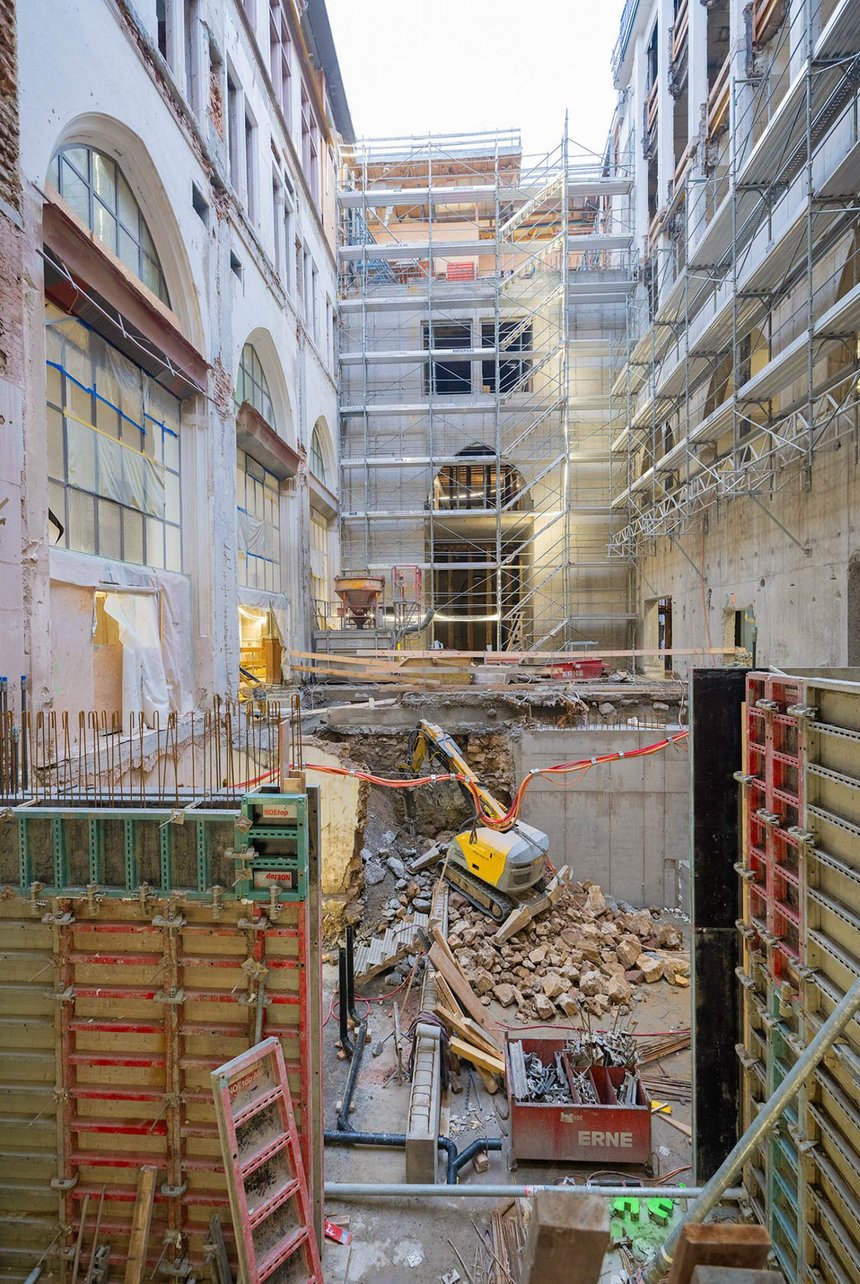
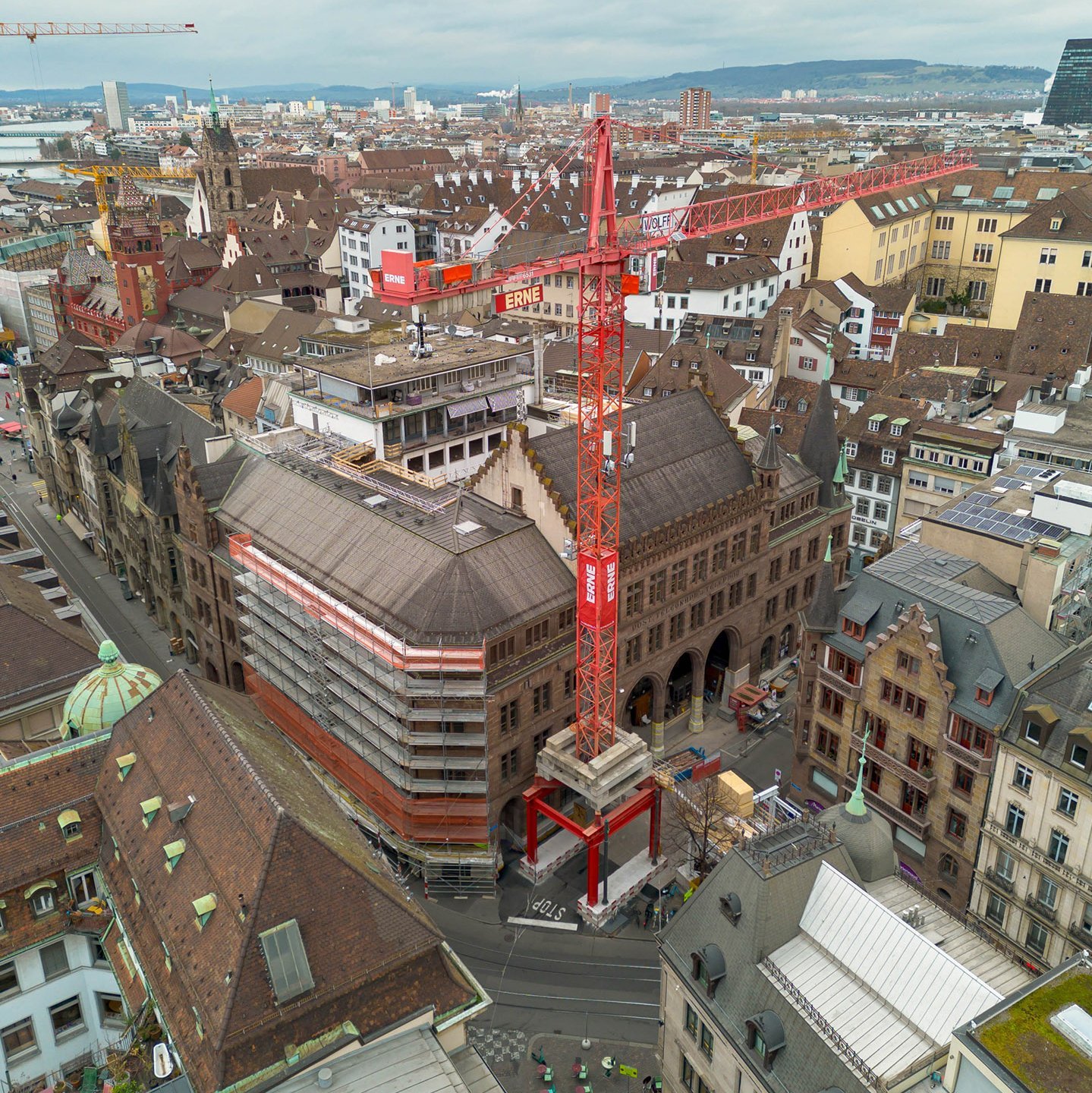
"Planning is everything here," says ERNE 's project manager Nicolas Egli, summarizing the challenges. Because anyone who knows Basel's old town knows that a conversion in this location requires logistical finesse. There is hardly any space for deliveries and storage of the necessary building materials. Before a crane could be set up, the Swisscom canal running underneath with high-voltage cables and fiber optic cables had to be filled with steel girders and the loads had to be distributed over a large area via a floor slab. The good old Birsig canal also had to be taken into account. And in order not to put any more strain on the nerves of residents and passers-by and to limit the disruption to businesses, the ERNE team in Basel simply erected the crane at night. Materials are only delivered when the craftsman wants to reach for them, virtually just in time, because the storage space is practically non-existent. This applies to both construction and demolition, all a question of discipline and precisely timed construction site logistics.

Complex plans, clear strategy
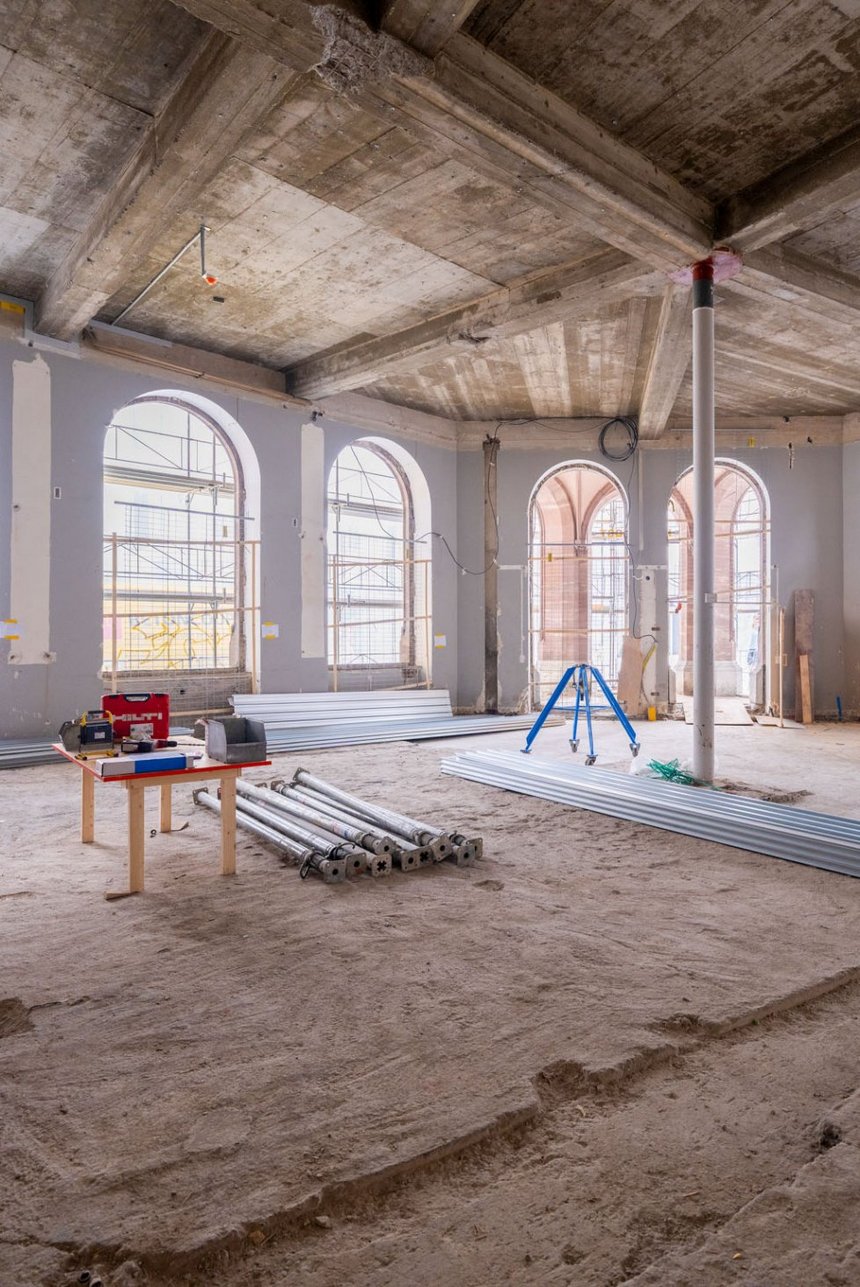
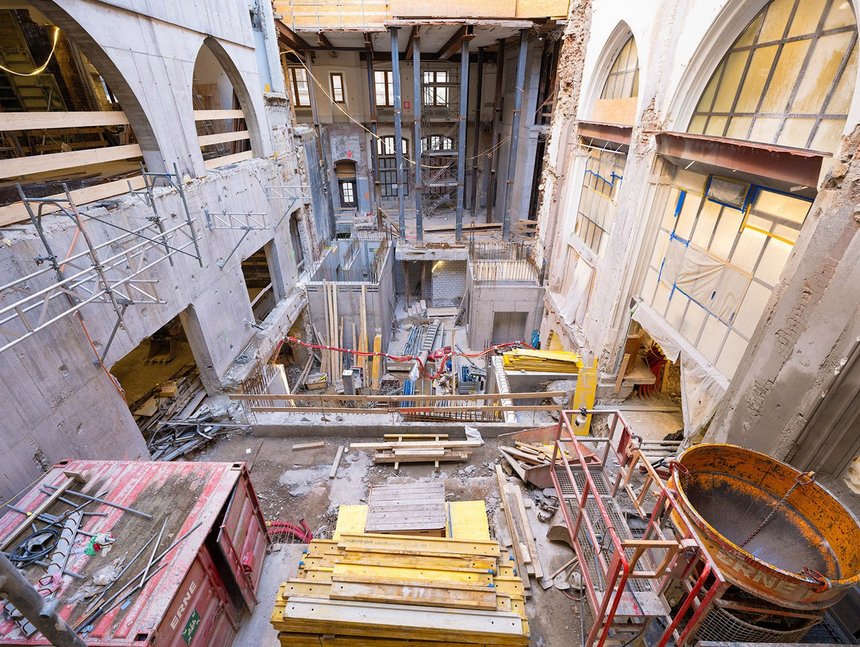
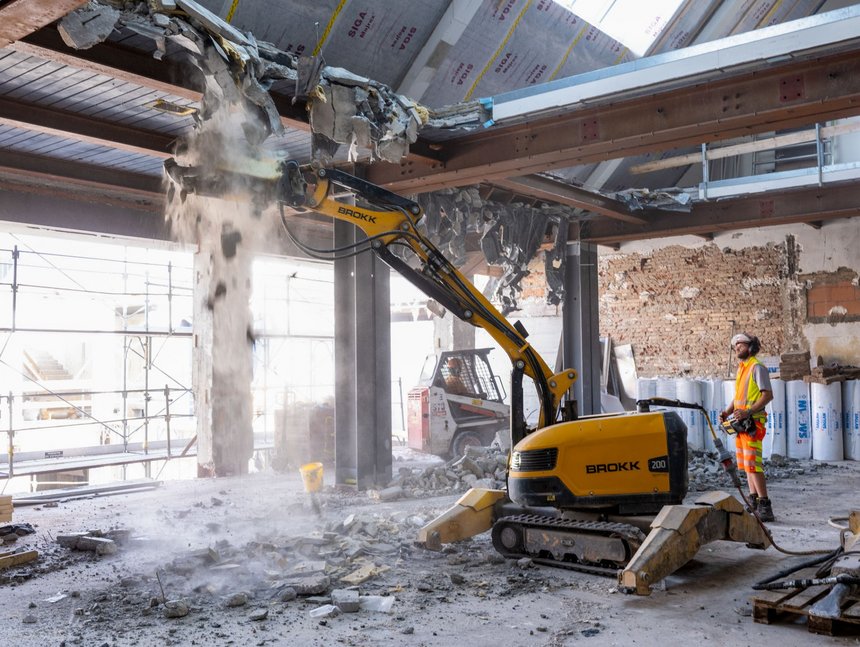
ERNE's list of tasks reads like a demanding one: structural gutting, renovation of the sewer system in the basement, inserting micropiles there, installing two new stairwells, four elevator shafts and climbing zones, installing earthquake-proof walls from the second basement floor to the fourth floor, reinforcing ceilings and upgrading ceilings. "The dependencies on this construction site are enormous," confirms Egli. In order to maintain an overview of this complex construction situation, Drees & Sommer divided the overall project into clearly defined zones. And ERNE further developed the concept so that demolition and new construction could run simultaneously - nothing beats precise timing.
A detailed task and work program documents the respective dependencies. "This has worked very well so far," says Nicolas Egli.
The right feel for the old and the new
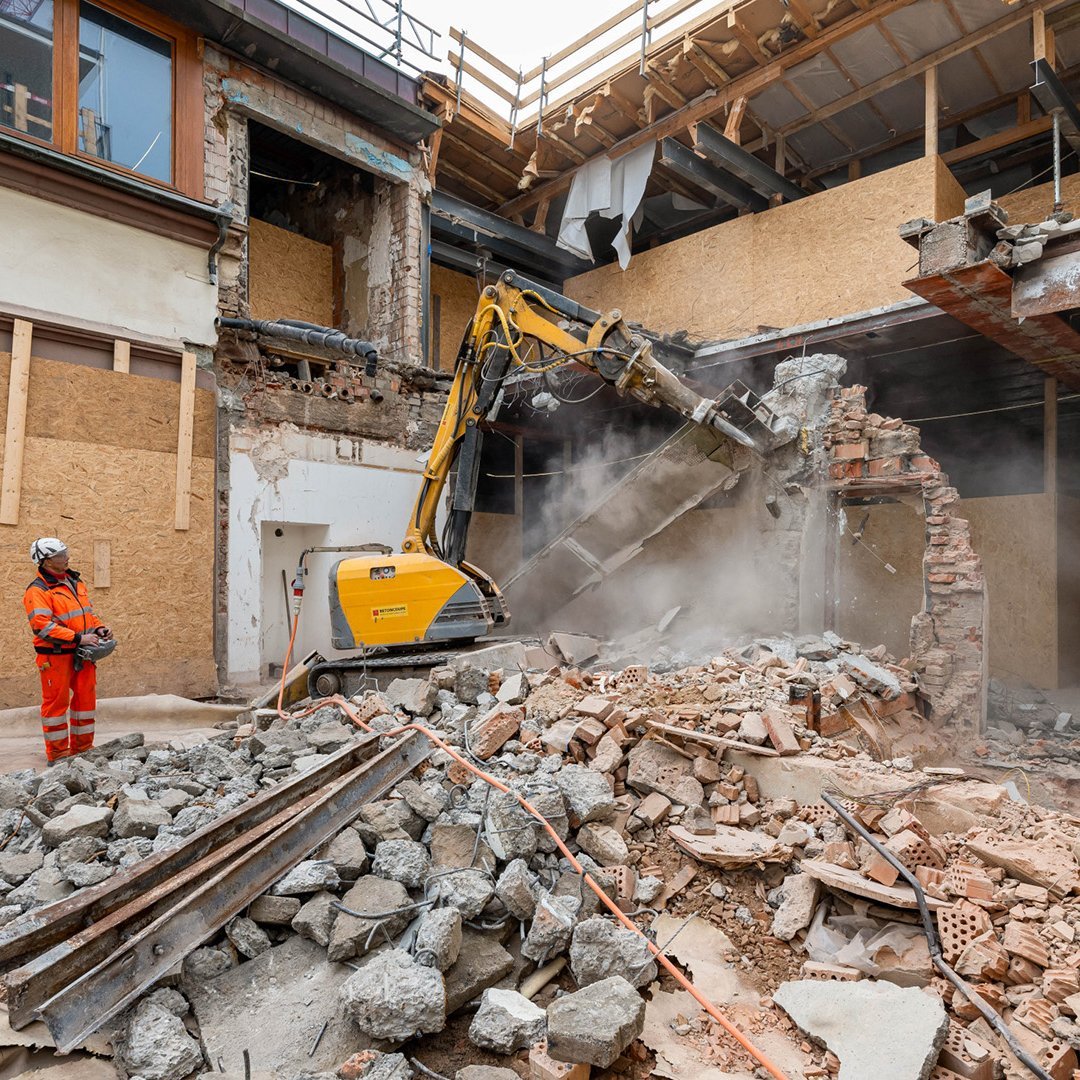
Renovating a historic building without losing its character requires the right instinct and the necessary sensitivity on the part of the architects and all those involved. "Some of the walls and ceilings that had lost their original structural function had to be demolished. Not without first absorbing and redirecting the loads with line or point supports," explains Egli. "This was done across all floors and several work zones, followed by structural reinforcement and removal of the cracks." In future, customers and employees will be able to stroll through an attractive passageway on the first floor between Freie Strasse and Gerbergasse. Based on the former atrium, a covered, light-flooded patio will be created, bringing daylight down to the first floor.

Something is happening under the floor slab
In 2024, formwork and cast staircases, elevator systems and riser zones were installed on site in parallel with the structural gutting, supporting the statics and making the building earthquake-proof at the same time.
In-situ concrete construction can be challenging. This is because a space had to be created under the new floor slab of the patio for the media feed-through from the Freie Strasse side to the Gerbergasse side. After breaking up the old crane slab, the Birsig canal had to be taken into account again. The excavated earth was placed exactly on the previously determined canal crown - this was the only way to ensure load-bearing capacity. The base for the media channels was then concreted. The partition walls and supports were then constructed and finally the new floor slab of the patio was concreted on site. Challenging, but where there is a will, there is also in-situ concrete.

Earthquake-proof aesthetics
The old staircase in the Gerbergasse wing was completely redesigned. From the second basement to the fourth floor, the in-situ concrete construction provides the bracing for the historic building.
The bespoke new staircase in the same wing has an exposed concrete soffit - creating an exciting contrast between historical elegance and modern architecture, in keeping with Herzog & de Meuron's philosophy. "The tight space conditions and the ambitious schedule require precise planning for the in-situ concrete, which also guarantees work safety," says Nicolas Egli, "but just as important is the coordination of the various types of work, good teamwork and flexibility. Because we are currently writing a new chapter in Basel's city history together."
Fully on course - things are progressing rapidly
The renovation is continuing successfully and on schedule. Project manager Nicolas Egli is very satisfied with the current status: "The main work is almost complete and we are pleased to be able to carry out additional adaptations and new orders. This shows the great trust the client and general planner have in us and our sister company Husner."
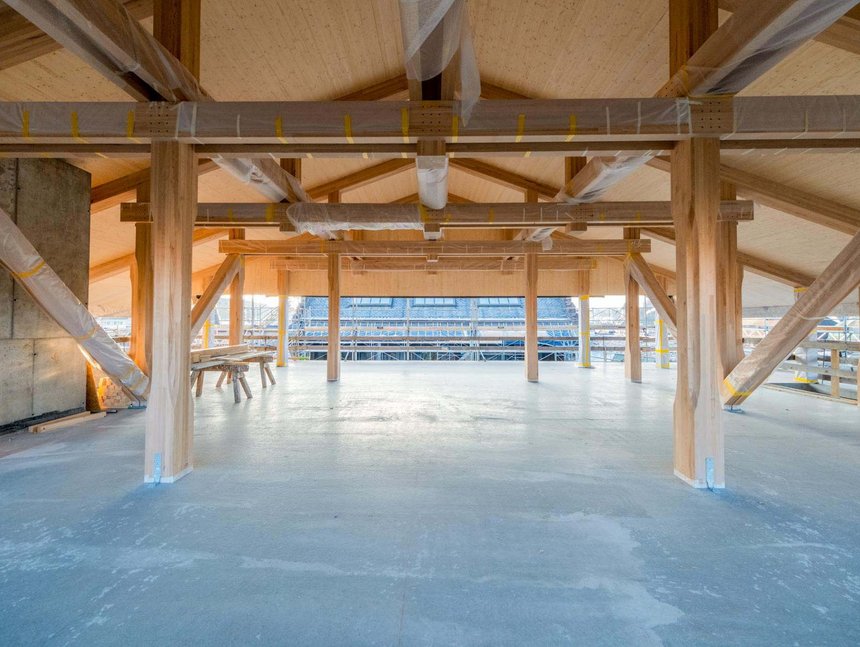
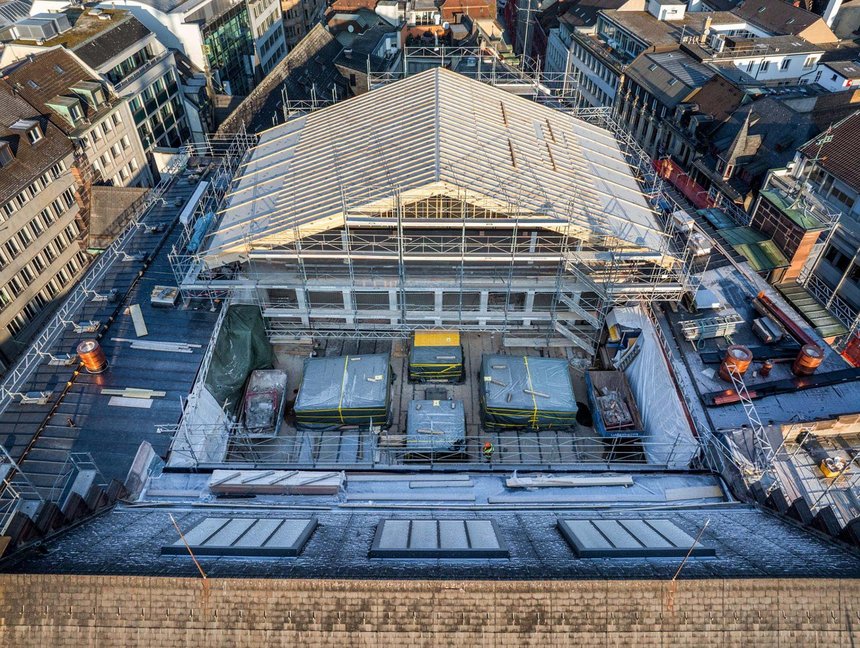
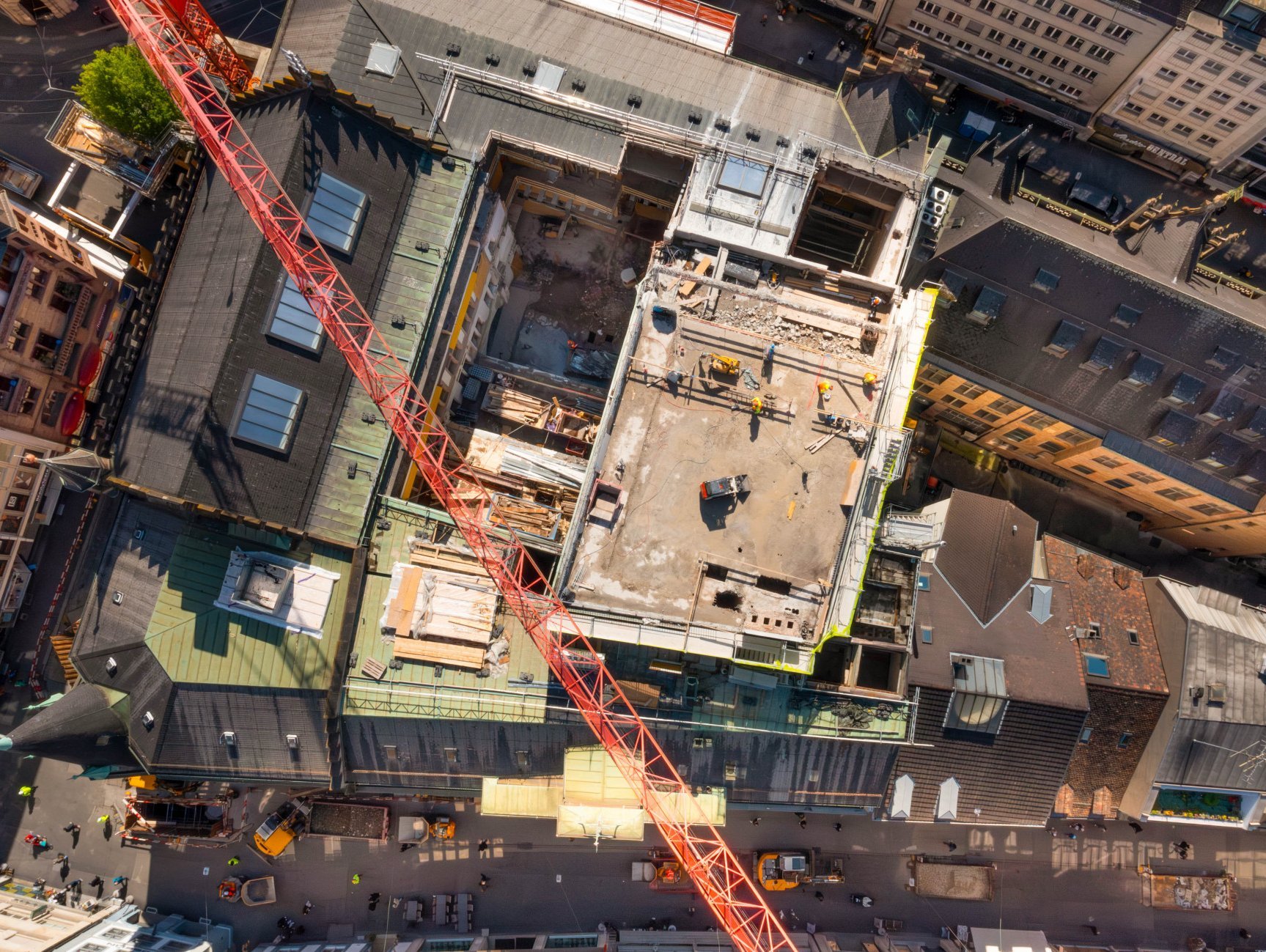
The ERNE team is currently working on the new roofs on Gerbergasse, while the roofs on Freienstrasse will soon follow. The planned patio roof is particularly tricky, where ERNE as structural works contractor, together with steel construction specialists and HUSNER as carpenter, will carry out demanding work at a height of 25 meters.
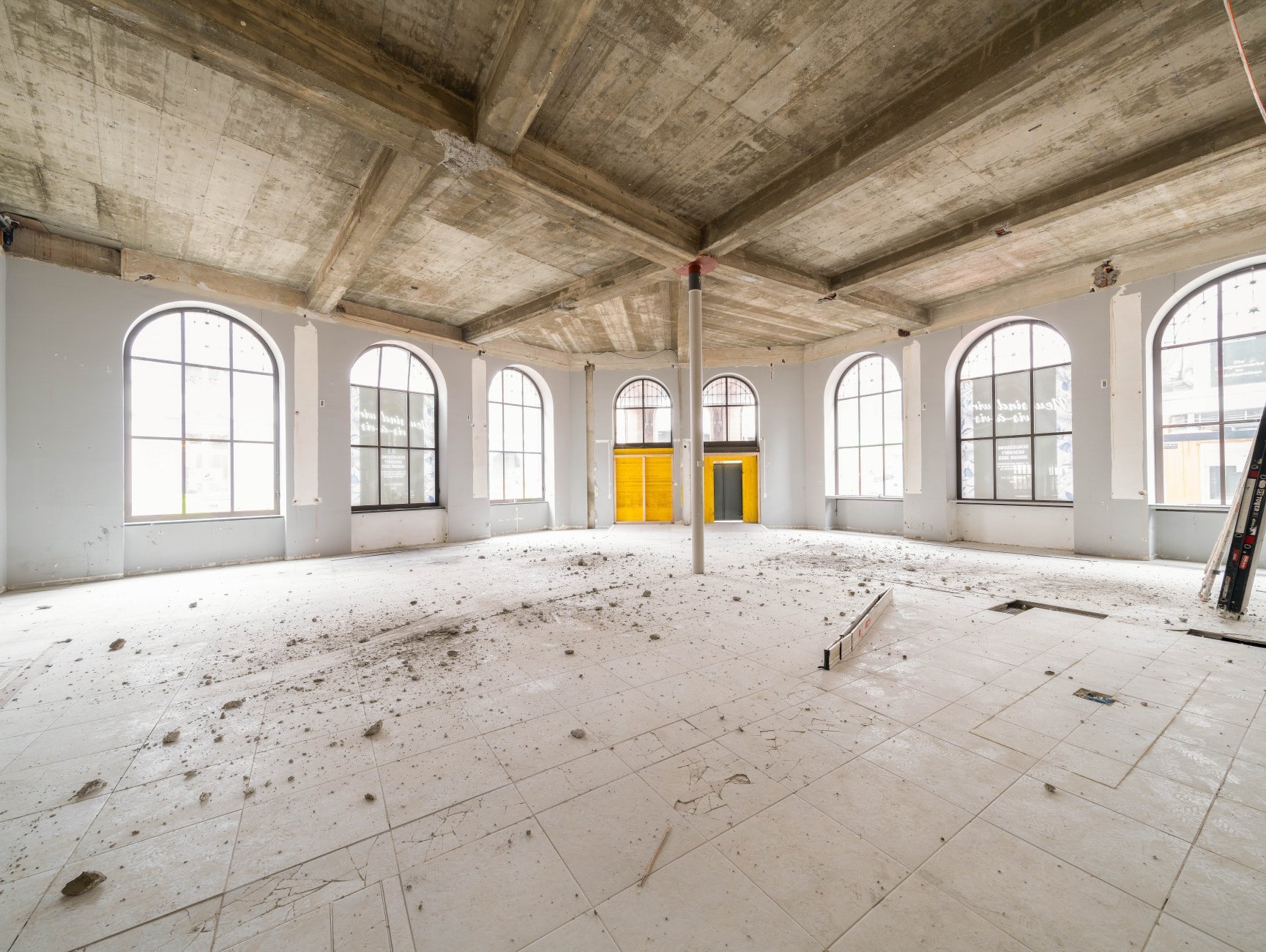
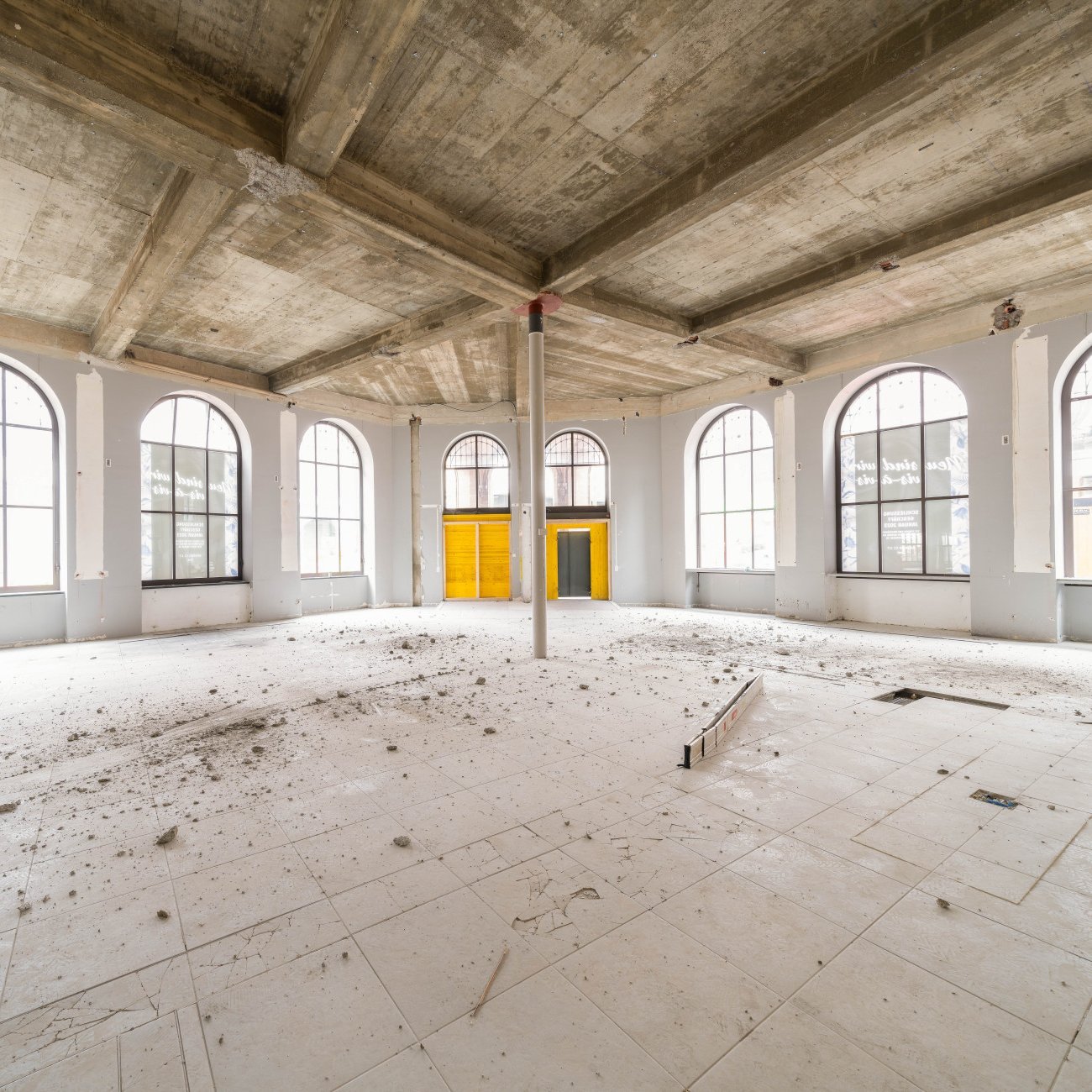
Complex details are involved in the execution, as the intricate components demand the utmost precision and dexterity from the craftsmen. The imposing room dimensions call for high ceilings and walls, but the biggest challenge at the moment is connecting the new ceilings to the old building. "A lot of preparatory work is needed, because the building has to remain covered for as long as possible," explains Egli. Important milestones have already been reached, including the completion of the master builder work on the Gerbergasse side and the completion of the patio floor slab with all media ducts. At peak times, up to 35 employees were working at the same time; currently there are around 20.
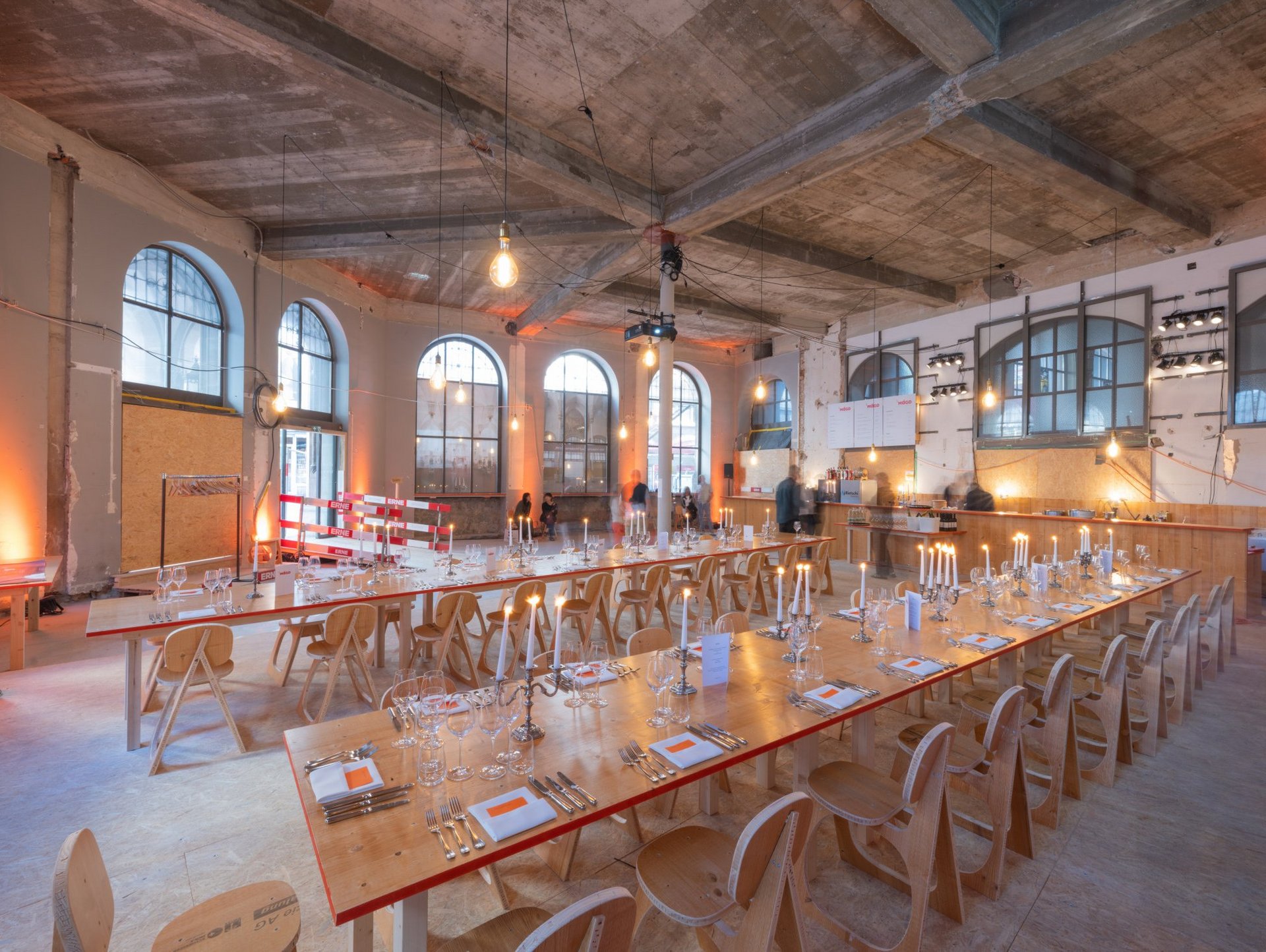
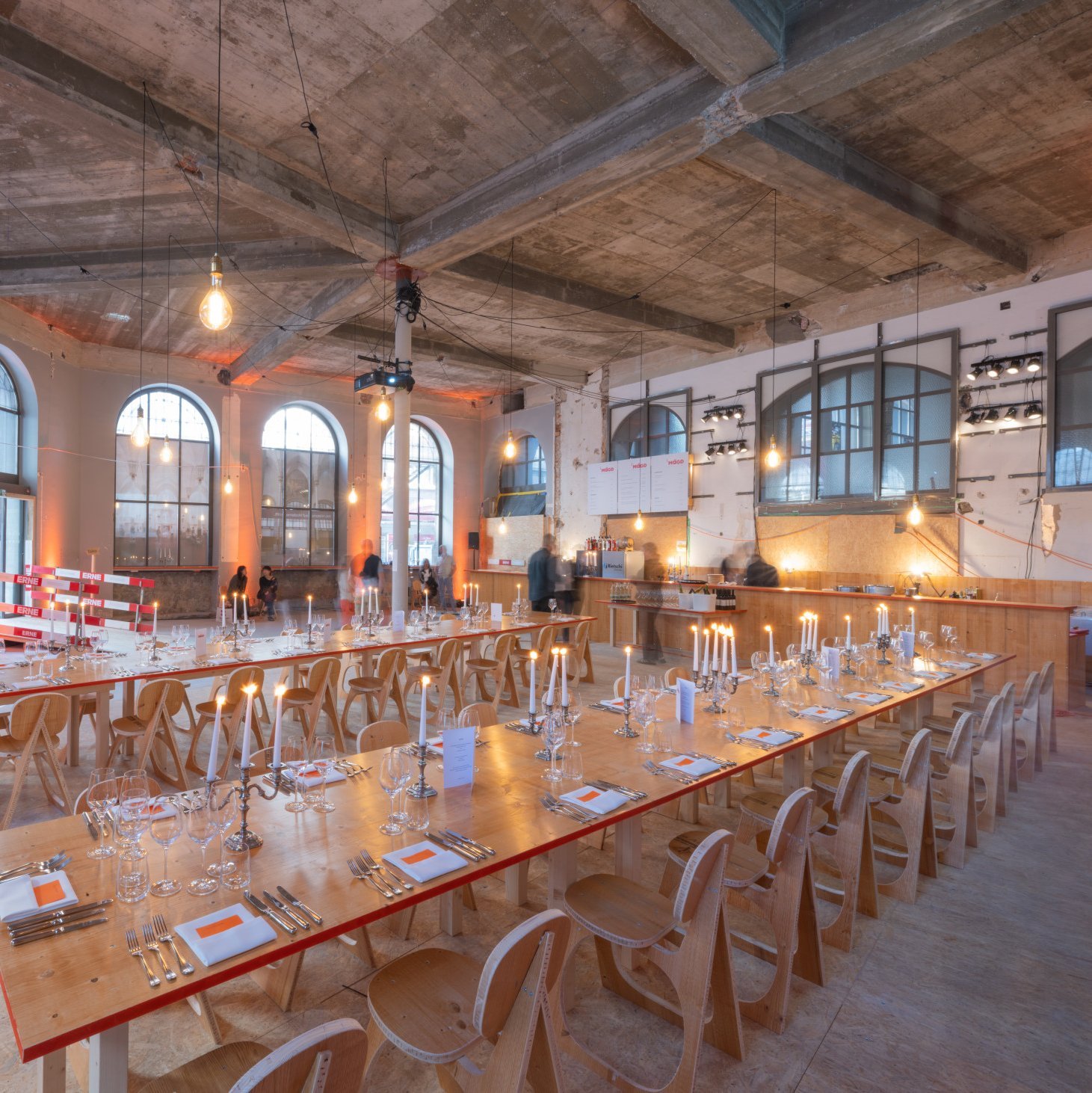
Douze points an ERNE
"The construction site has actually been in operation long enough, but it still happens time and again that passers-by want to get to the post office, barely leaving a grille open a crack," smiles Egli. Despite occasional complaints about dust and noise, there are also positive reactions, such as a pop-up bar that operated in the middle of the construction site for two weeks during the Eurovision Song Contest.
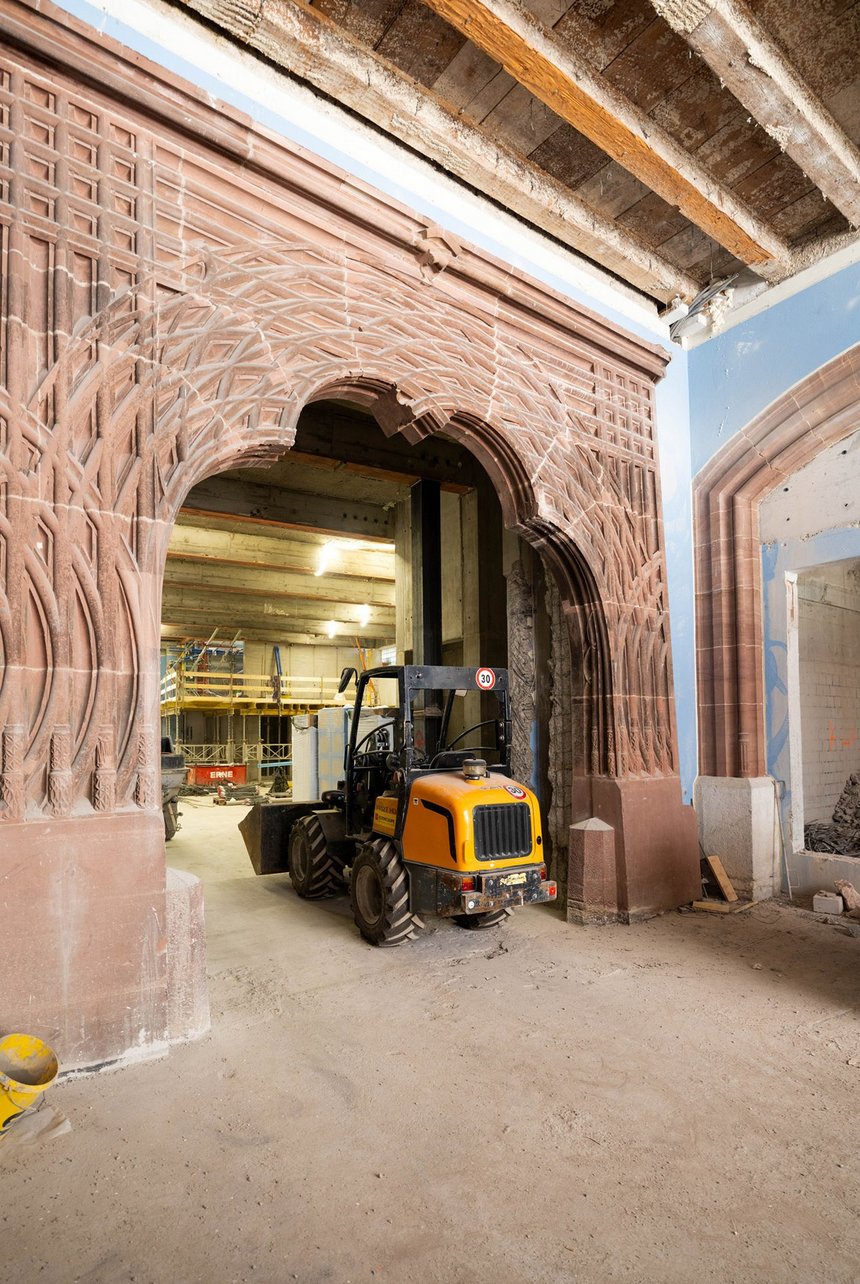
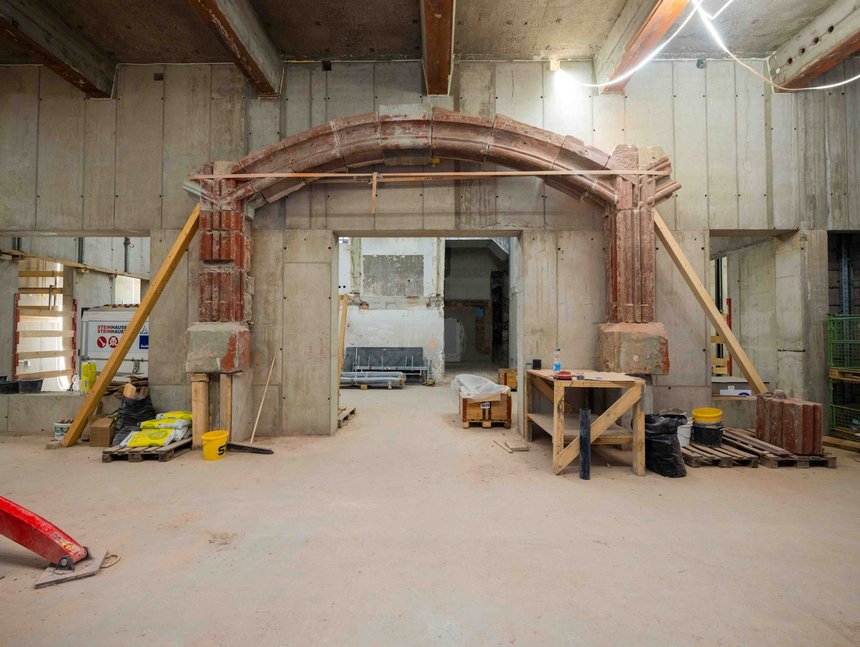
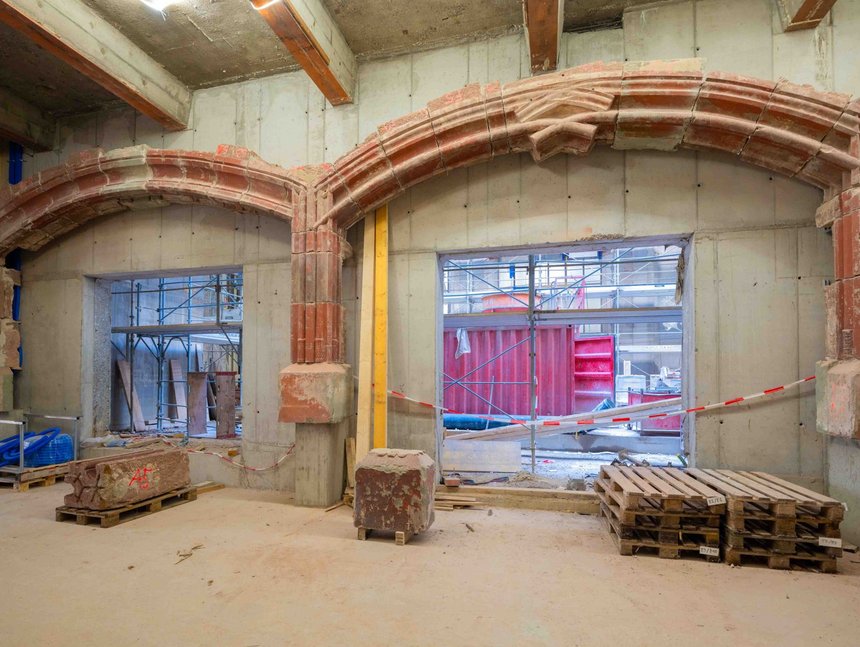
Egli is particularly excited about the completion of the new passage between Gerbergasse and Freienstrasse: "We are creating an attractive meeting zone with natural stone arches on our concrete walls. I'm looking forward to taking a walk here with my family later on and remembering this exciting construction period."
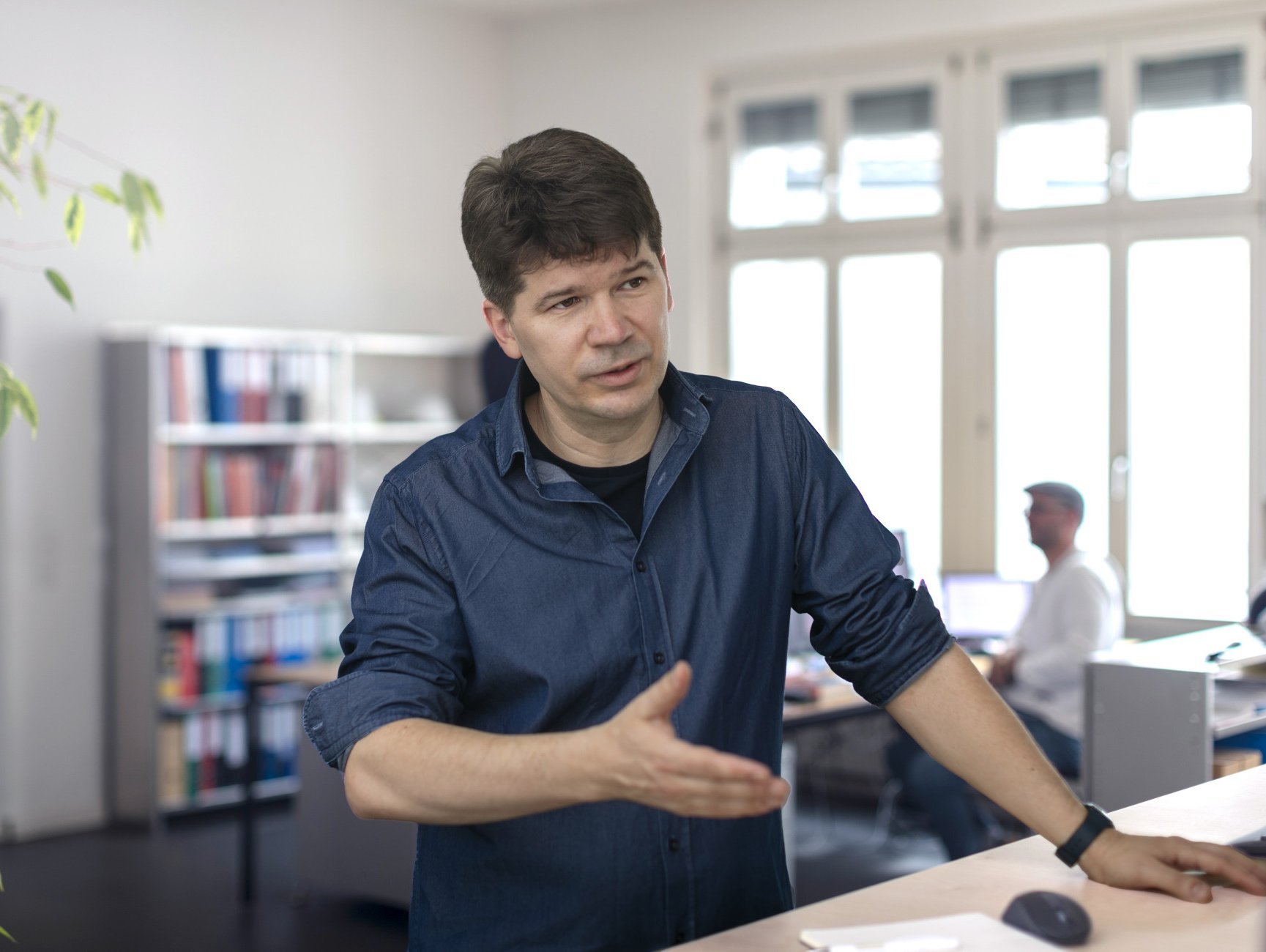
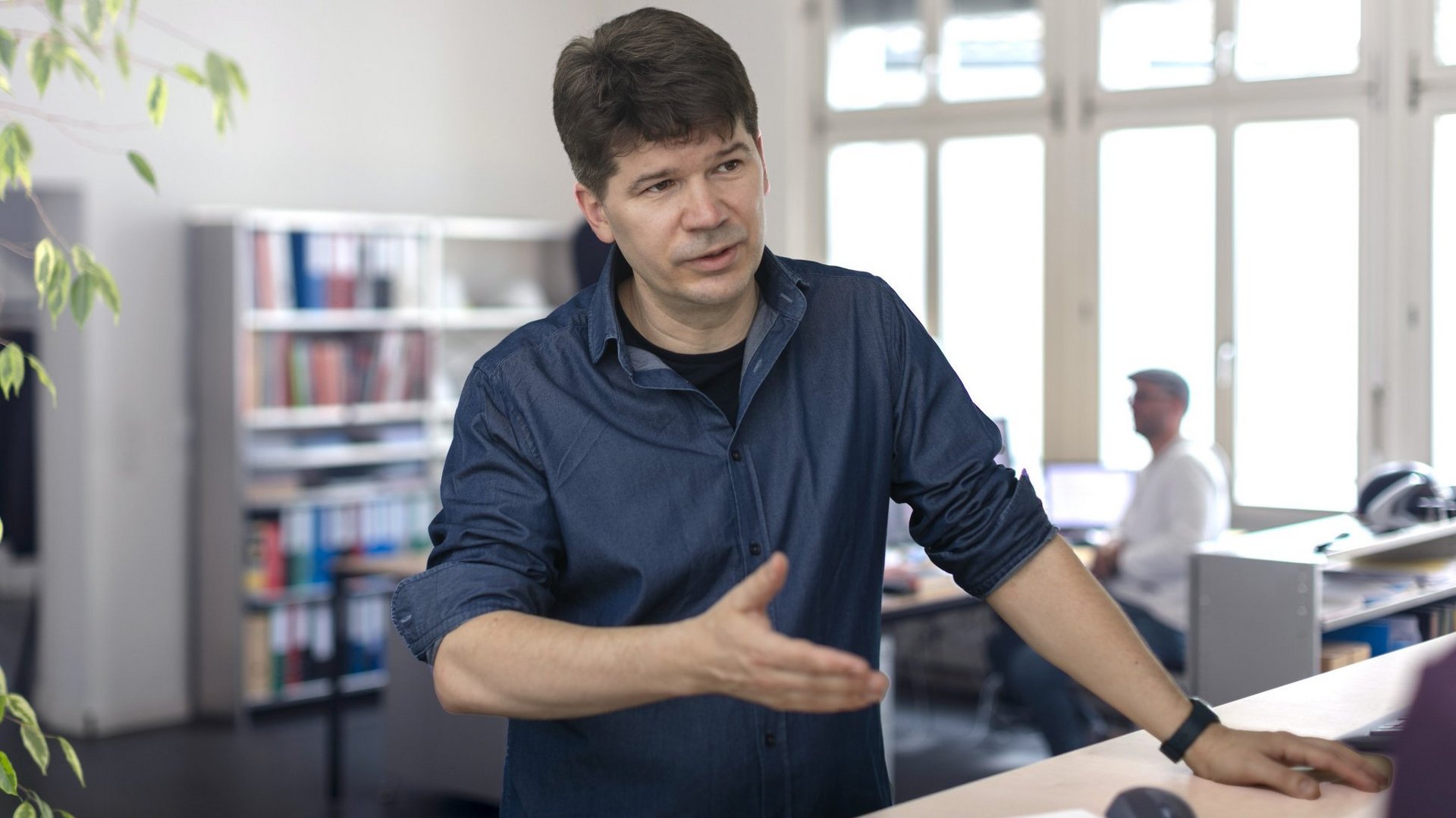
The project was particularly challenging because the ensemble of buildings had been built on and altered over the centuries - and not all of this was documented. It was only through the on-site investigation that the different building materials used were revealed. Our task was to check all components for load-bearing capacity and suitability for use in accordance with applicable standards. A particular challenge here was the structured recording of hundreds of components of different types, construction methods and ages. Using comprehensive tables with the relevant properties and parameters, we were able to quickly identify critical areas and define possible measures.
According to studies, the greatest leverage for emissions in the construction of buildings lies in the ceilings. In new buildings, we try to use sensible spans and materials wherever possible in order to maximize efficiency and sustainability. ZPF has already been able to introduce and successfully implement new and particularly sustainable building materials such as wood-clay ceilings, cavity ceilings and clay blocks in various projects. In the case of the Alte Hauptpost, the fundamental decision to preserve as much of the existing building fabric as possible resulted in particularly low emissions.
There is no room for negotiation when it comes to structural safety. The stability of the structure must be guaranteed in accordance with the applicable standards, and as an engineer I cannot simply turn a blind eye to this. At the same time, we also strive to find new, tailor-made solutions to meet the design requirements. These are developed and tested together with the architects until we have found the best possible option.
With a building as complex and heterogeneous as the Alte Hauptpost, computer-aided simulations are used specifically where manual calculations reach their limits - for example in the earthquake calculation or the construction of the rooftop. However, the majority of the structural checks, such as the recalculation of all timber and steel beams, are deliberately carried out "by hand". Parameterized tables enabled us to quickly and reliably assess where interventions were necessary. As a matter of principle, we attach great importance to first understanding the load-bearing structure by hand before using simulation tools.
This is not my first ERNE construction site in the region. My experience with the construction teams on the "StadtErle" apartment building and the "Switzerland Innovation Park Main Campus" in Allschwil was consistently positive. I am glad that I was able to count on such a competent team for such a complex project, which was built in a very confined space, in an exposed location and under time pressure. The interaction was always solution-oriented and respectful - this speaks both for the quality of the individual team members and for the corporate culture at ERNE!