Bad Zurzach eastern bypass
June 07, 2023
COMPLEX INFRASTRUCTURE CONSTRUCTION WITH MANY CHALLENGES
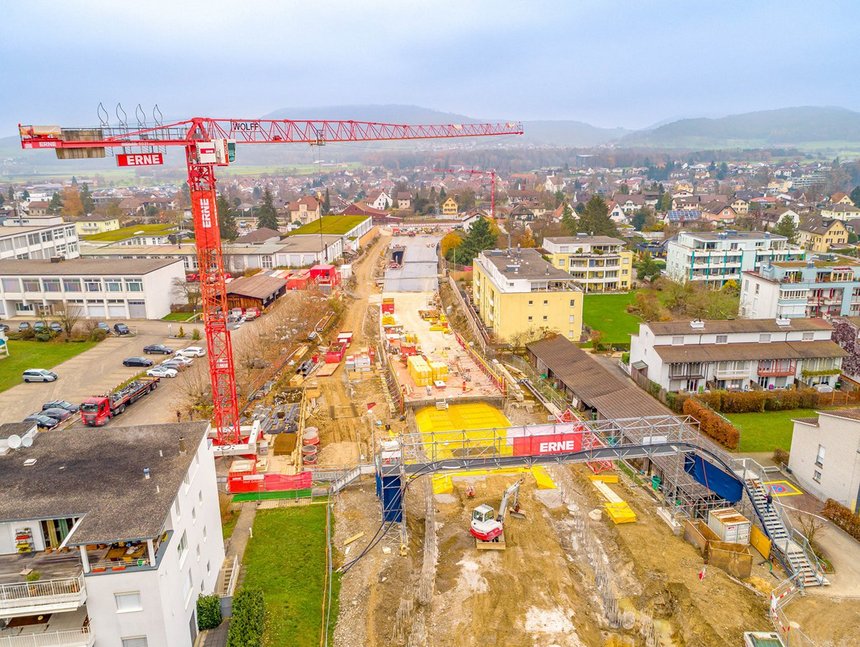
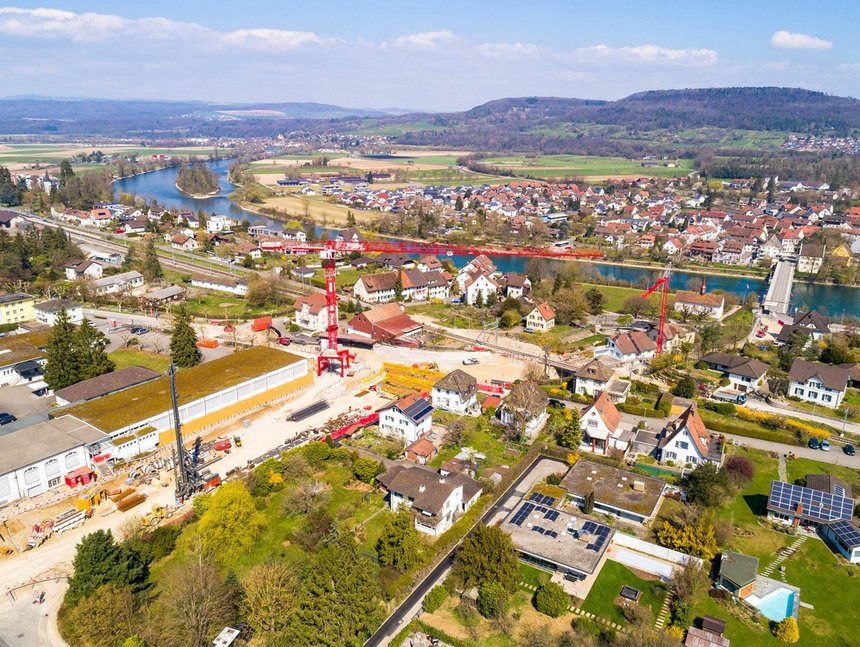
The eastern bypass, which relieves the historic center of Bad Zurzach of transit traffic, is over one kilometer long and runs 530 meters in a tunnel. The bypass connects Bruggerstrasse and Zürcherstrasse via a two-lane cantonal road and is used by around 10,000 vehicles every day.

Special civil engineering work at the Glocke junction
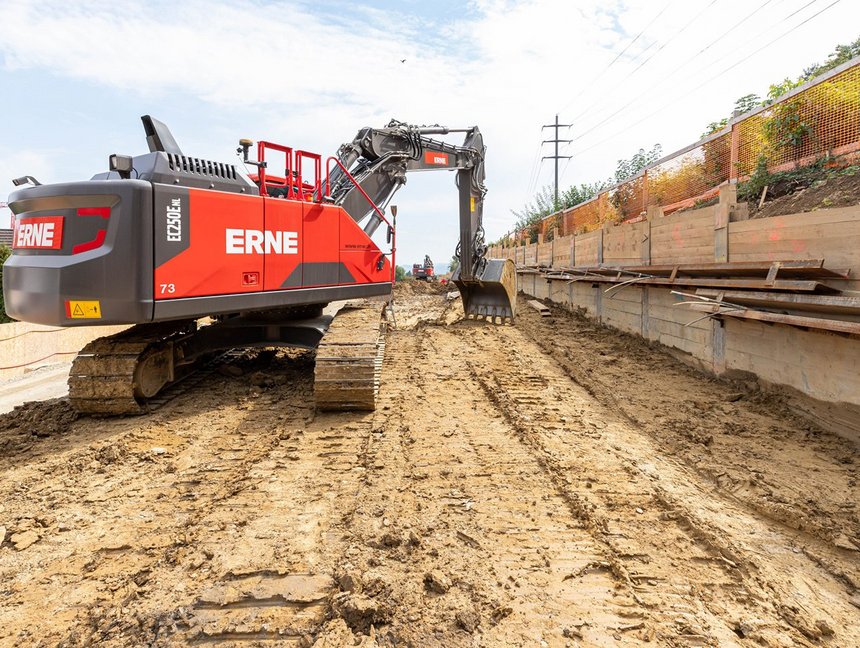
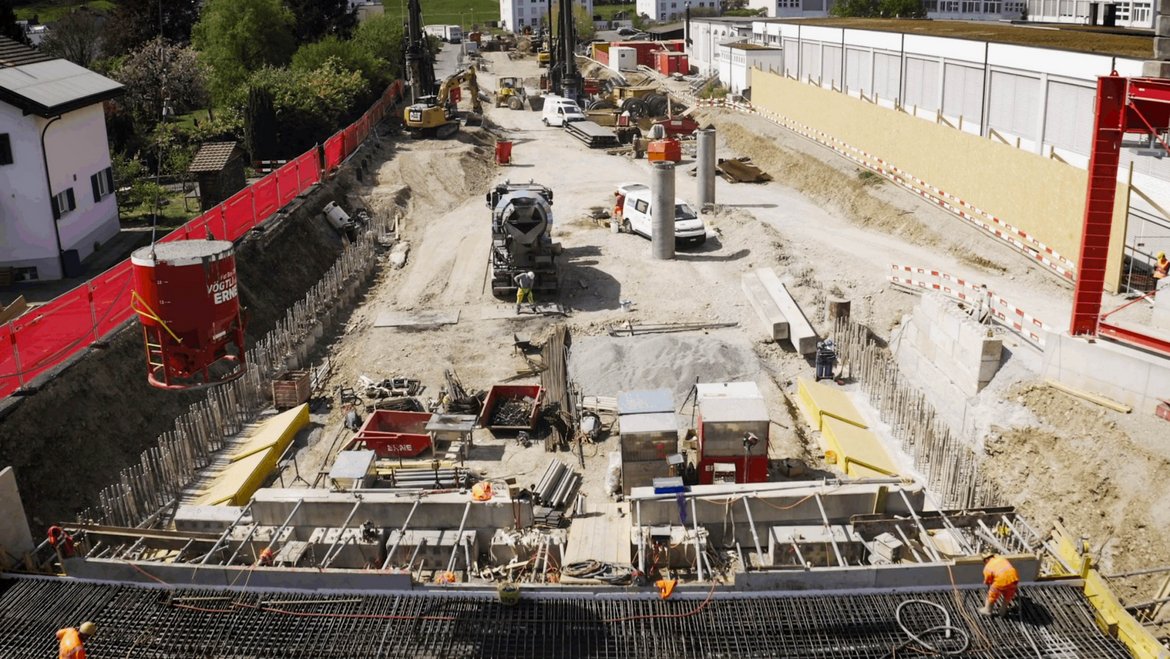
The project started in January 2020 with the excavation work in the area of the Glocke junction. The civil engineering team then laid the service lines and constructed the scouring and shotcrete walls. These special civil engineering measures prevent the embankments from slipping and seal off the excavation pit. Despite difficult conditions due to the coronavirus pandemic, the 50 or so employees on the construction site did an outstanding job.
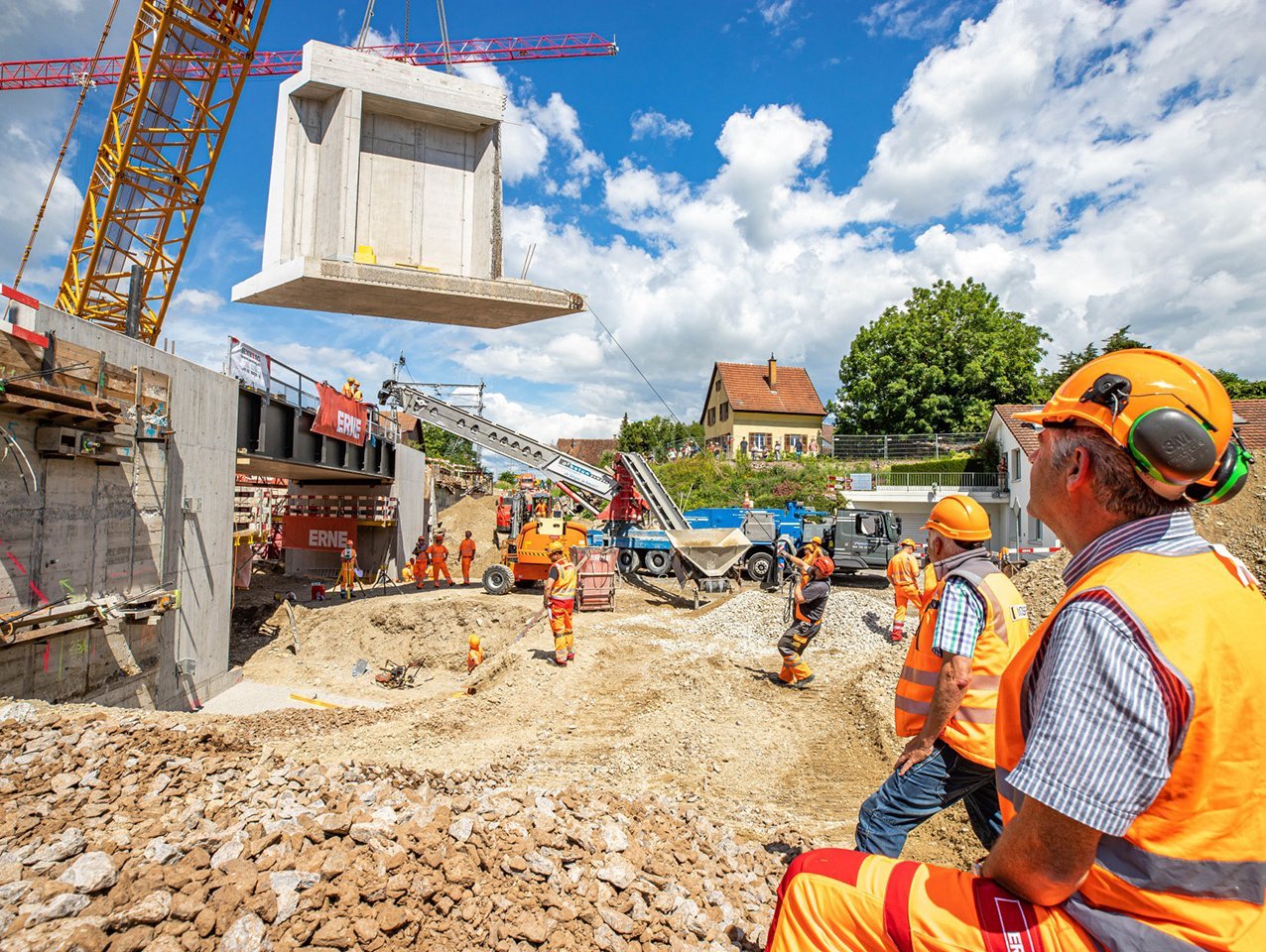
ERNE team moves the SBB bridge in 38 hours
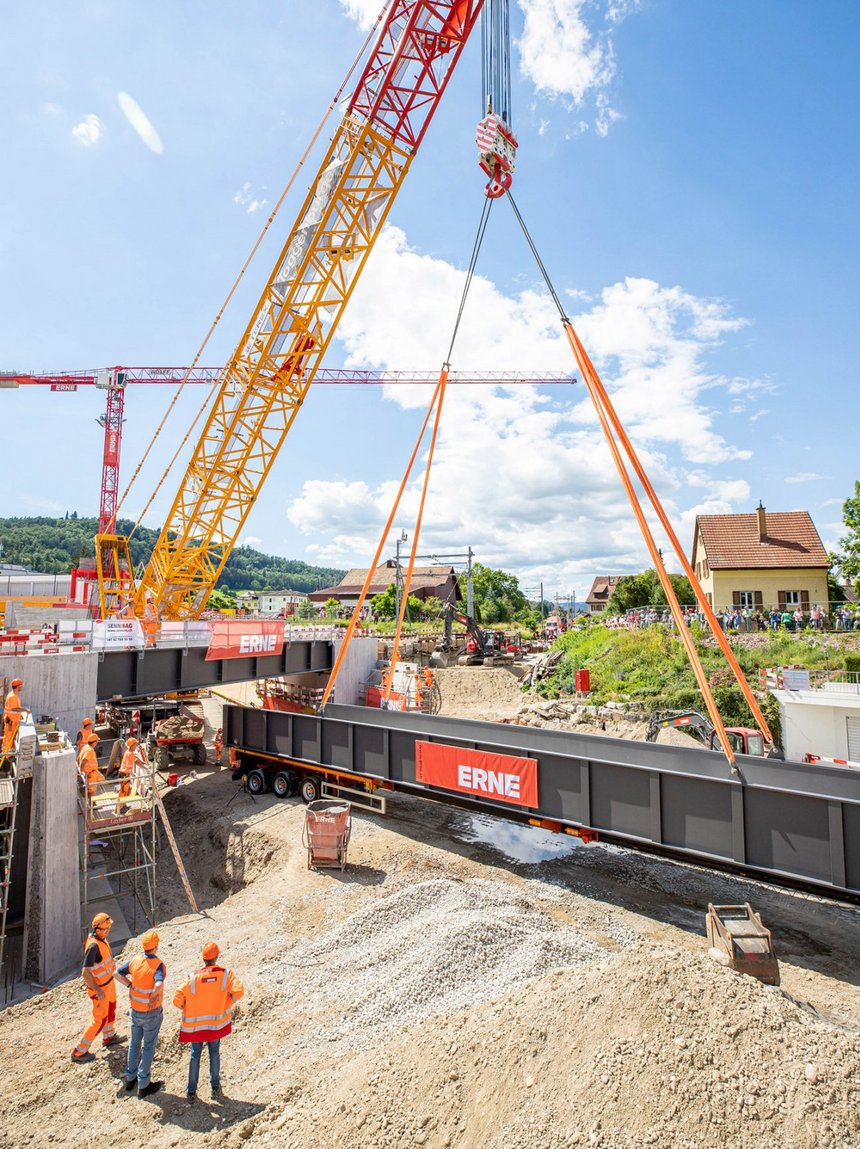
The two abutments and the huge bridge slab were prefabricated on the construction site over several weeks. On the night of June 19-20, 2020, work began on the actual installation of the new SBB and pedestrian bridge. A time window of just 52 hours was available for the complex construction project, during which the railroad line between Rekingen and Bad Zurzach was interrupted and all the work had to be carried out.
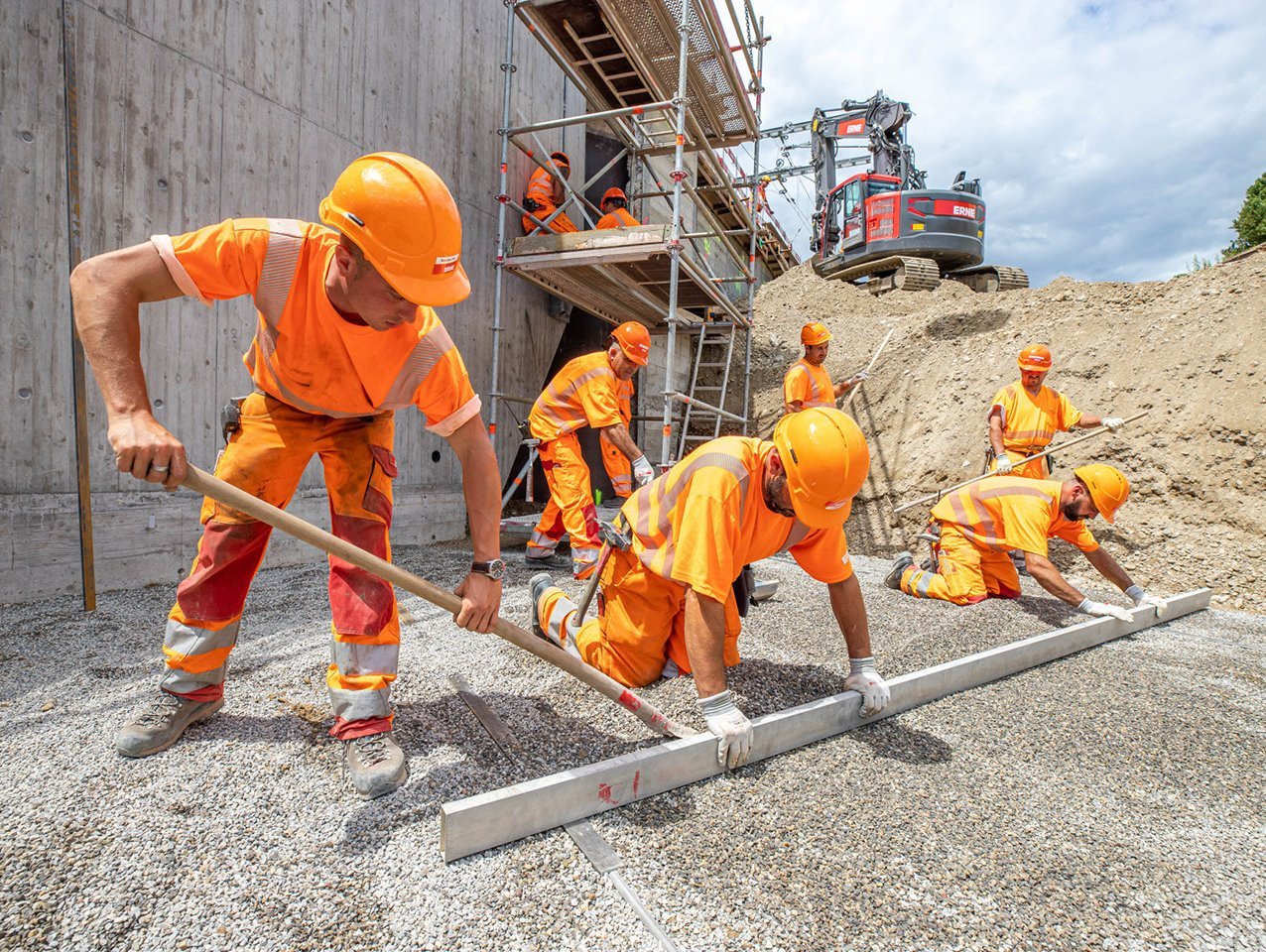
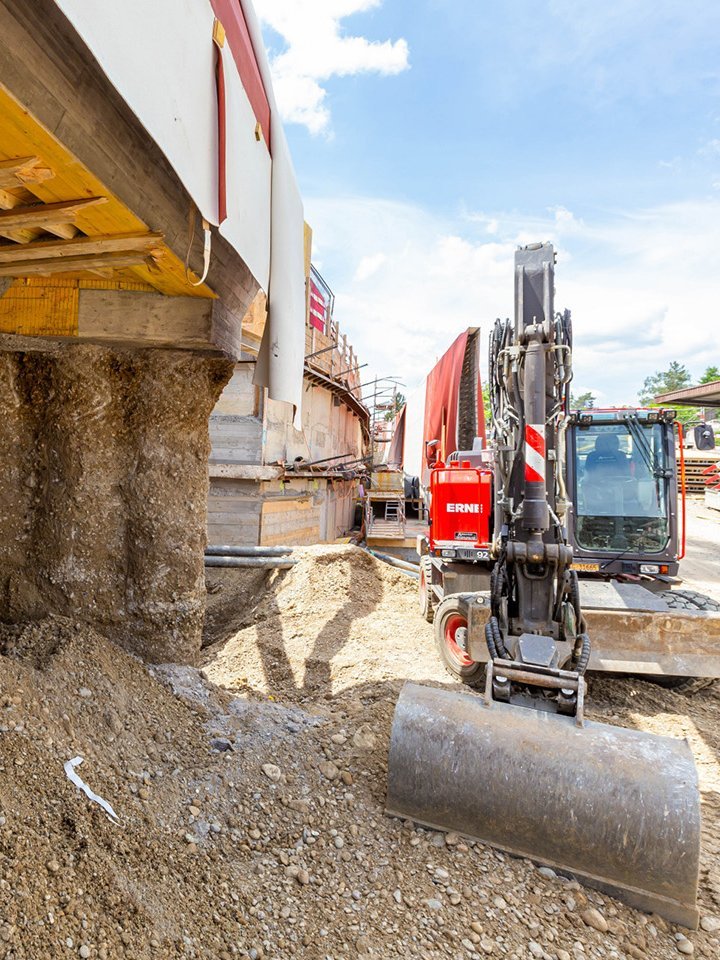
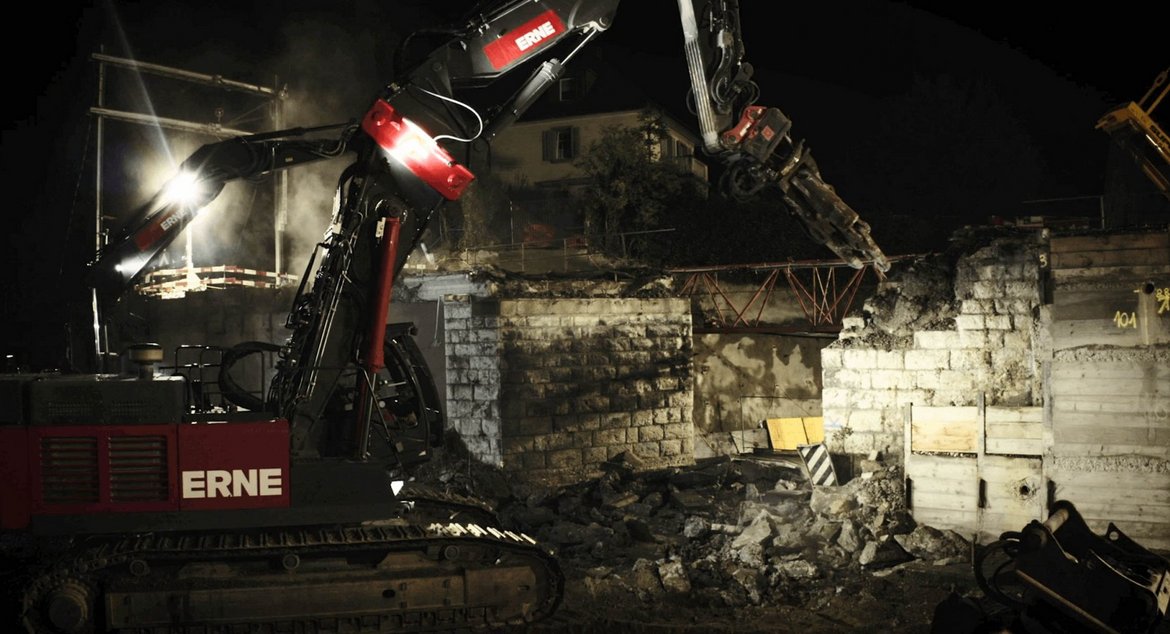
First, SBB dismantled the tracks and overhead lines. The ballast was then removed from the tracks and deposited to the side. Six excavators dismantled the old bridge slab into its individual parts and demolished the two dilapidated abutments dating from 1906. Only now could the new construction of the future SBB bridge begin. The ERNE team first excavated the abutments and then installed the leveling foundations on which the two abutments prefabricated on the construction site would later rest.

The first components of the new SBB bridge were installed the following day. The 650-ton special crane lifted the two abutments, each weighing 180 tons, one after the other and placed them precisely on the foundations. They were then concreted underneath with a fast-setting special concrete and backfilled with rubble and rubble concrete. Now came the moment that everyone had been eagerly awaiting: the installation of the new bridge deck with a span of 17 meters. It was a captivating moment when the huge bridge deck, weighing around 250 tons, began to hover on the crane, seemingly as light as a feather, and was placed over the two abutments with centimetre precision. The teams' joy was palpable when the slab was fitted precisely and the new bridge was elegantly presented in the spotlight.
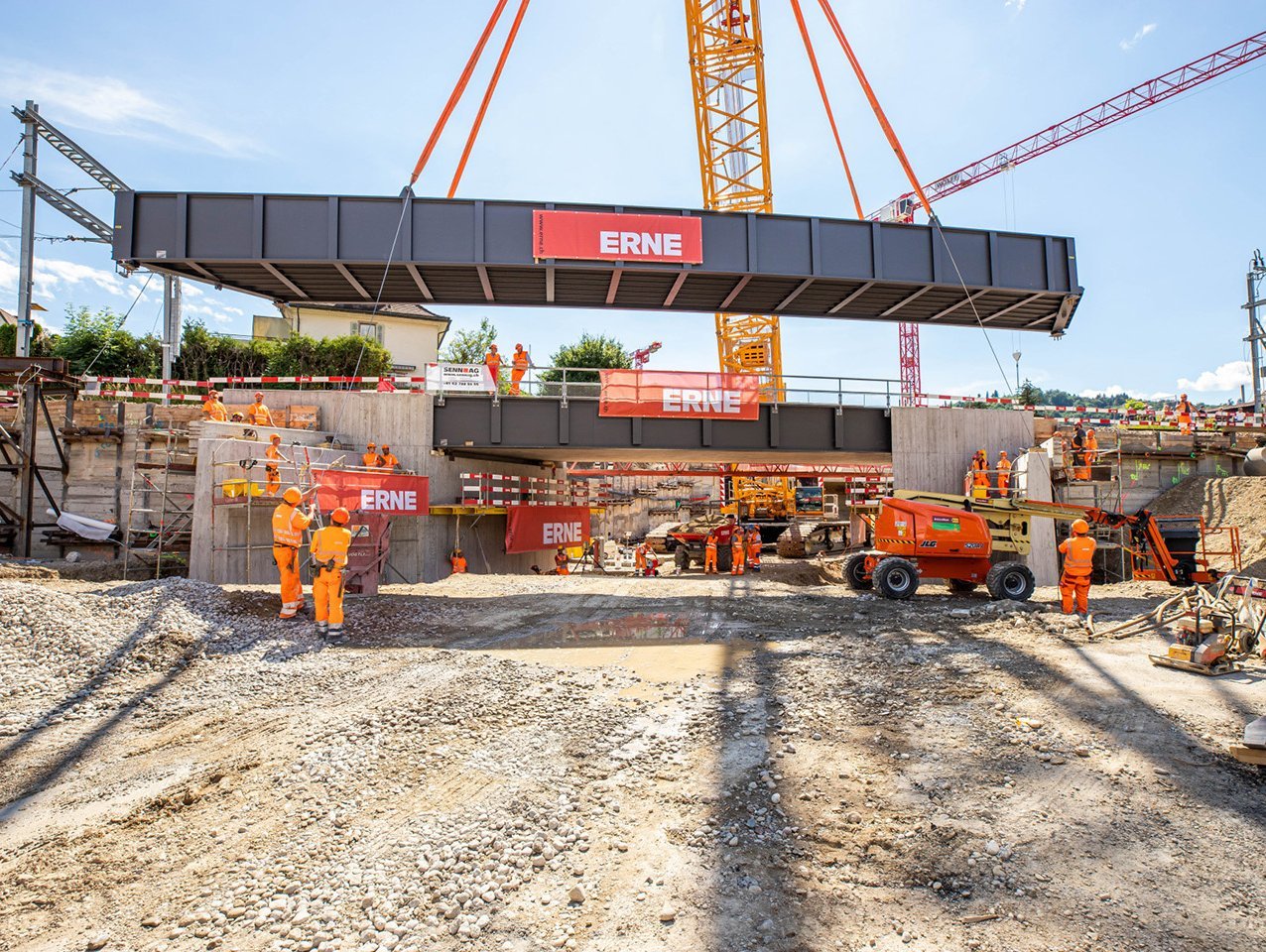
Floating bridge deck and opening of the Glocke junction
It was a captivating moment when the huge bridge deck, weighing around 250 tons, began to hover on the crane, seemingly as light as a feather, and was placed over the two abutments with centimetre precision. The teams' joy was palpable when the slab was precisely fitted and the new bridge was elegantly presented in the spotlight.
The structural and civil engineering teams then continued with preparations for the installation of the new pedestrian bridge. This was delivered by heavy goods vehicle on Sunday and mounted on the previously installed abutments. After 38 labor-intensive hours, ERNE was then able to hand over the new bridge to the SBB, who immediately reinstalled the tracks and overhead lines.

On June 22, 2020 at 4.30 am, the first train crossed the new bridge on time. This marked the completion of the first milestone: the dismantling of the old SBB bridge and the installation of the new one.
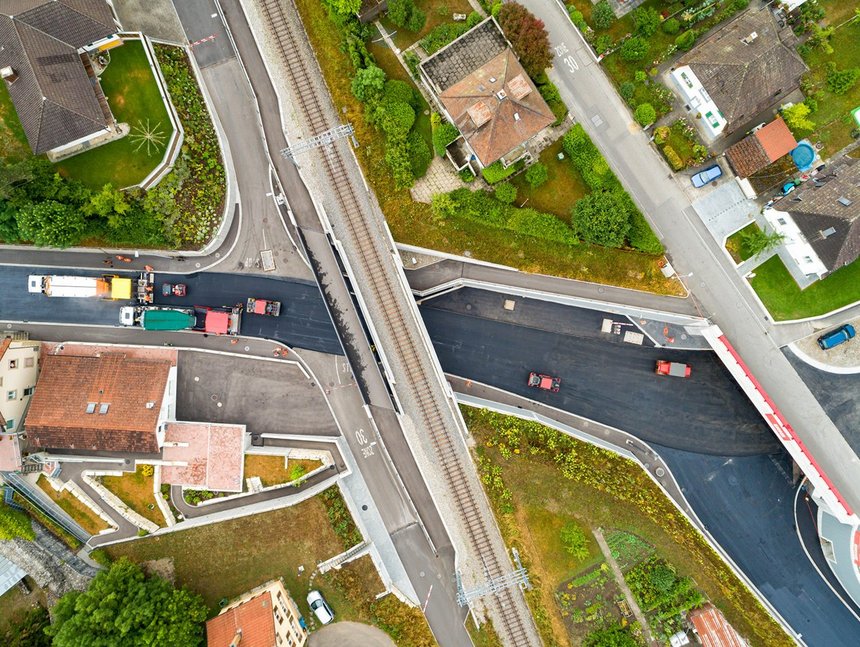
Work also continued in the area of the Glocke north portal. Retaining walls, noise barriers and access roads for the adjacent properties were built along the roads. Finally, the civil engineering team installed the road closures and laid the surface. The closure of the Glocke junction was lifted on time on November 20, 2020. Since then, Zürcherstrasse has been open to normal traffic again.
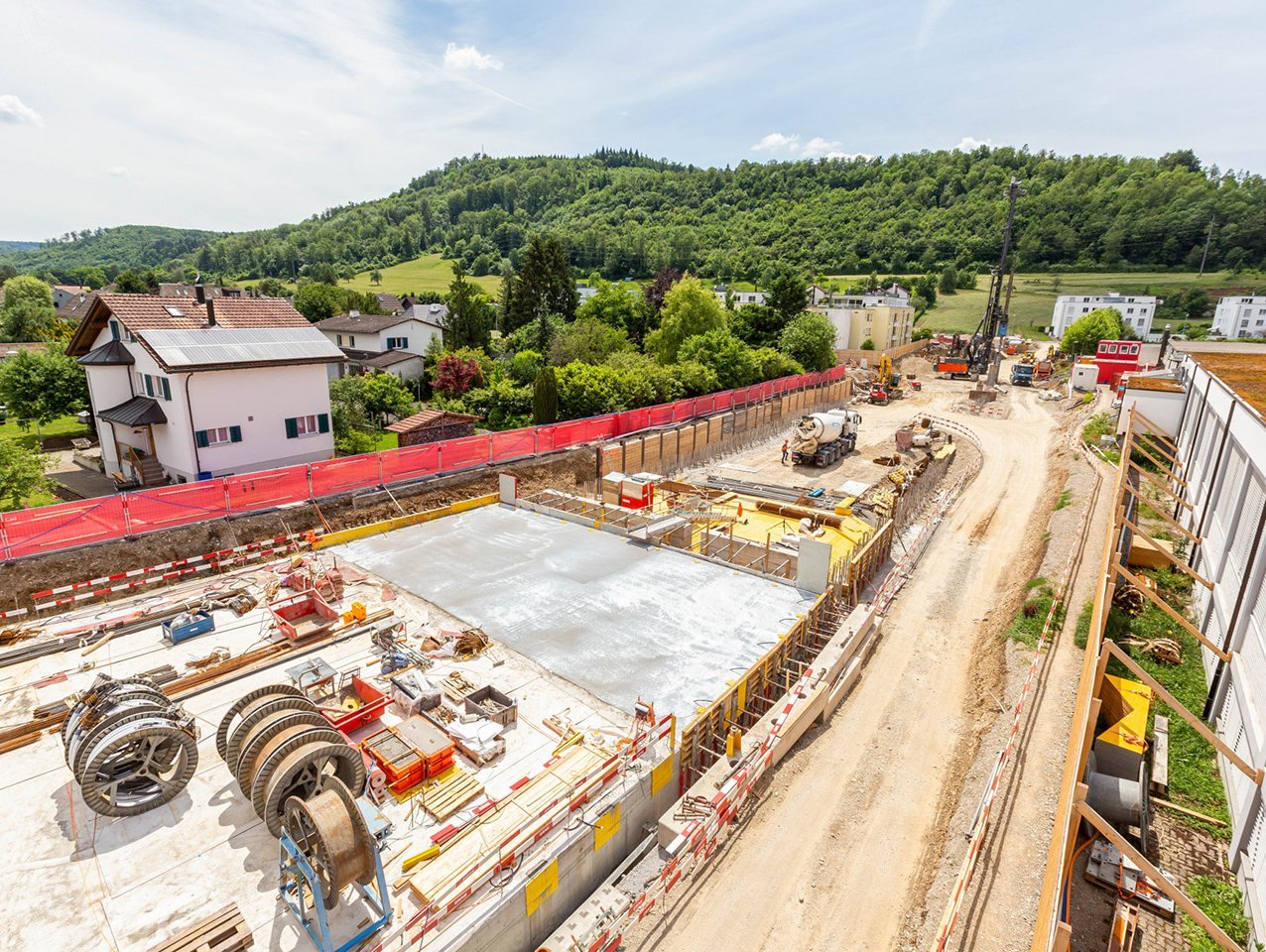
Shuttering, reinforcing and concreting the 530-metre-long tunnel ceiling
Parallel to the preparations for the installation of the new SBB bridge, work began on the tunnel, which is being built using the cut-and-cover method: The first bored piles for the tunnel walls were installed in the area of the Glocke junction. A hole approximately 13 meters deep was drilled for each of the 1,143 in-situ concrete bored piles. Depending on the type - reinforced or unreinforced - a reinforcement cage was inserted and then filled with concrete.
Once around 40 meters of bored piles had been installed on both sides, the ERNE structural engineering team began shuttering, reinforcing and concreting the tunnel ceiling. The ceiling - which is around one to one and a half meters thick - is prestressed for the first 50 meters at the Glocke north portal. Every four to five days, a ceiling stage of 10 meters was concreted. The tunnel is thus growing steadily towards the Zurziberg south portal. In spring 2021, the approximately 530-metre-long tunnel ceiling was completely concreted.
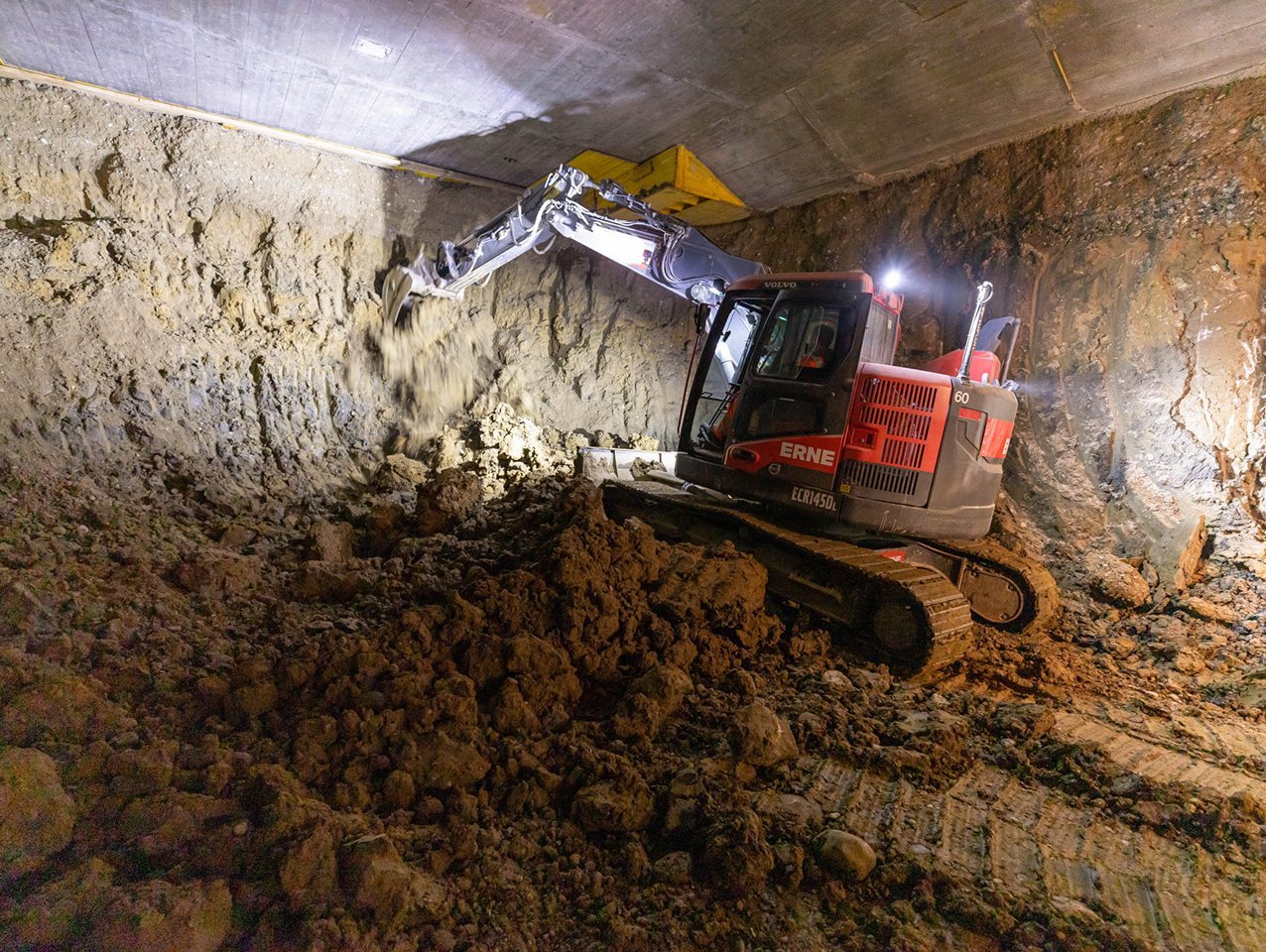
From tunnel tapping to tunnel lining
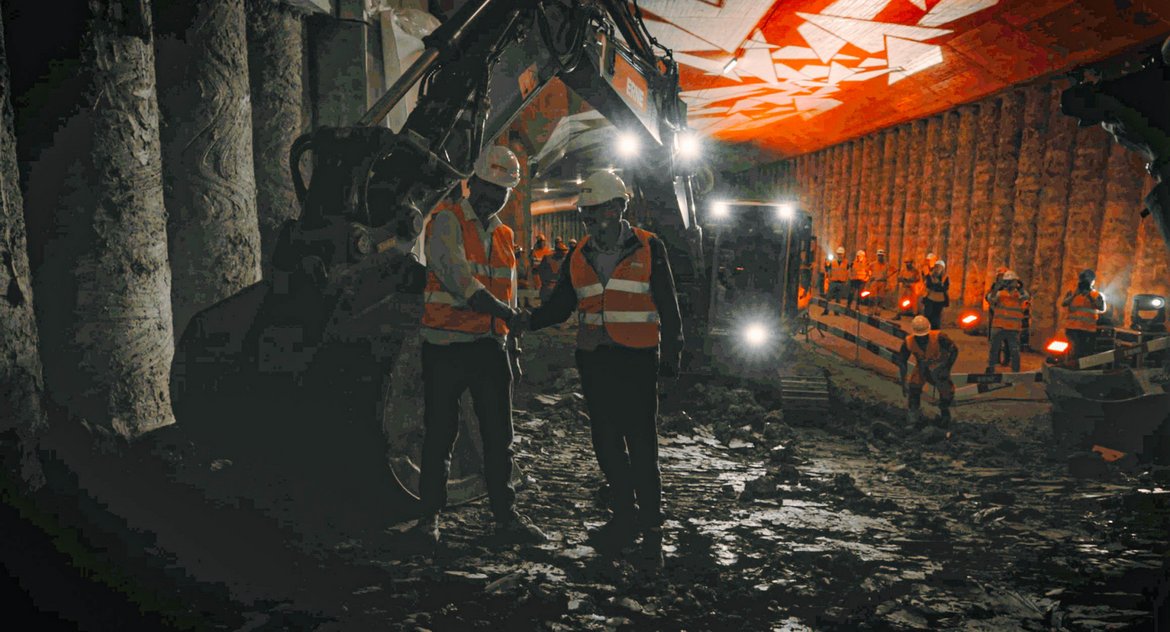
The team was specially trained for the excavation work on the tunnel profile. At the Glocke portal, the trucks removing the material had to be reintegrated into road traffic: a logistical challenge! To remove the excavated material, the empty trucks, which were equipped with reversing cameras, drove backwards into the tunnel and then, fully loaded, drove forwards out of the tunnel. In the area of the newly built Glocke junction, they merged into the ongoing traffic.
The tunnel and the work inside were supervised by St. Barbara, the patron saint of miners. The statue of the patron saint adorned the tunnel entrance of the north portal from January 2021 and brought the teams good luck during their work in the tunnel.
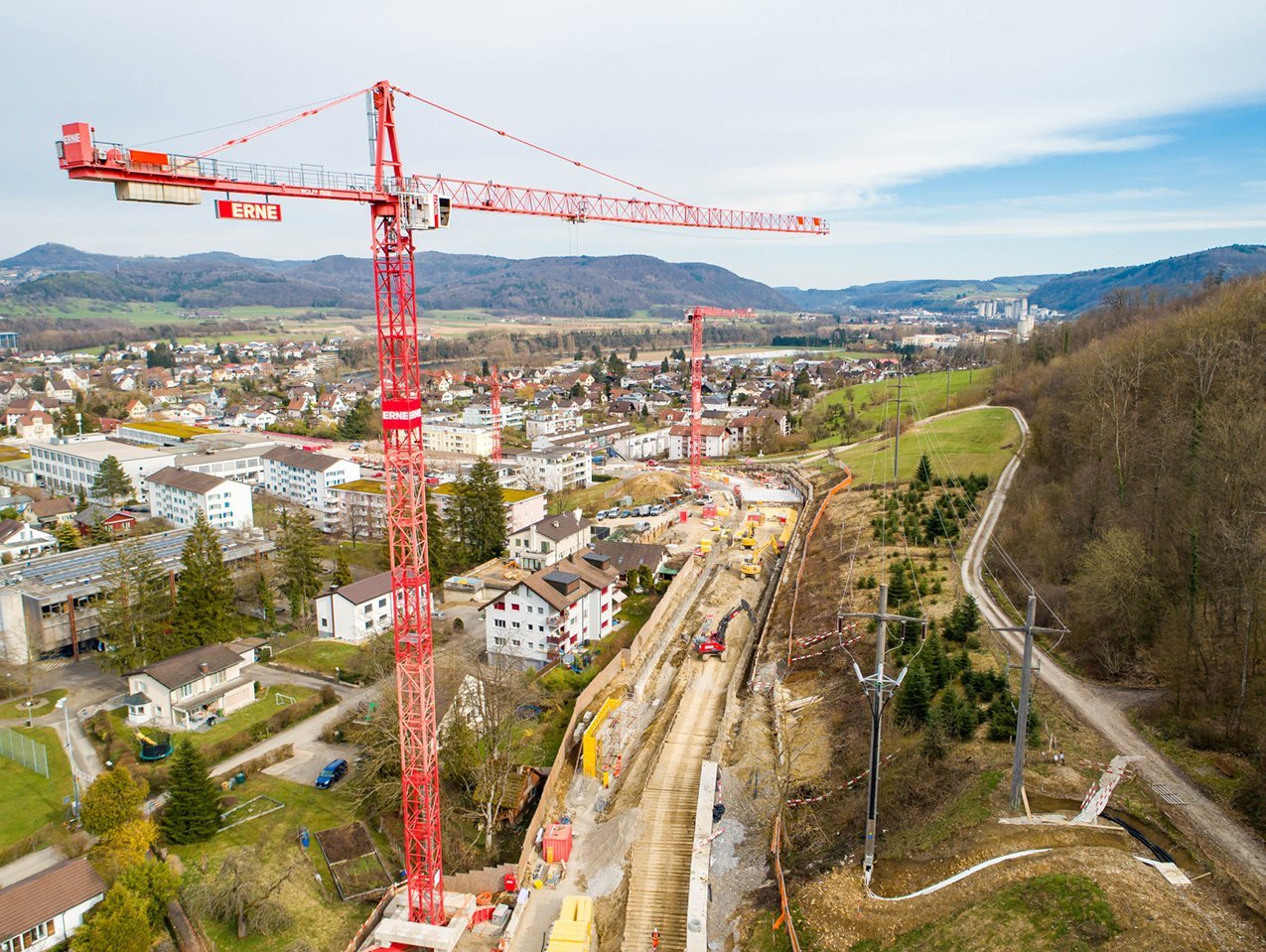
Culvert for small animals and lowering of electrical cables
A small animal culvert was built in the southern connection of the bypass road. Amphibian elements were also installed to protect the amphibians. The team mastered another milestone in this area: the 110kV AEW high-voltage line was laid deeper into the ground at the level of Tiergartenweg, as it was crossed by the tunnel access road and the retaining walls in this area. The special thing about this was that the cable block was not inserted as usual, but welded by the team from Meier AG Rohrleitungsbau. This part of the project was particularly time-consuming for the construction planners, as the execution had to be coordinated with the inspection date of the Leibstadt nuclear power plant. The outstanding commitment of the team made it possible to successfully complete this important milestone.
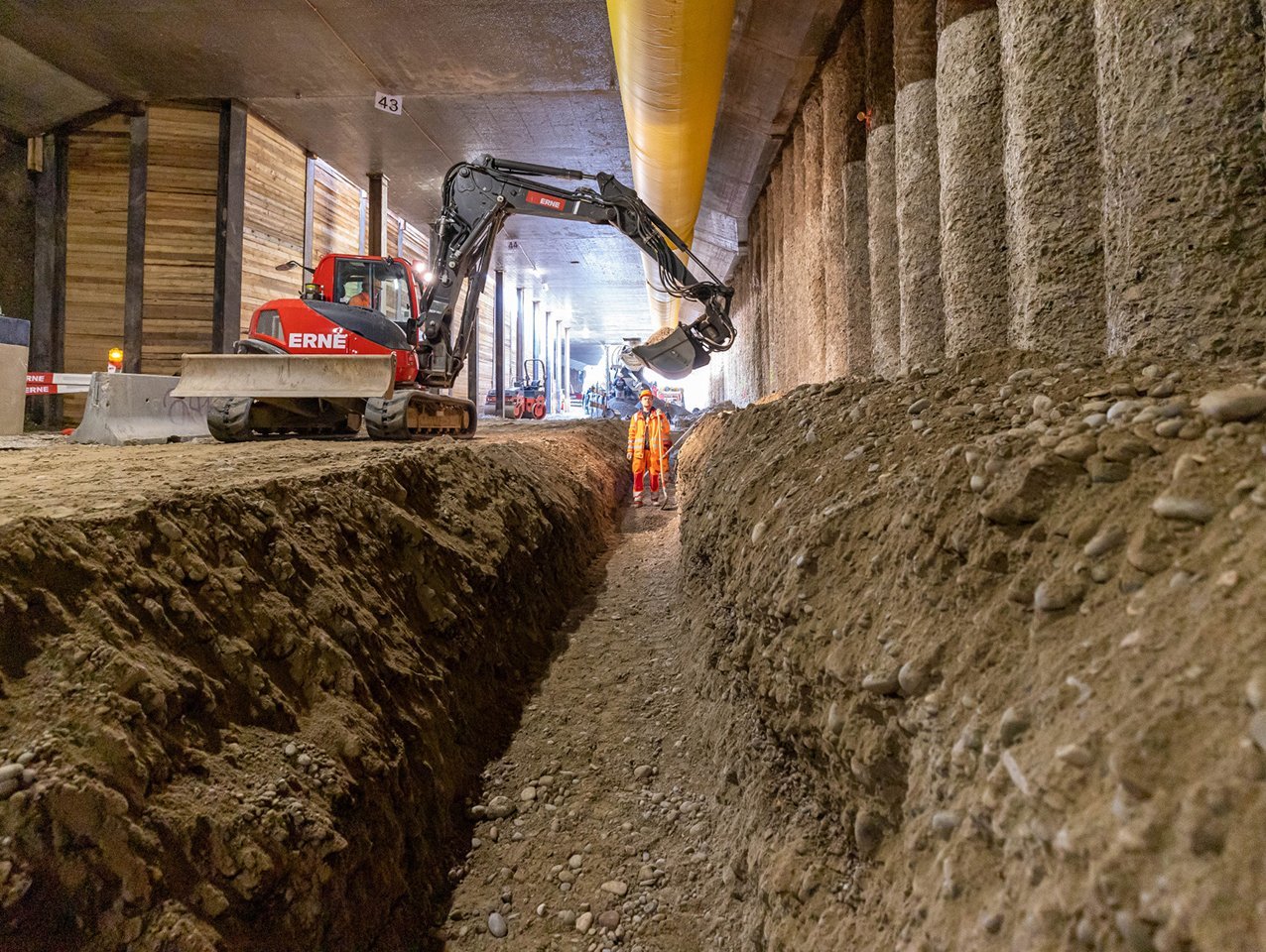
In the course of 2021, excavation work on the tunnel profile from the south began with the tunnel opening at the Zurziberg portal. The expansion of the tunnel then began in the area of the Glocke tunnel portal. In the embankment area to the side of the roadway, service pipes for water, waste water and electronics were laid and drainage channels were created. The tunnel floor was then reinforced with a baffle plate from Neubergstrasse to the Zurziberg south portal, and concrete impact walls were constructed in the side wall area. This was followed by the installation of the foundation layer and the surfacing work, which started as planned in May 2022.
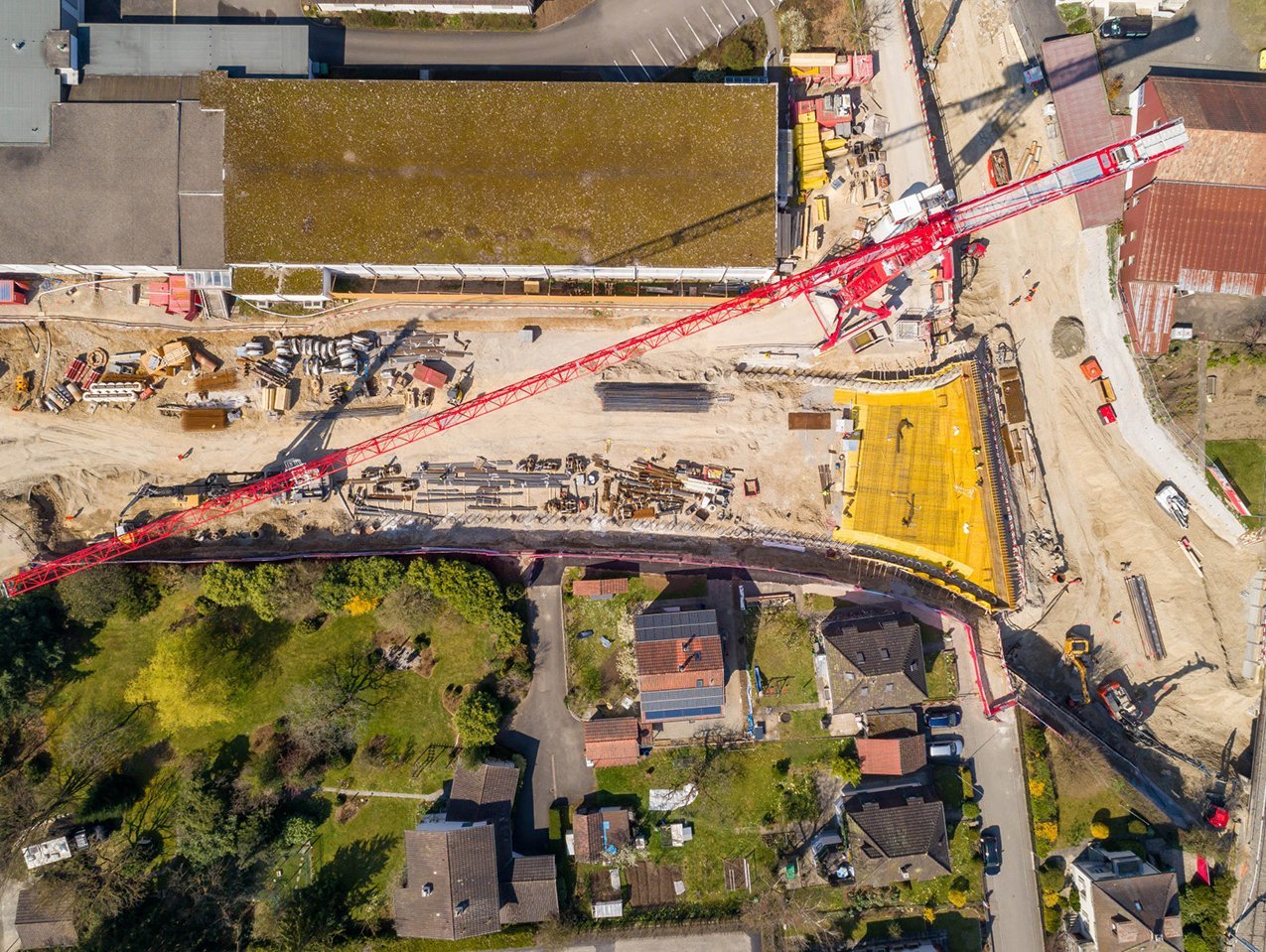
Work is also continuing above the tunnel
Waterproofing was installed on the tunnel ceiling. This was followed by the installation of a gravel or earth layer. A small access road was built above the tunnel in the Schützenweg area. As the future meeting zone should stand out with a special color scheme, a colored surface was installed.
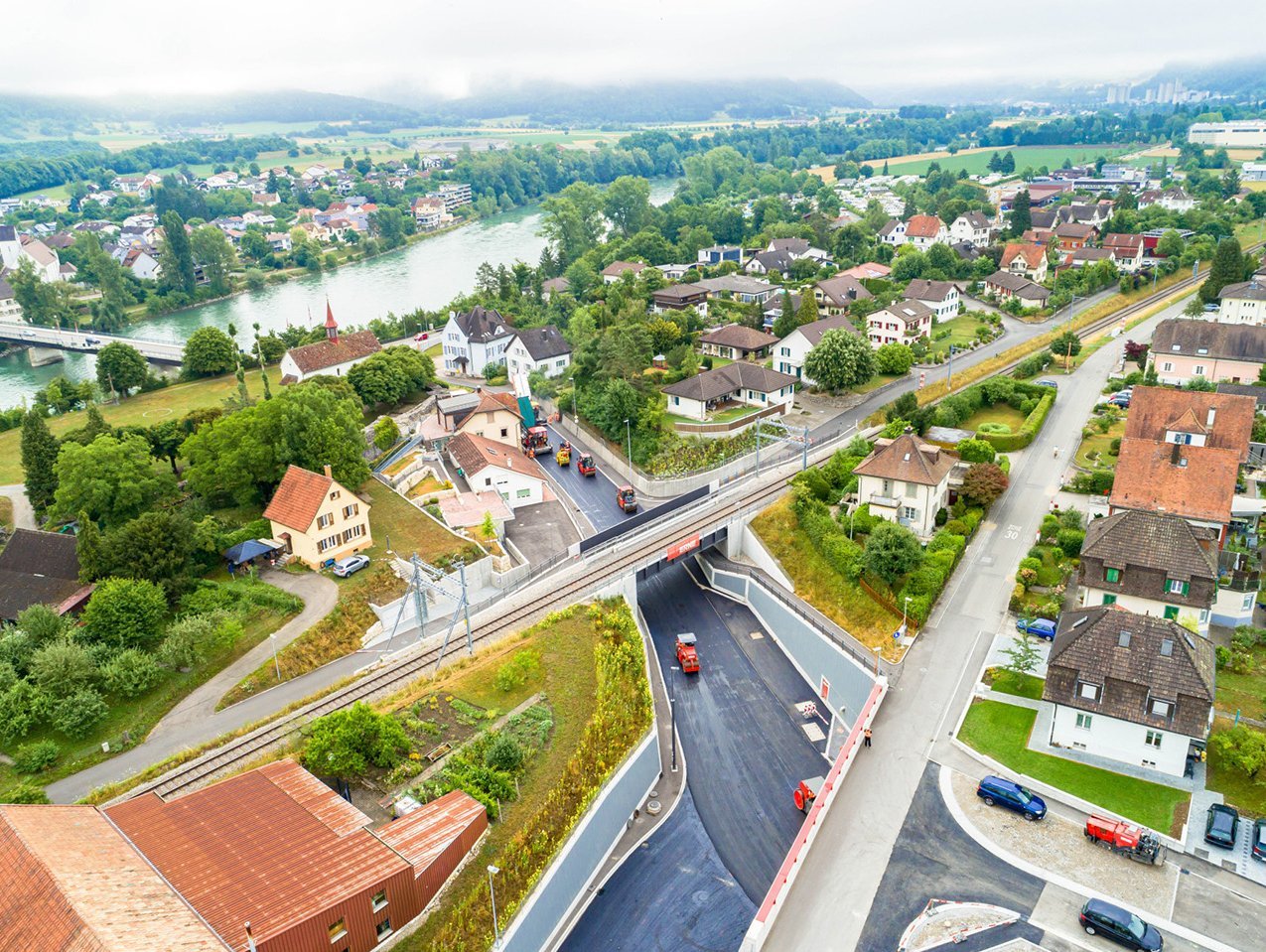
Surfacing work in the pre-zones of the tunnel
In the slightly warmer months of the year, the surfacing work was carried out in the tunnel's pre-zones. In the first stage, the surface was laid at the north portal, in the area of the future Glocke junction up to the customs crossing. This work was carried out at the Zurziberg portal during a weekend closure of Bruggerstrasse on August 20 and 21, 2022. The construction work was completed with the work for the wall cladding, the installation of the operating and safety equipment and the traffic light systems for the tunnel.
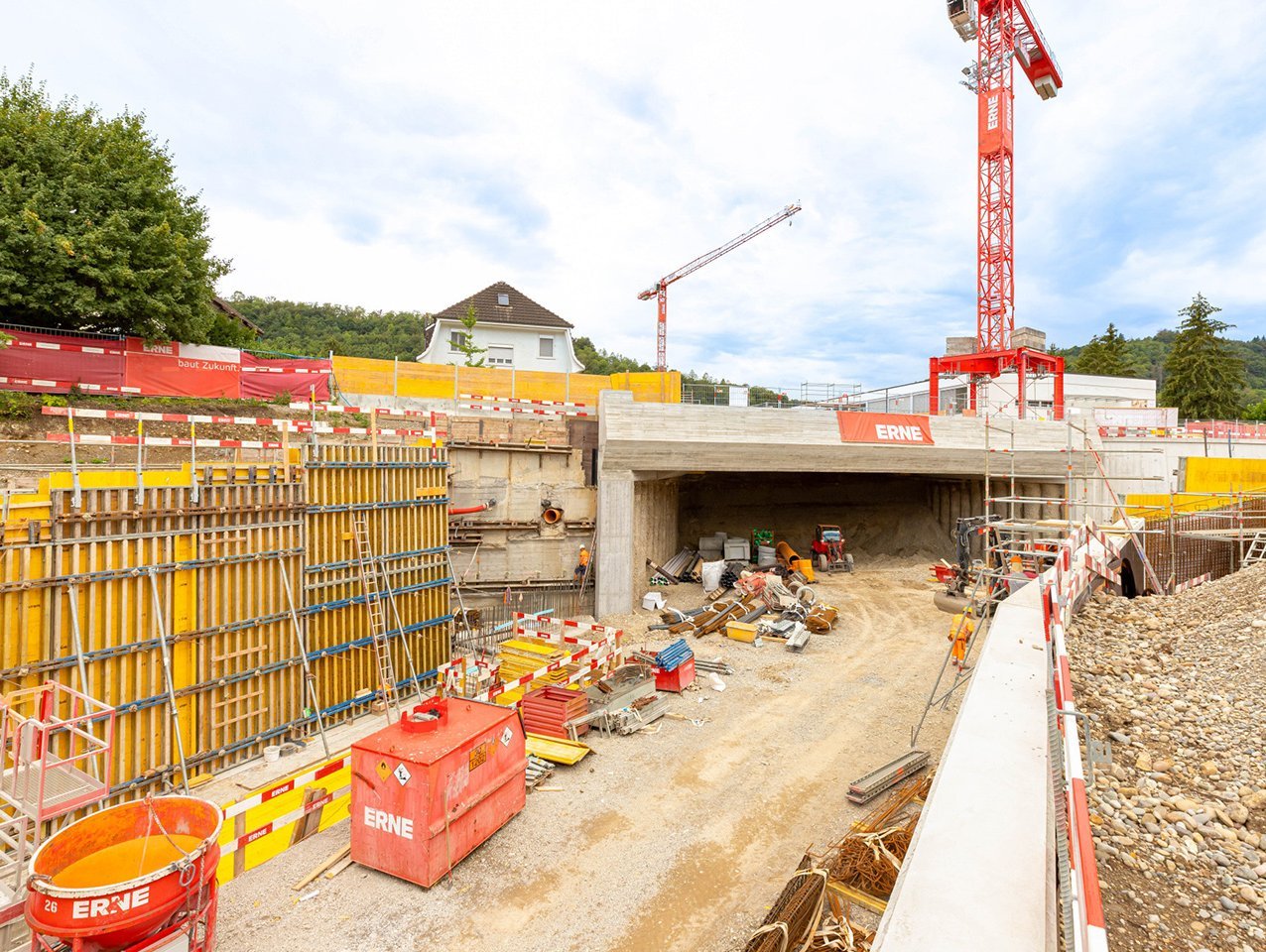
ERNE & Gebr. Meier - A Power Team
Various construction services were required for the major Bad Zurzach eastern bypass project, which the ERNE Group was able to provide from a single source thanks to specialists from all areas of the main construction trade. While ERNE's civil engineering and structural engineering team took care of the construction of the tunnel and the roadway, the specialists from Meier AG Rohrleitungsbau carried out all the piping work on various sections of the construction site. In addition to transport and distribution pipes, which supply the population of Bad Zurzach with water, the Meier Bros. teams laid the extinguishing water pipes in the tunnel. By the end of the project, around 2,200 meters of pipes, such as PE pipes with a diameter of up to 250 mm and cast iron pipes with a diameter of up to 150 mm, had been installed.

Project completion with a brilliant opening ceremony
After two and a half years of construction, the Bad Zurzach eastern bypass was officially opened on Saturday, June 3, 2023. The heart of the infrastructure construction project and the venue for the opening is the 530-metre-long tunnel, which relieves the historic town center of traffic. Several hundred guests eagerly followed the act of blessing the tunnel at the opening ceremony. This was followed by musical interludes from the Rekingen Music Society and the school class that had already attended the ground-breaking ceremony. Then the big moment finally arrived: the inside of the tunnel, which had previously been covered by a cloth, was unveiled to the acoustic accompaniment of drummer Stefan "Stee" Gfeller and opened to the numerous guests. On this unique occasion, numerous visitors explored the tunnel route on foot, which around 10,000 vehicles pass through every day from Monday afternoon.
The brilliant opening ceremony marked the completion of a complex infrastructure construction project with many highlights for ERNE. We remember great moments such as the relocation of the SBB bridge, the lowering of the high-voltage line and the handover of the "Glocke" junction and thank you for this great project.
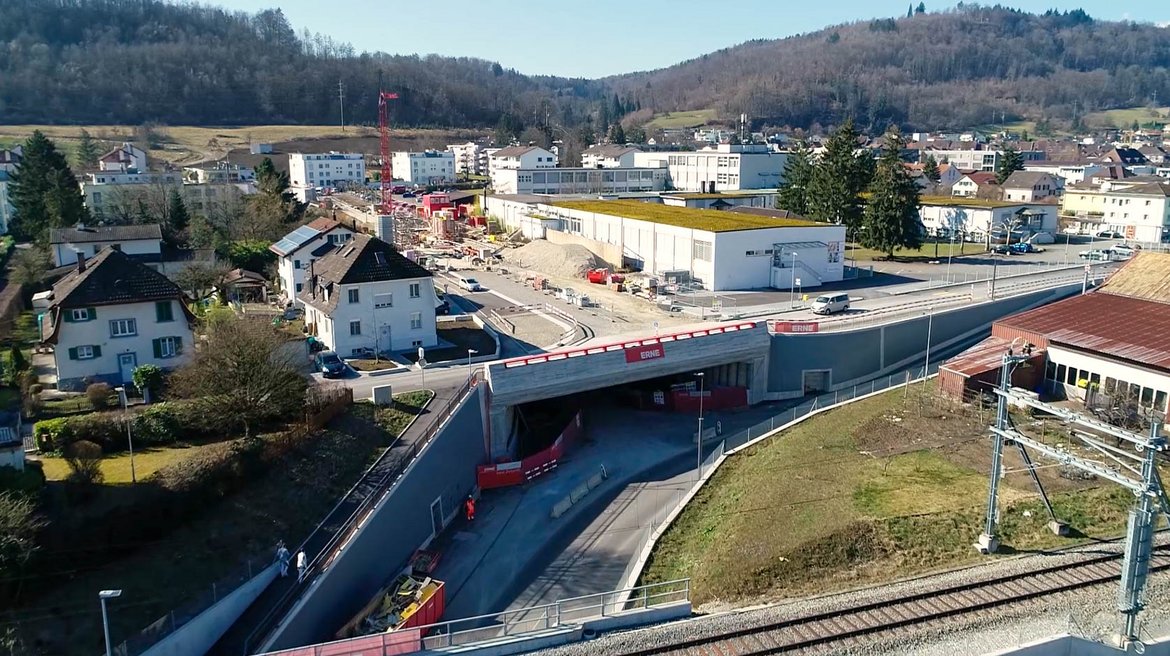

Facts about the construction site
Project title: | Bad Zurzach eastern bypass NK 286 |
Project manager / site manager: | Gerhard Hauser, Alain Hofer, Sascha Ehrler, Rolf Zumsteg, Peter Frei, Simon Schmidle, Jascha Mürner |
Foreman: | Urs Strittmatter, Manfred Nussbaum, Dominik Hasler, Philipp Müller, Roman Müller, Philipp Kolly, Maik Lüdke, Dean Mollet |
Services: | Civil engineering, in-situ concrete and infrastructure construction, special civil engineering |
Construction period: | Execution January 2020 - spring 2023 |

Impressive figures
Excavation: | approx. 95'000 m3 |
In-situ concrete: | approx. 18'500 m3 |
Formwork: | approx. 26'500 m2 |
Reinforcement: | approx. 2'500 tons |
Prestressing: | approx. 1'500 m |
Reinforced walls: | approx. 1'000 m2 |
Nail walls: | approx. 3'100 m2 |
Bored piles reinforced: | approx. 13'500 m |
Bored piles unreinforced: | approx. 2'400 m |
Prestressed anchors: | 450 pcs. |
Foundation layer: | approx. 12'000 m3 |
Rolled and mastic asphalt: | approx. 7'000 tons |
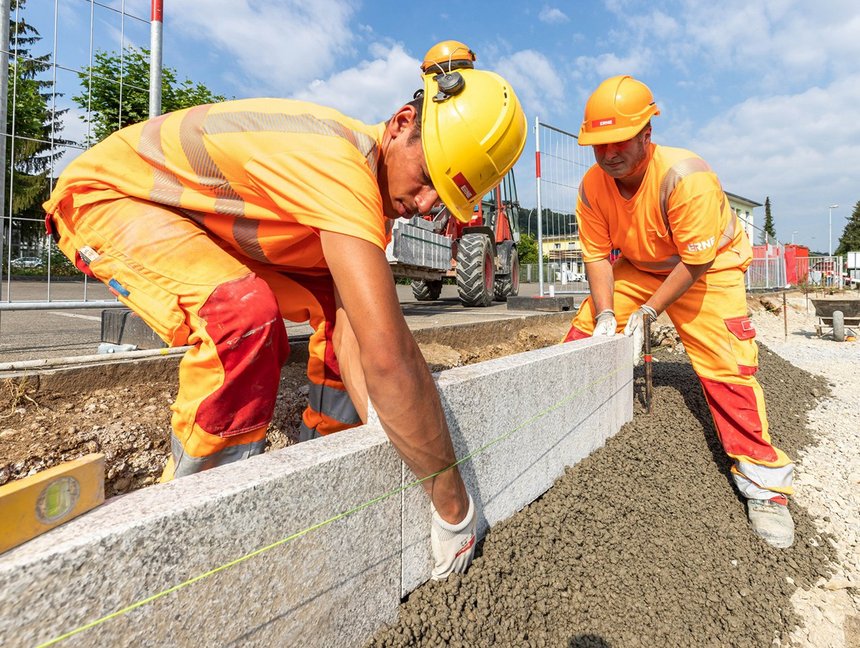
Edge finishes: | 4'500 m |
Cable conduit blocks: | 4'500 m |
Waterproofing: | approx. 10'000 m2 |
Amphibian protection: | 200 m |