TU civil engineering project wildlife underpass in Brugg
December 13, 2021
1000-ton concrete structure moved within 56 hours
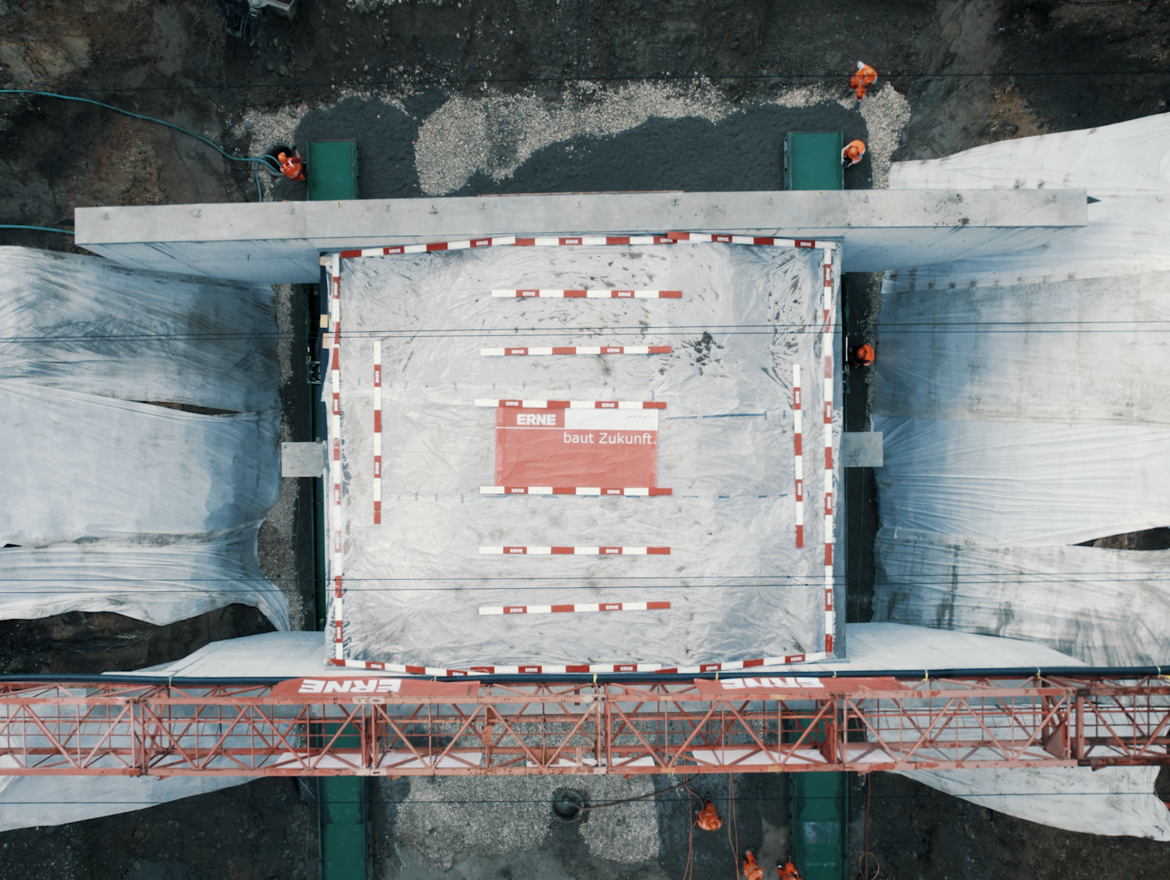
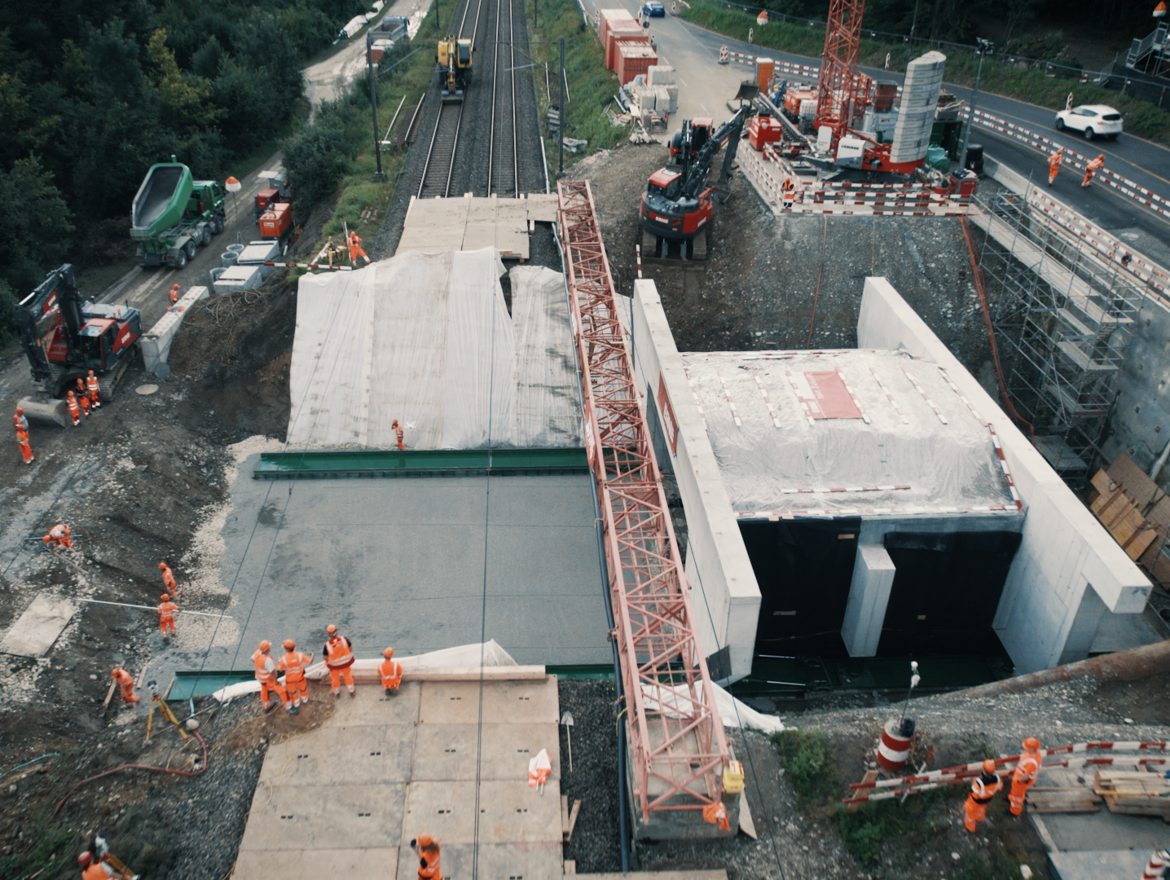
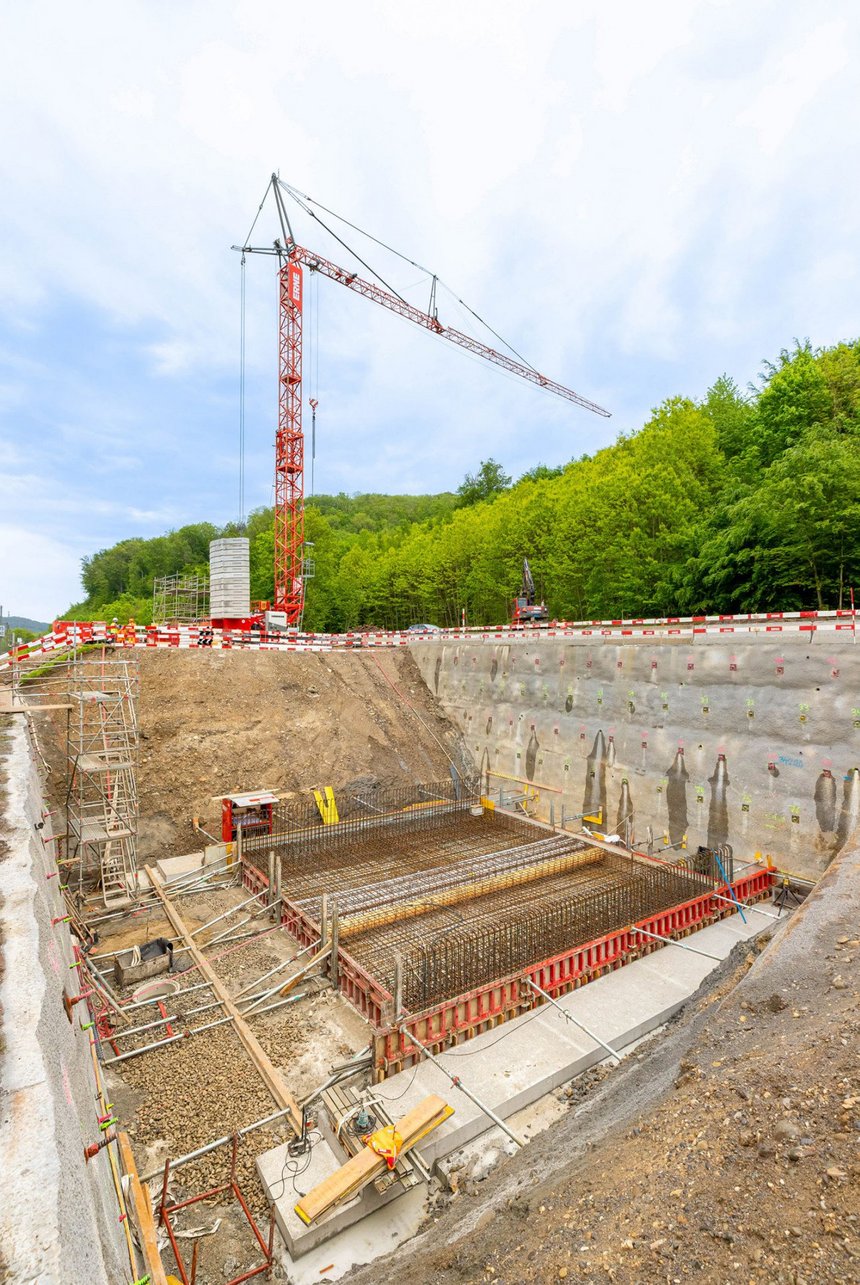
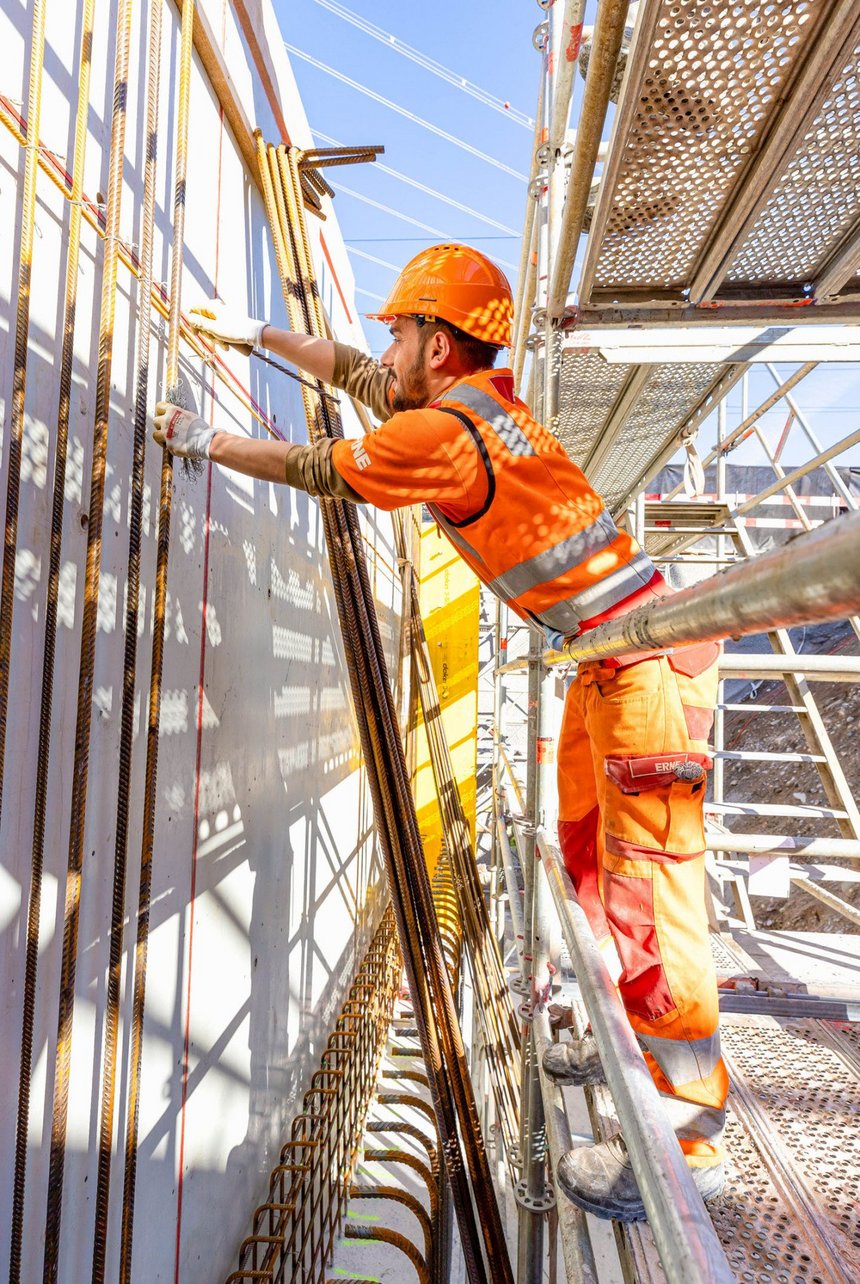
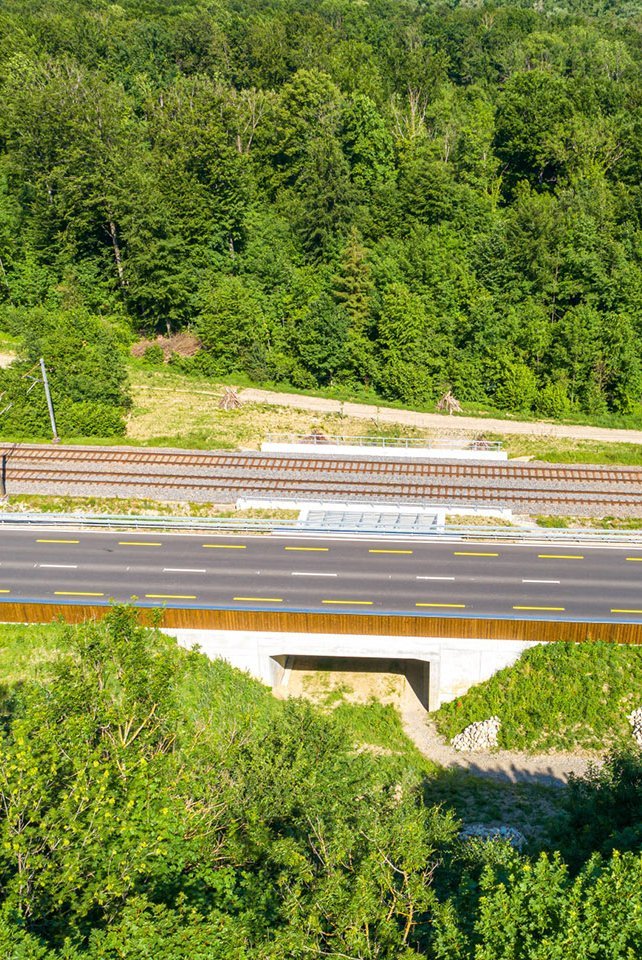
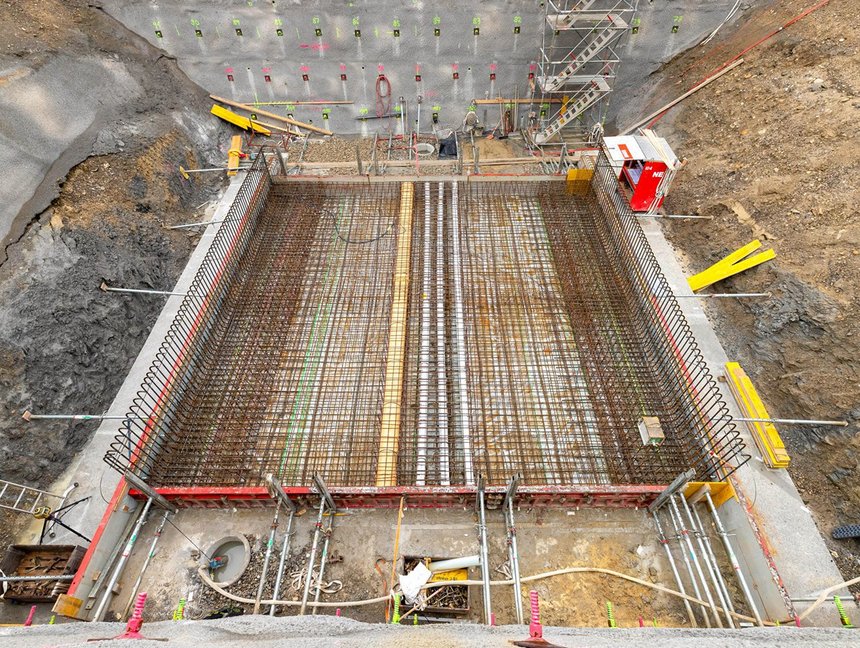
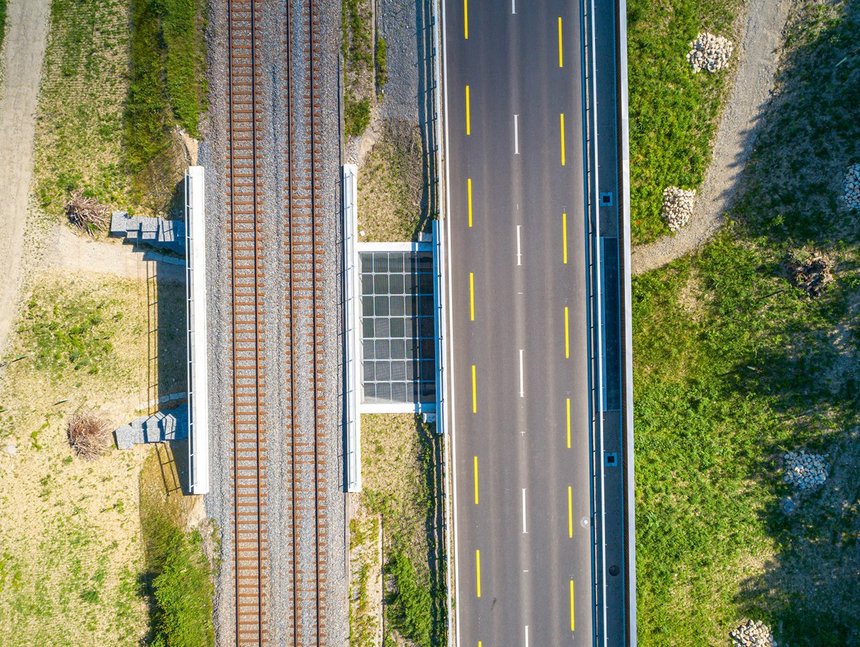
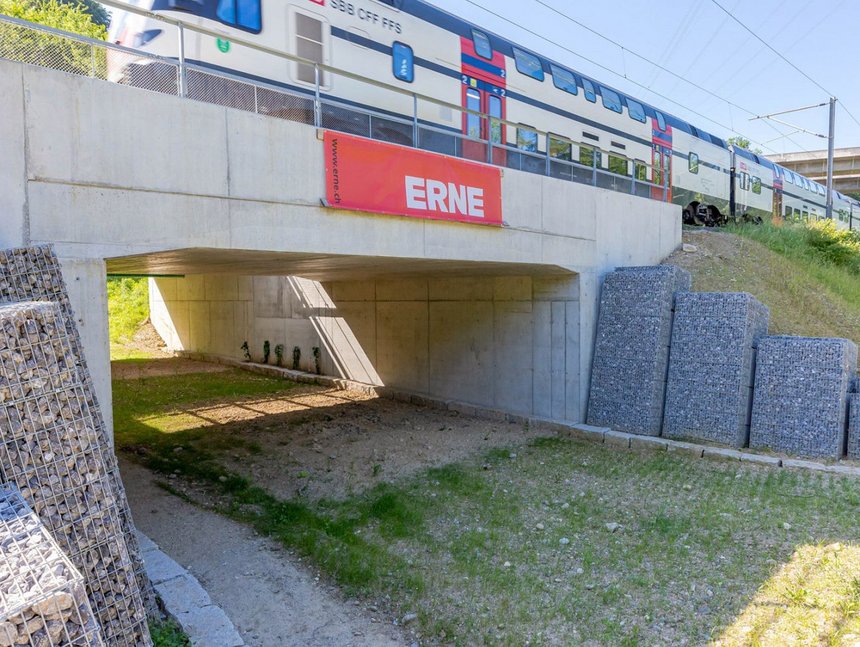
For the new B-7281 wildlife underpass in Brugg, which will connect the interrupted Schinznach-Bad wildlife corridor in future, the SBB railroad line and the cantonal road had to be crossed underneath. The contract was carried out in two stages by ERNE AG Bauunternehmung as a total civil engineering contractor. The railroad line was interrupted for a limited time window of 56 hours on the weekend of July 23rd to 26th for the undercrossing of the railroad line. During this time, around 60 employees worked in seven shifts to move the structure, which weighed around 1000 tons and had previously been built on the construction site.
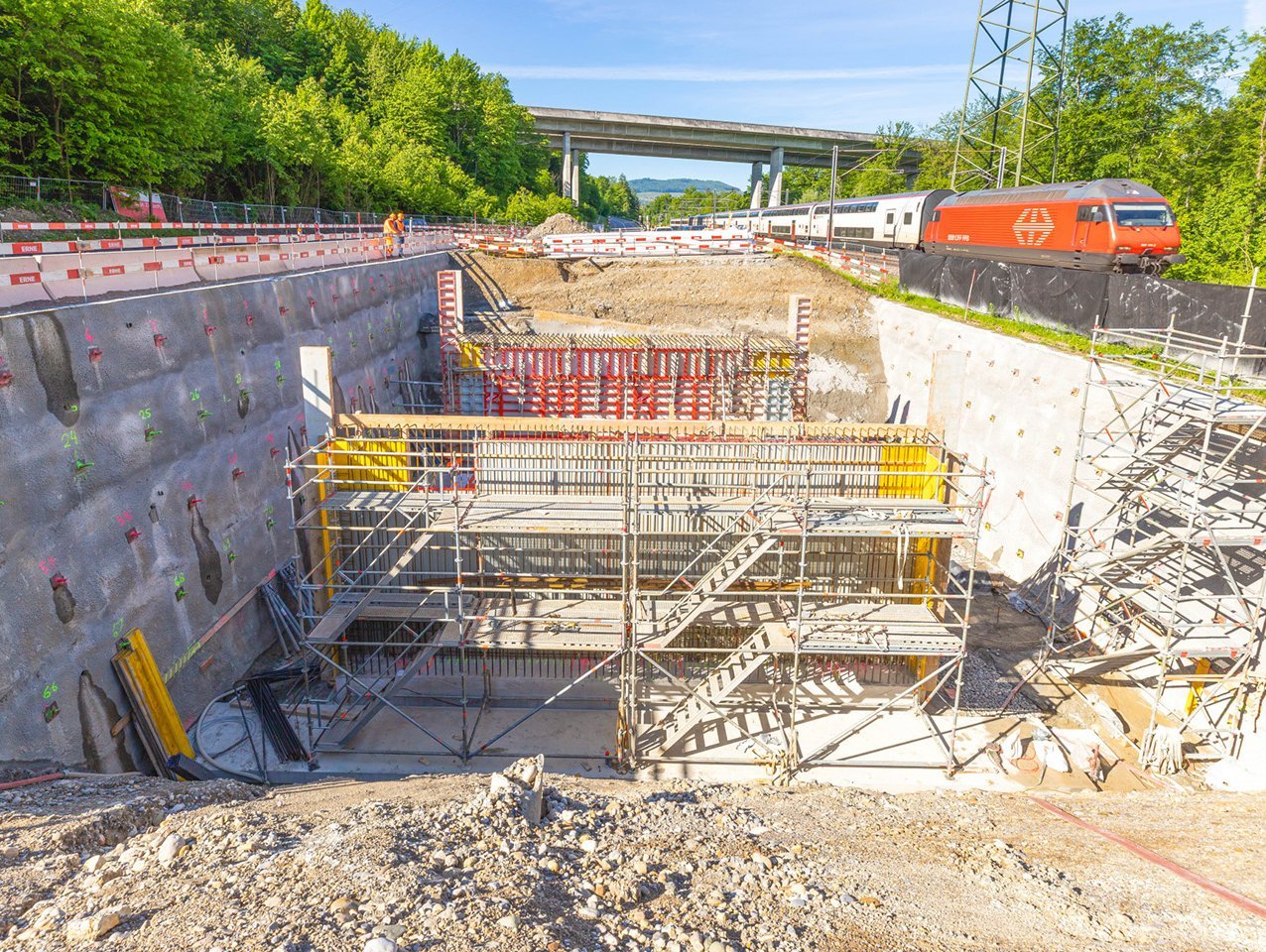
Spectacular relocation of the wildlife underpass
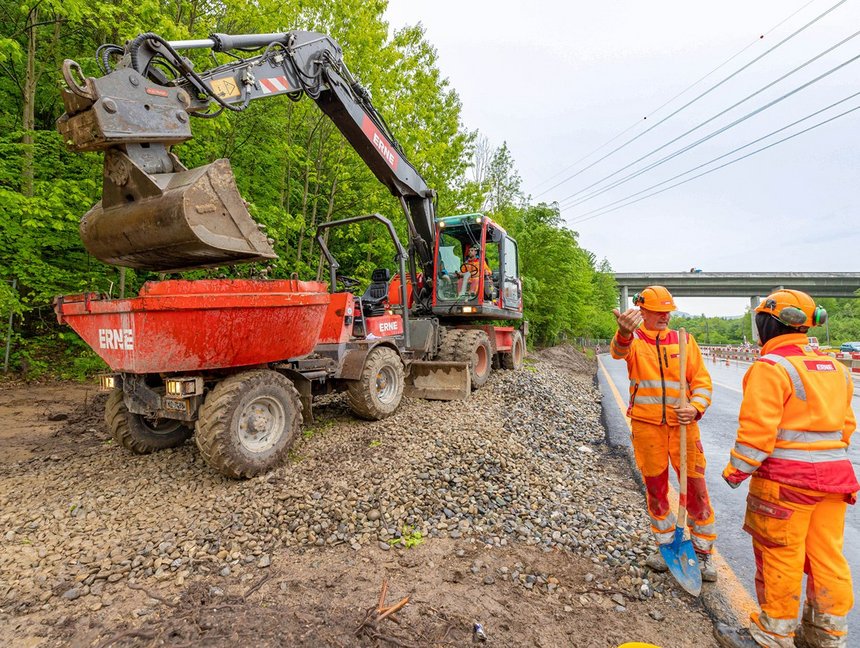
The work started on Friday at 8.00 pm. The tracks and railroad ballast were removed immediately. The ERNE civil engineering team then demolished the temporary nail wall that had previously been erected to secure the excavation pit in the area of the cantonal road to the railroad embankment. Following the dismantling work, excavation work began for the concrete structure to be moved under the railroad line. Four excavators and 160 truck journeys were used to remove and transport 3000 m3 of loose excavated material. In addition to the tight schedule, the logistics on the otherwise rather small construction site were a challenge for everyone involved. In addition, the groundwater level had risen due to the heavy rainfall in recent weeks and the team also had to drain the excavation pit this weekend using dewatering measures. The material in the excavation area was then replaced - rocky, non-load-bearing material was replaced with lime gravel - and the base level was created with chippings. The civil engineering professionals then used the mobile crane to lay the ten-metre-long, nine-tonne skidways. The concrete structure was then lifted 15 centimetres using six hydraulic jacks and moved to its destination via the tracks.

Shutdown of rail traffic and precision work
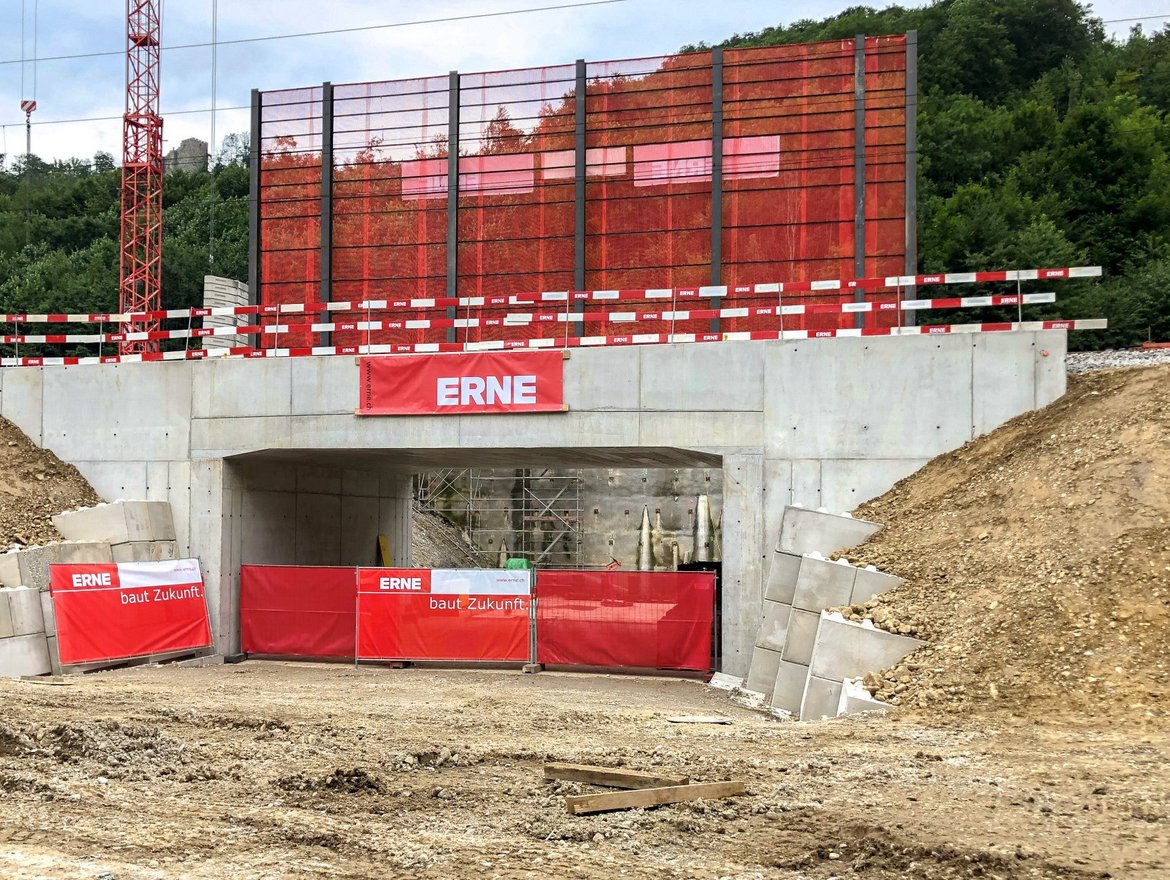
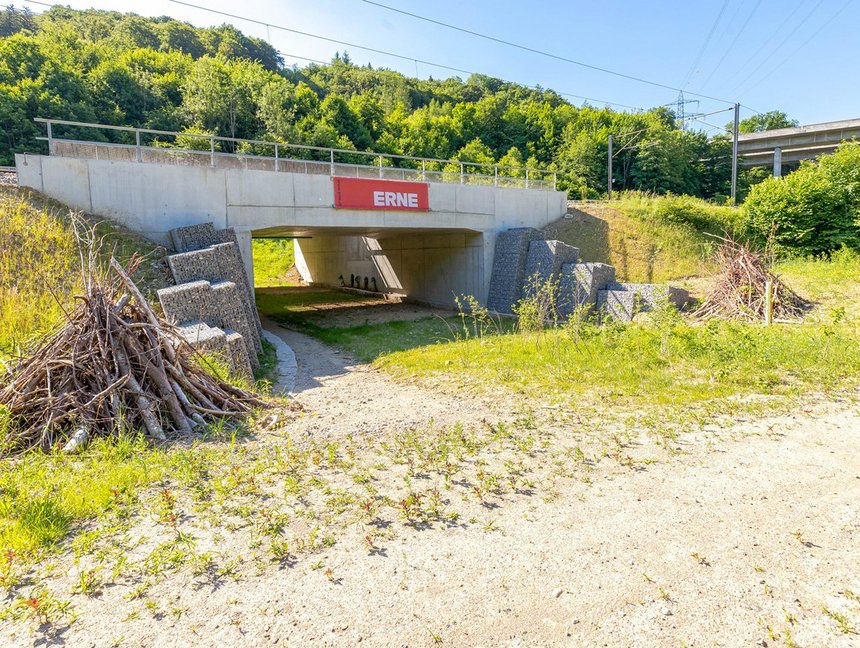
Once the correct position had been checked and approved by a surveyor, the structure was set down. The sides were then stripped for backfilling and the cavities filled with around 1000 m3 of rubble, gravel and ballast. For the subsequent work, a protective wall was also erected to separate the railroad tracks from the construction site in the area of the cantonal road. At the same time, a heavyweight wall was built at the entrance to the wildlife underpass near the Aare river to secure the railroad embankment. The prefabricated concrete elements required for this were manufactured by Kies und Beton Münchwilen AG. The retaining wall will later be clad with stone baskets, so-called gabions, so that it blends in with the natural surroundings. The weekend's work was completed on Monday morning at 4 a.m. on the dot, after the railroad ballast and tracks had been installed and the railroad line had been cleared by the SBB.
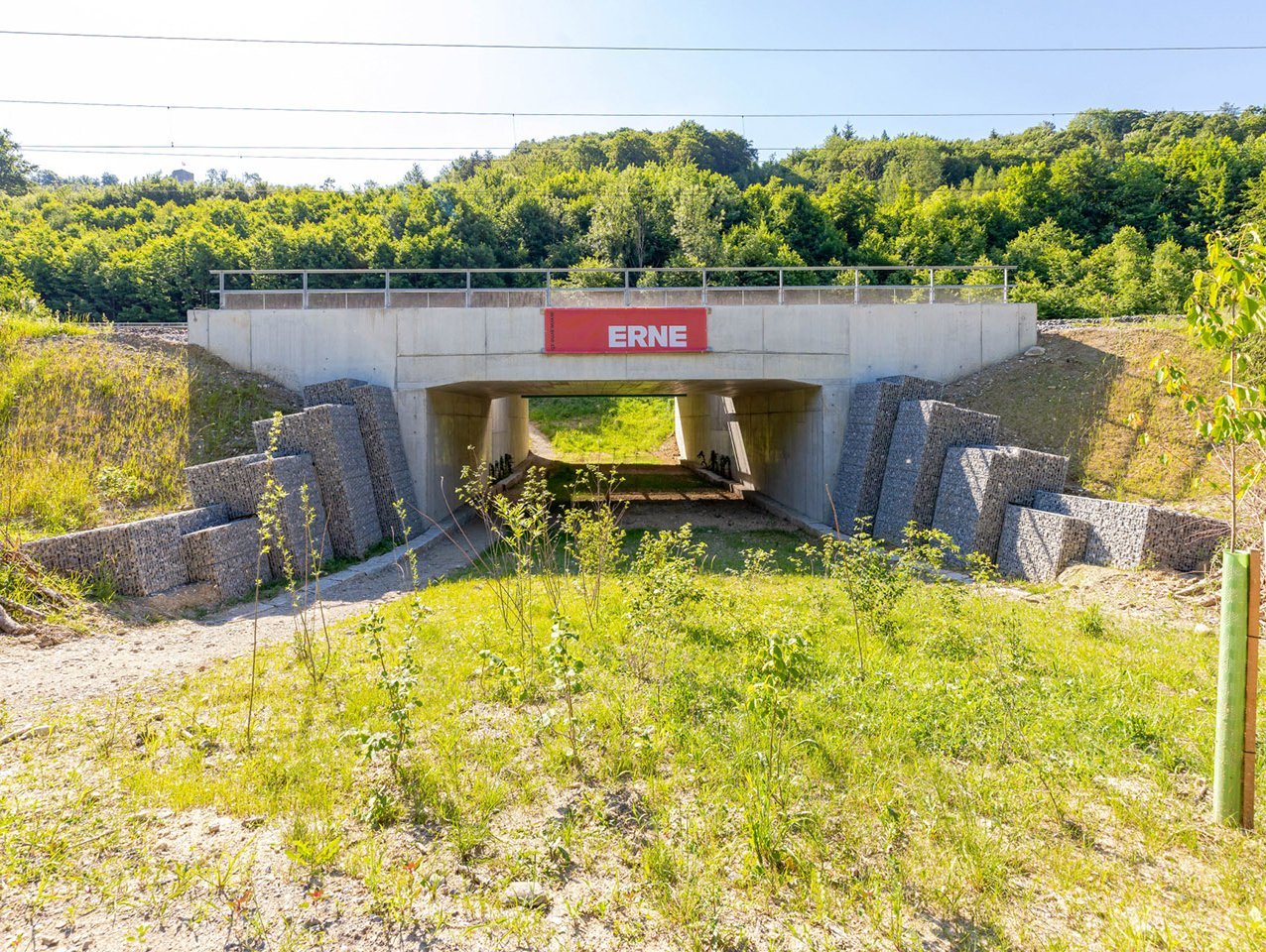
Construction of the second structure and landscaping work
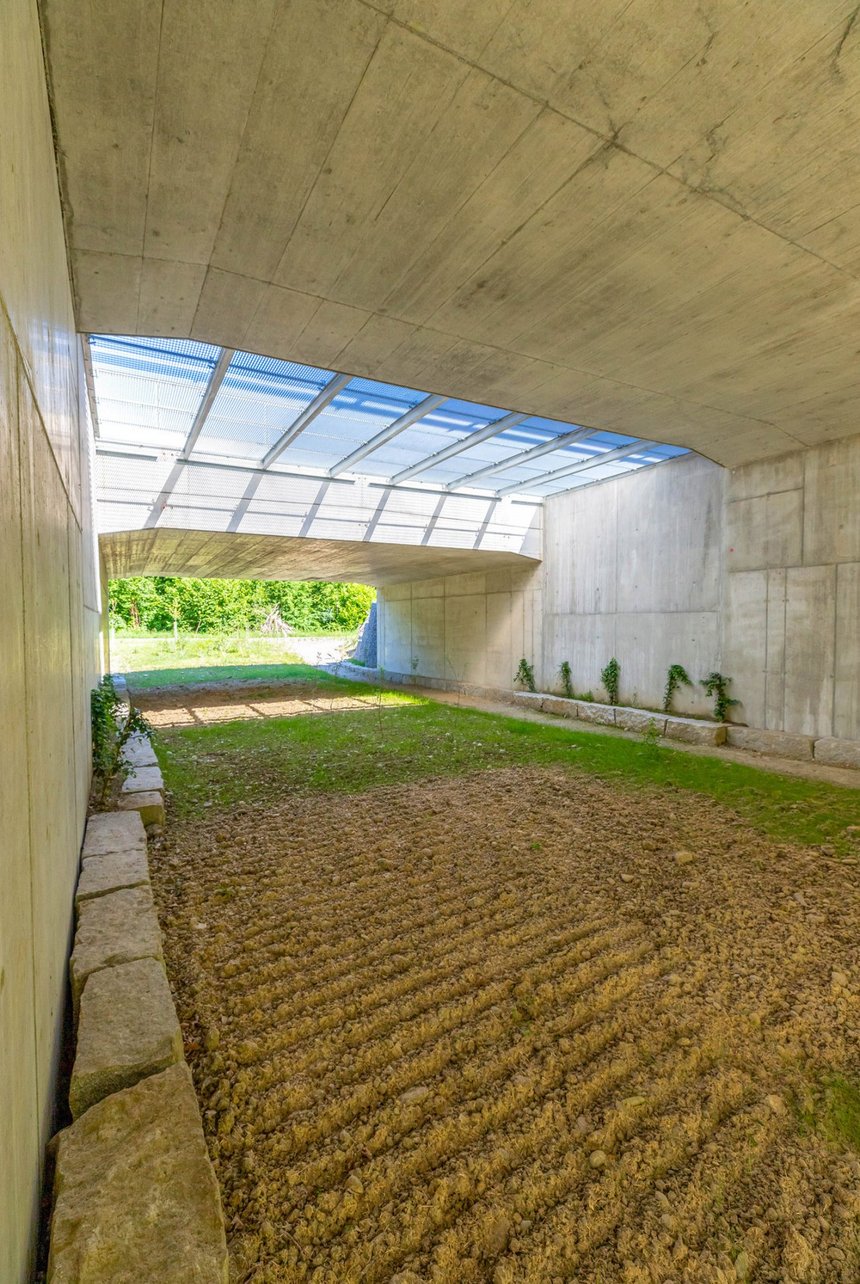
After the spectacular shifting of the first concrete structure, the second structure was built, which was adapted to the requirements of the cantonal road. In both the first and second structures, ultra-high-strength fiber-reinforced concrete (UHPC) was installed on the slab. The UHPC serves as waterproofing and was installed by ERNE decon AG. The section of the cantonal road was then rebuilt by the ERNE team and the detour was removed. The two concrete structures are connected by a light well. In the area of the Hölzliwald forest, an 80-metre-long wooden anti-glare wall was built to protect the wild animals from the headlights of passing vehicles. The anti-glare screen was manufactured by HUSNER AG Holzbau. To protect the animals, the Rossbergstrasse was also dismantled and the entrances and surroundings of the wildlife underpass were designed in a natural way so that deer, foxes and other animals feel at home.