New BBZ BL building in Muttenz
February 25, 2026
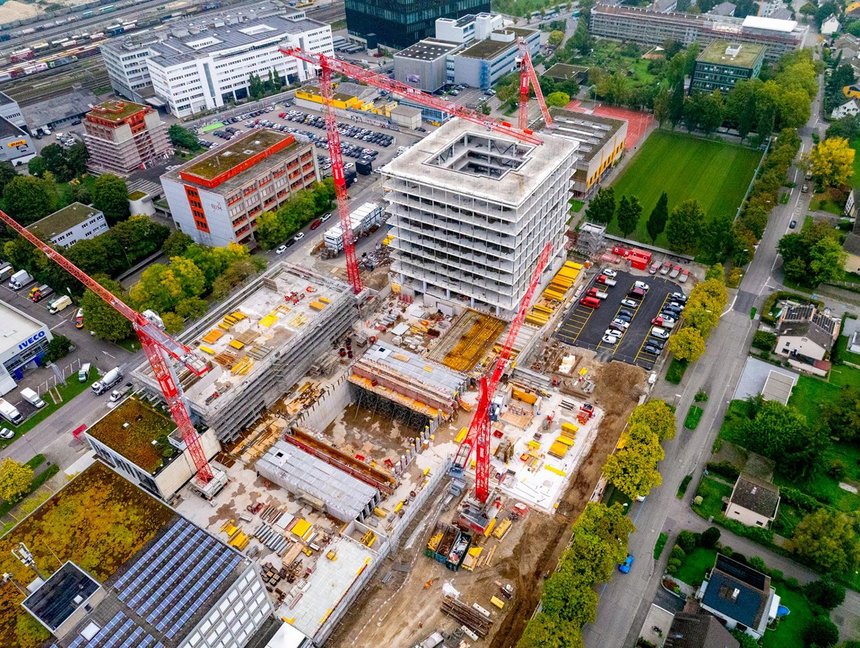
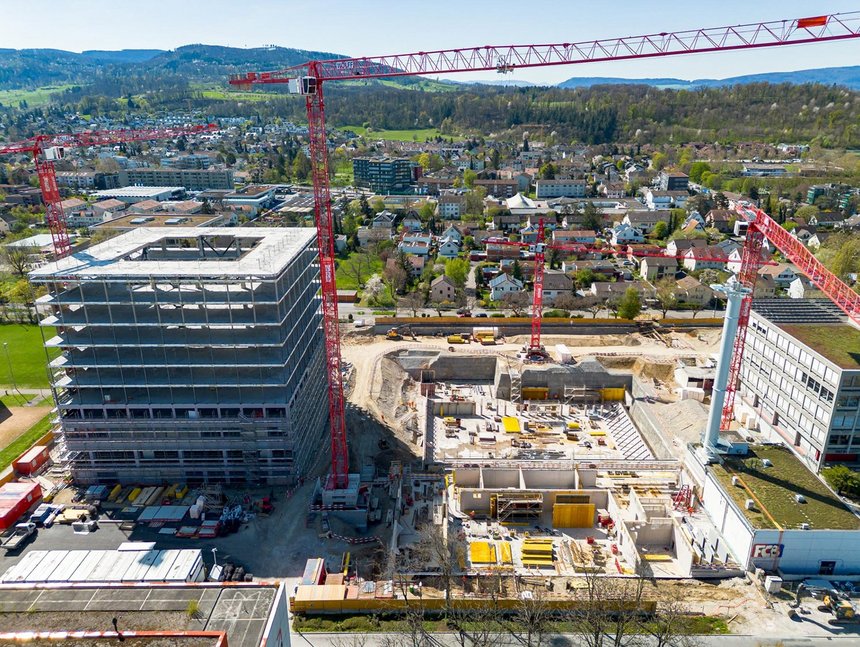
At the cantonal school site Kriegacker in Muttenz, three upper secondary schools will be brought together in the coming years to form the Polyfeld Muttenz upper secondary campus. These are the Baselland Vocational Training Center (BBZ BL), Muttenz High School and the Center for Bridging Courses. The Secondary II Campus Polyfeld Muttenz will be realized in three stages.
For the canton of Basel-Landschaft, ERNE is responsible for parts of the dismantling and the master builder work in stage 1 - BBZ, consisting of the workshop building, assembly hall and sports hall as well as the renovation of the existing tower, which will house the classrooms in future.
Complex demolition for the new Polyfeld Muttenz secondary school campus
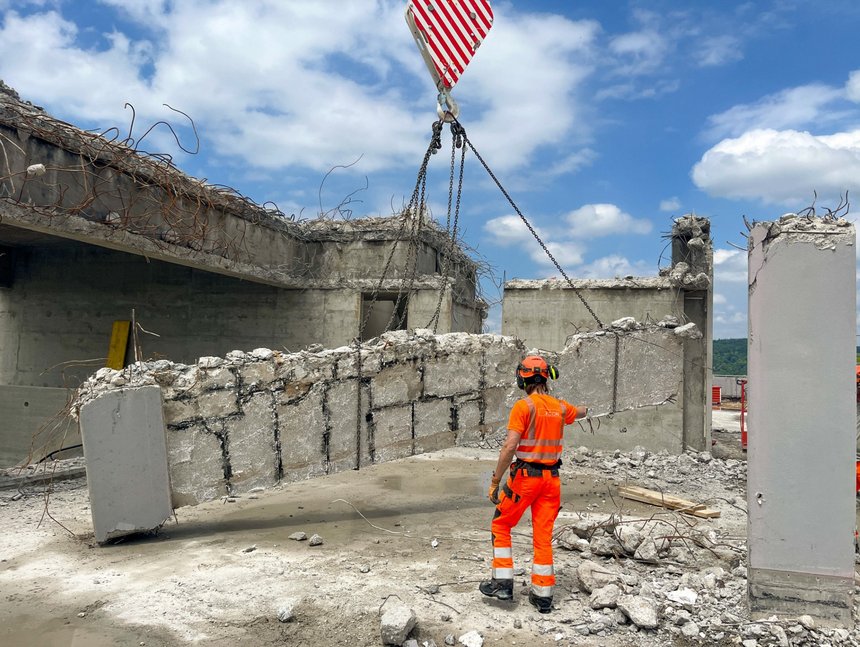
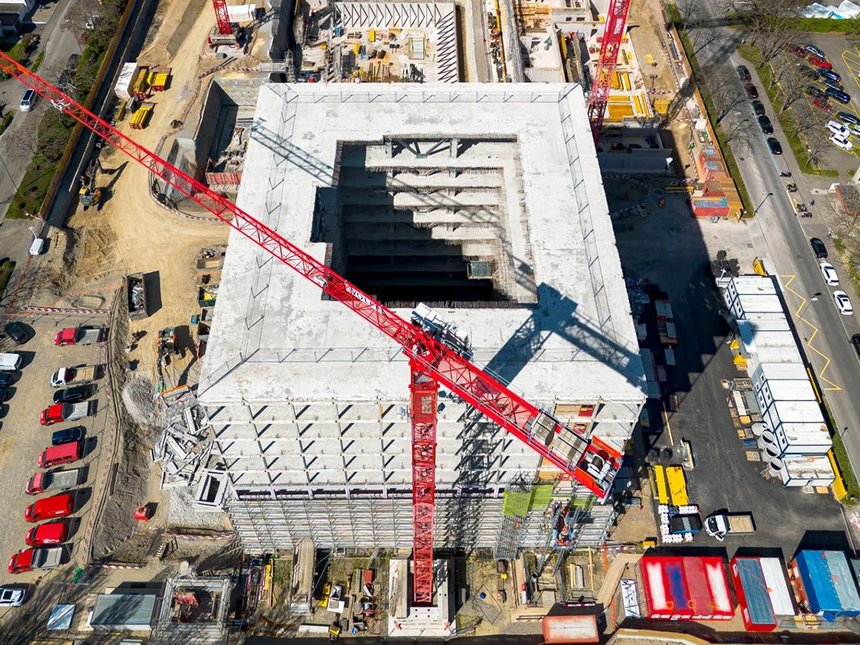
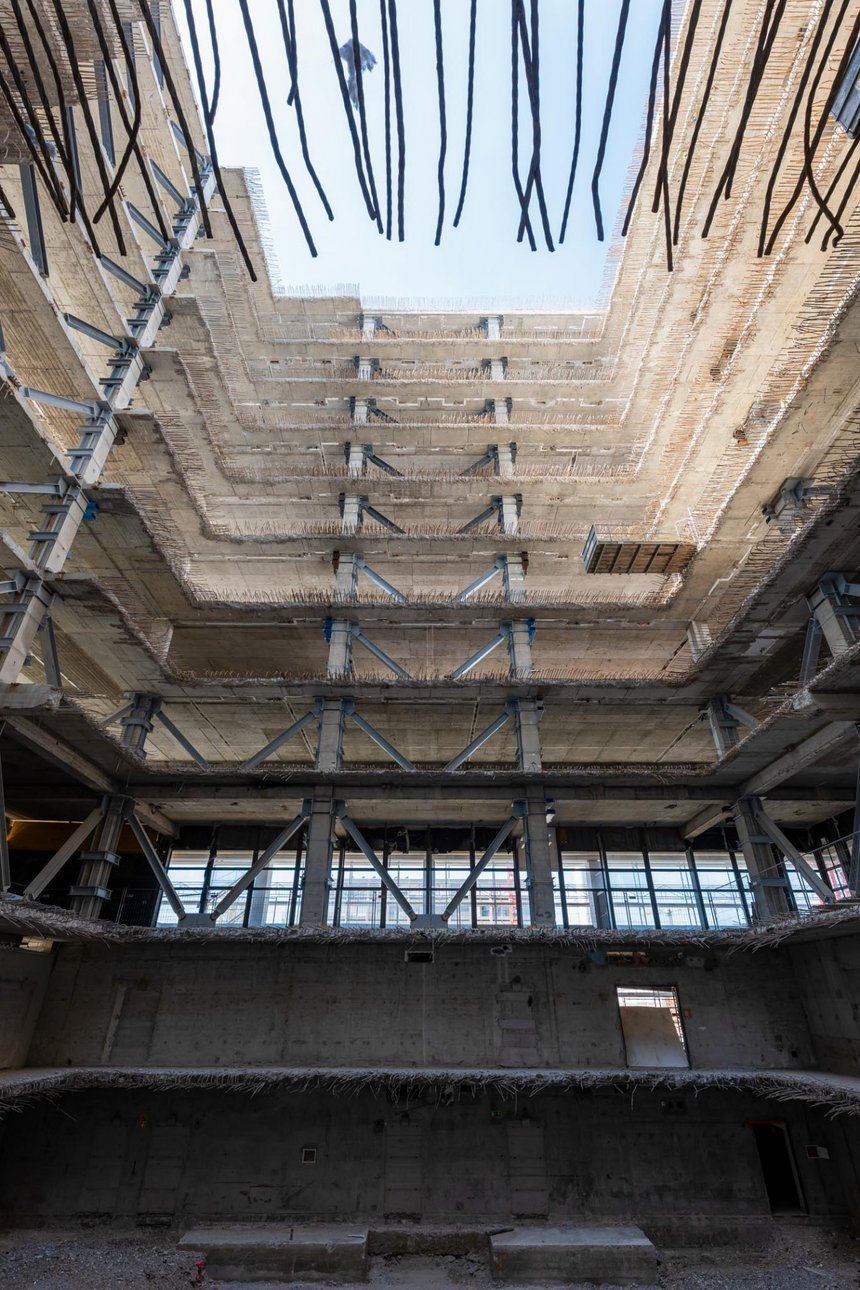
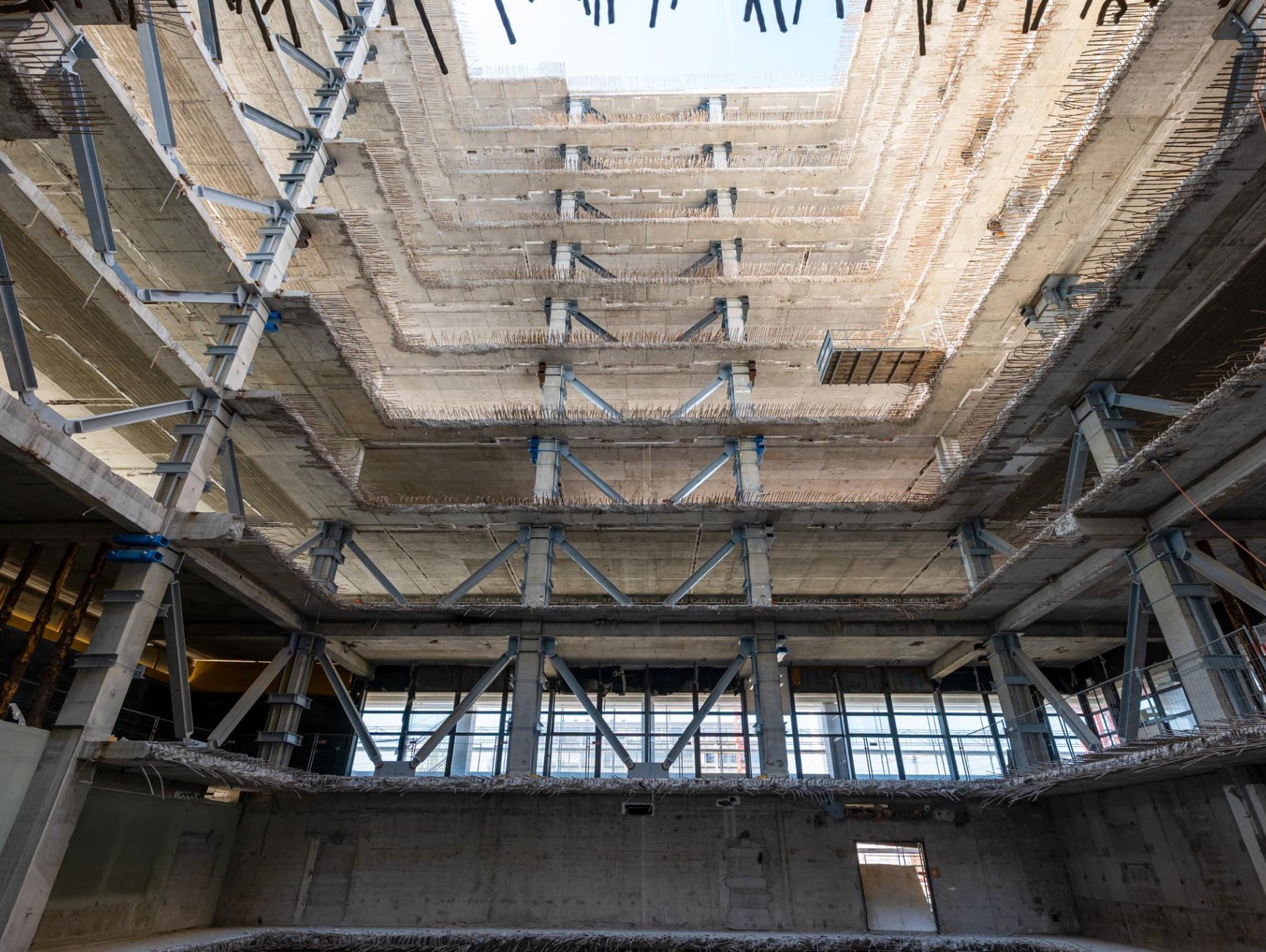
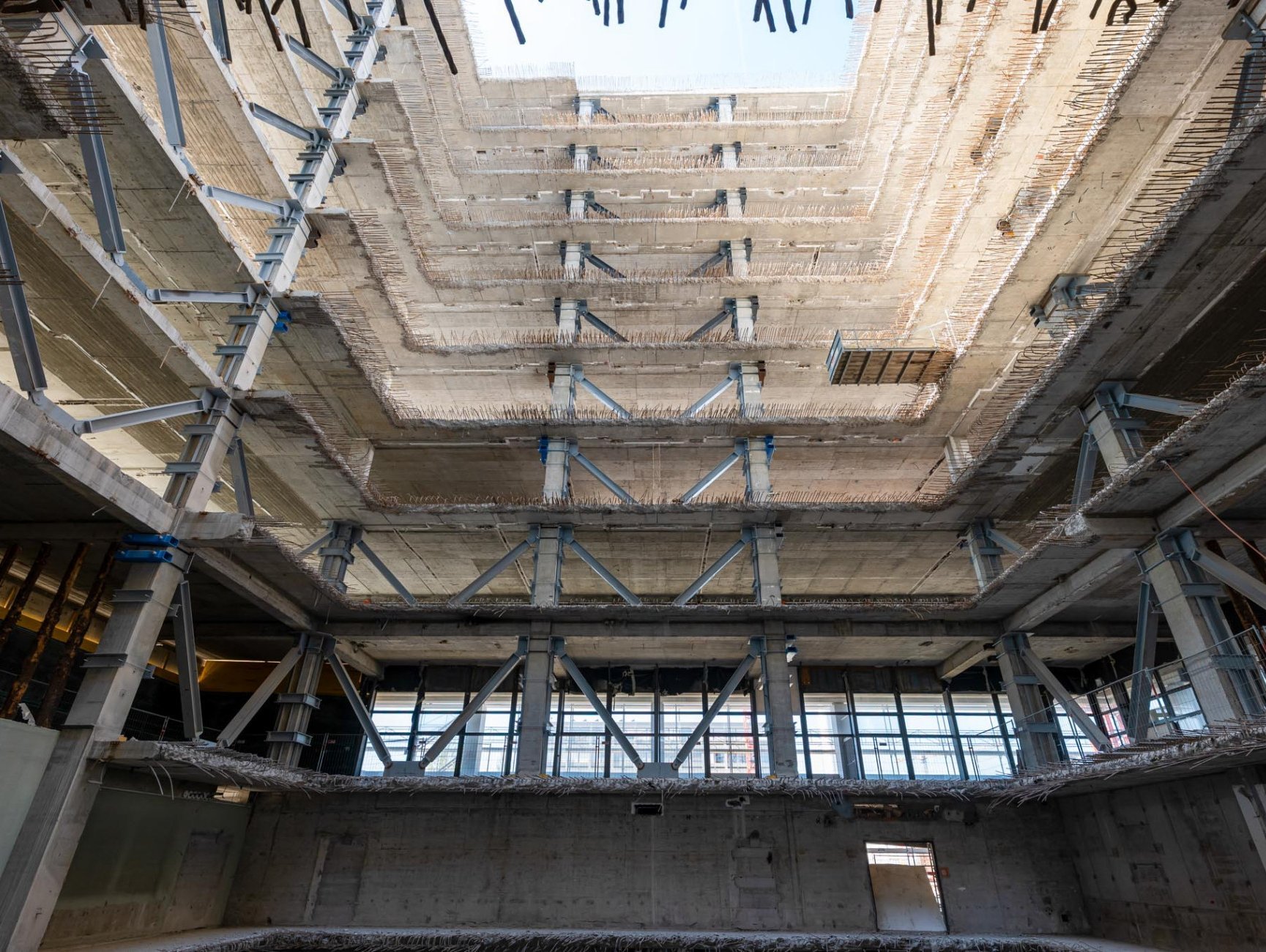
As part of the site preparation, existing buildings were demolished in collaboration with Aregger AG Bauunternehmung. The renovation and gutting of the tower, which was carried out from top to bottom by ERNE decon, was particularly challenging. At the same time, the pollutants were removed. The demolition work then began. Over an area of 20x20 meters, the core zone of the 12-storey building - including core walls, staircases, down to the floor slab and the existing foundations - was completely dismantled.
Due to noise protection, the dismantling of the glass façade could only begin after the gutting of five floors had been completed. For the demolition of the façade, the team developed a special load suspension system to safely remove the façade elements weighing up to 2.5 tons with the construction crane.
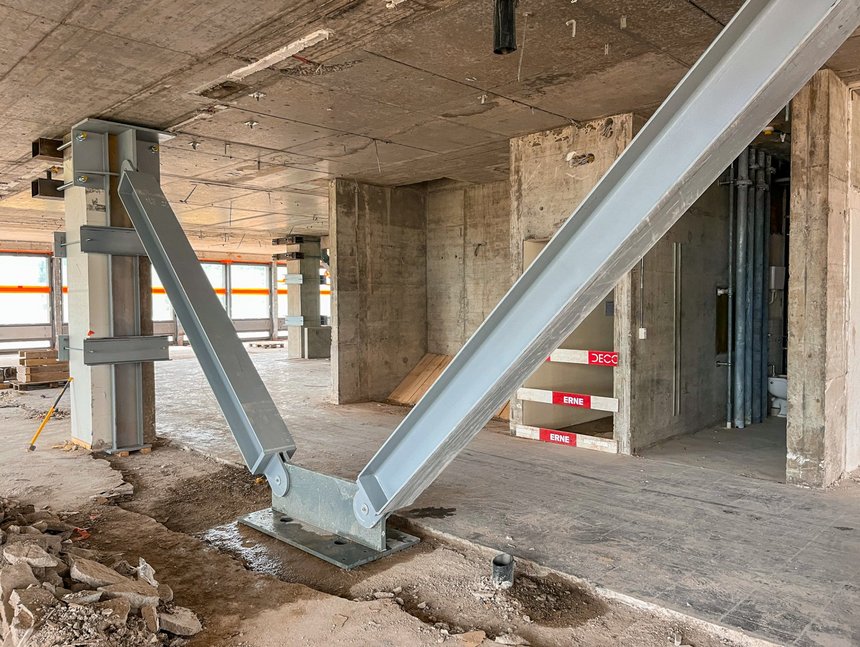
Additional reinforcement measures were implemented inside the building to provide the necessary bracing during the construction phase. Four steel frame constructions with transverse bracing, each weighing around three tons, were required on each floor level to safely transfer the load. This temporary construction will be completely dismantled once the conversion and new construction work is complete.
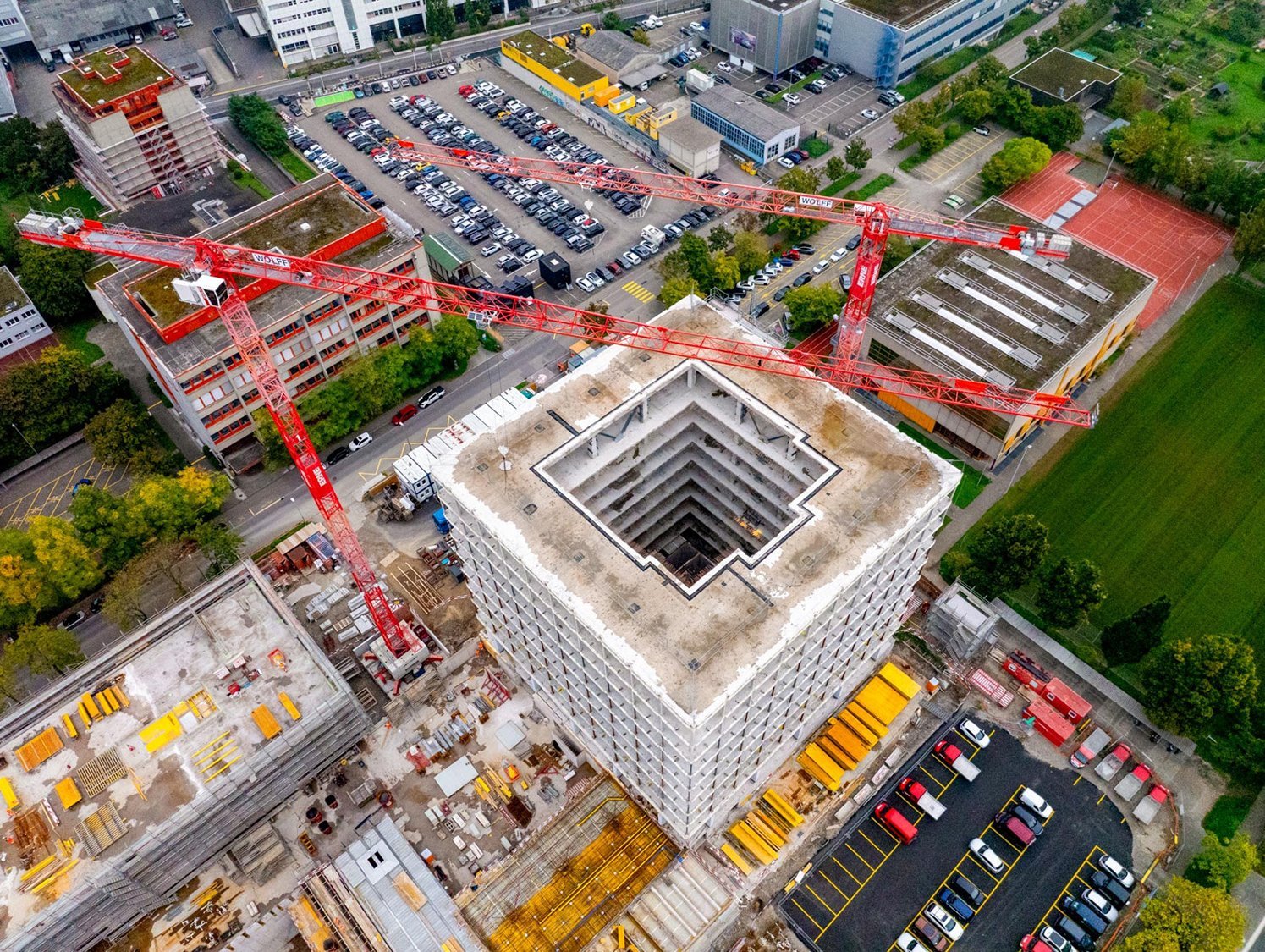
New construction of the building's core and the main staircase in the tower
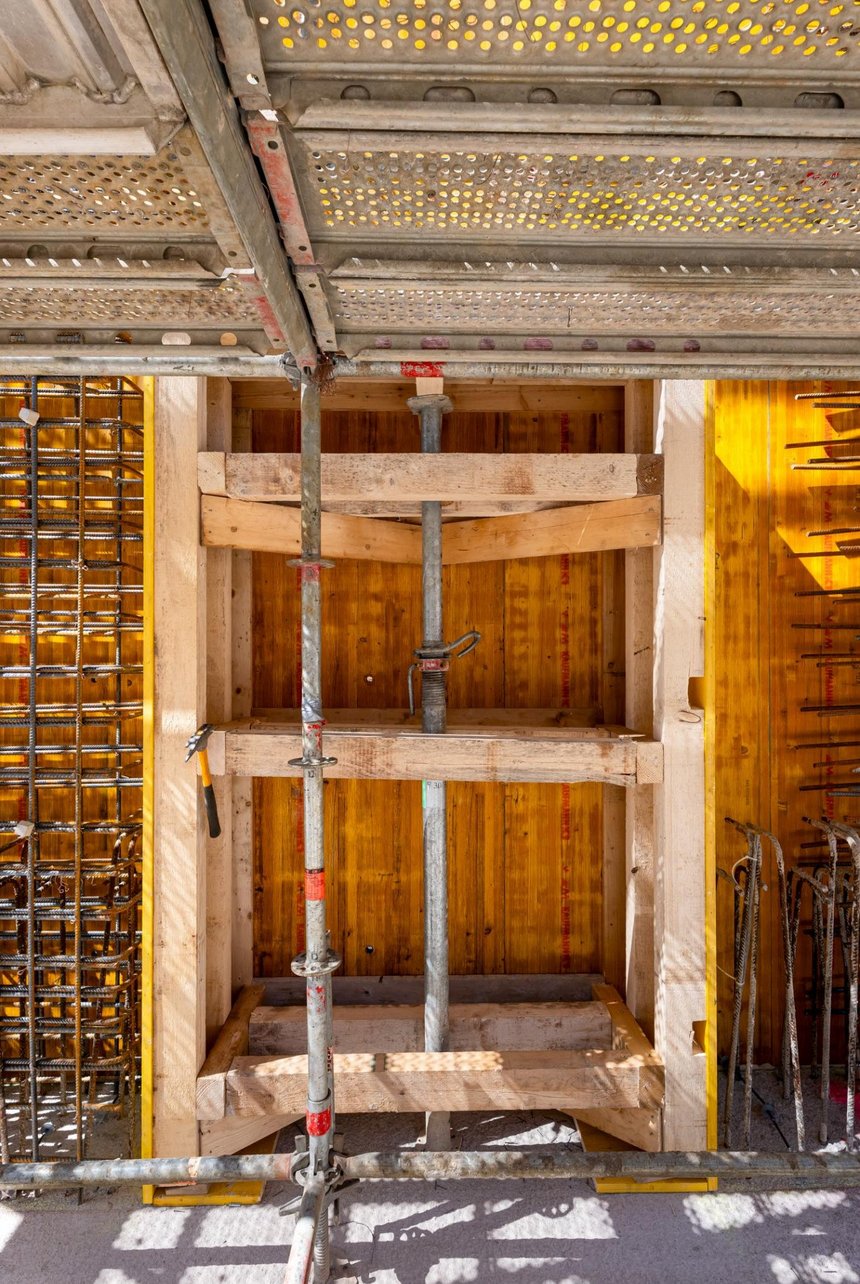
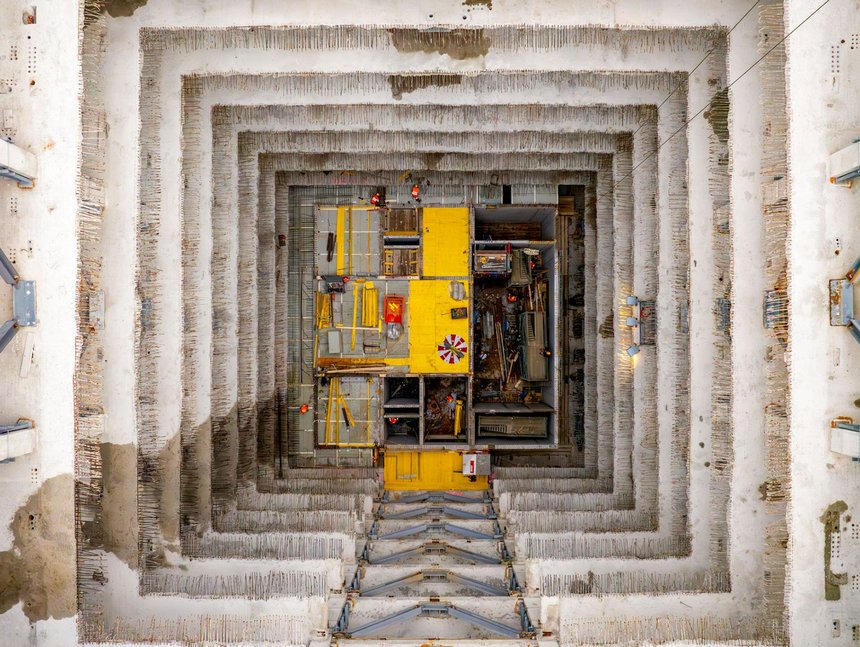
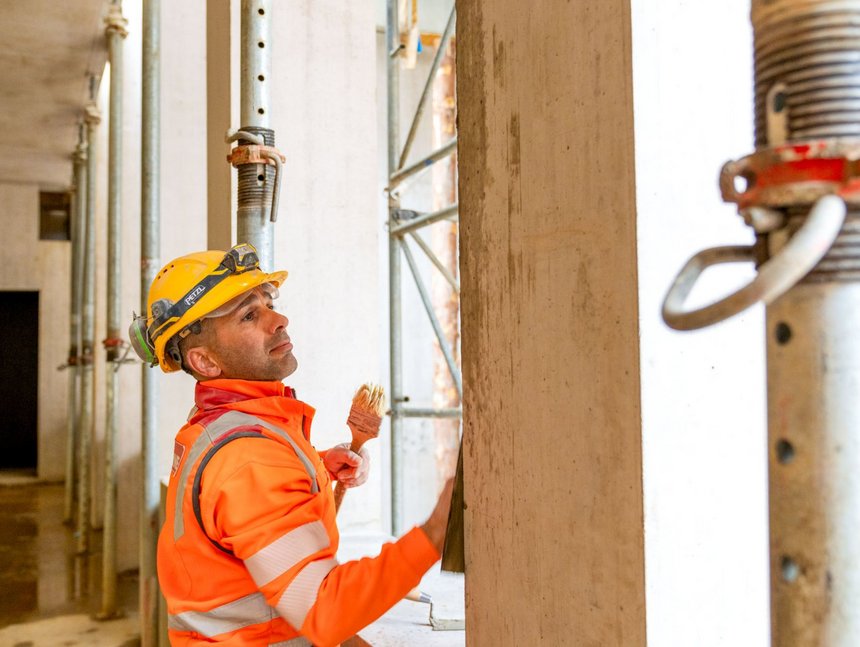
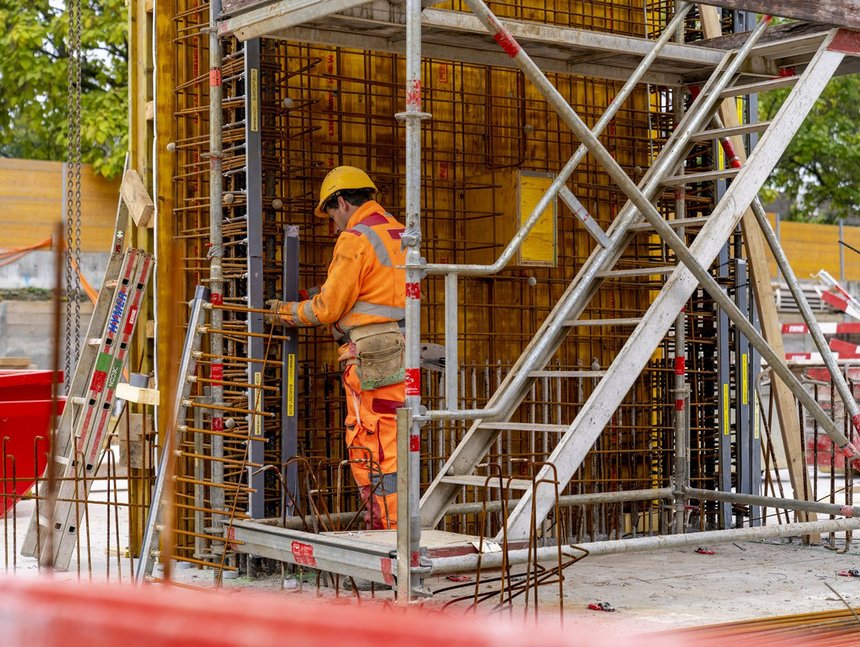
The tower building, which was previously gutted, will be fitted with a new building core during the new construction phase. Existing building sections will be connected to the new core via surrounding service corridors. The walls, ceilings, emergency staircases, and the central main staircase will be constructed floor by floor using high-quality exposed concrete. Wall and ceiling work will proceed in parallel: as soon as the first walls are poured in one half of a floor, work on the ceiling will begin there—while the walls are being constructed in the other half at the same time. Once all floors are complete and the core is finished, the expansion joints will be sealed and the temporary formwork removed.
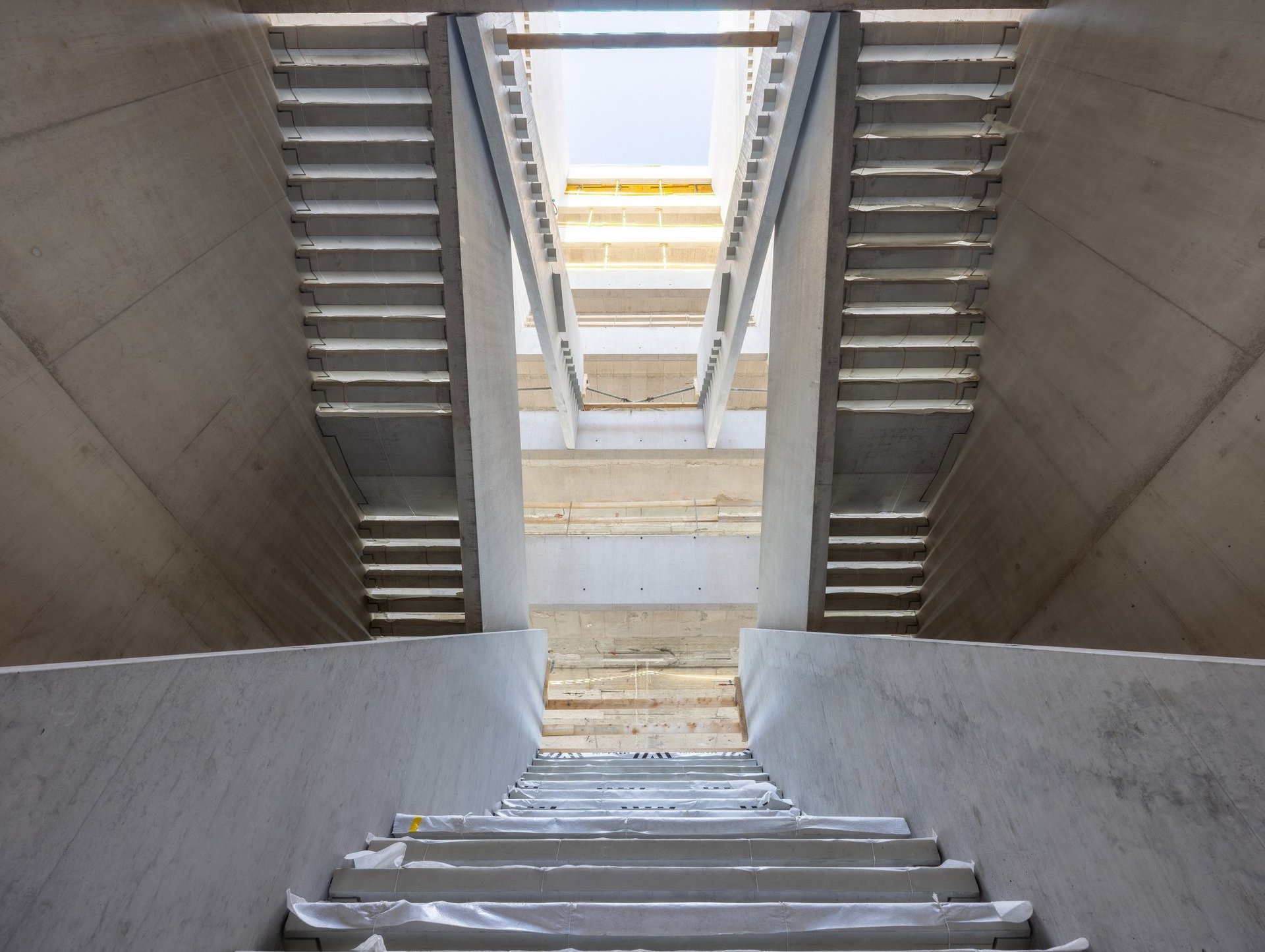
A Staircase as an Architectural Gem
The highlight of the tower building is the main staircase: It consists of individually designed and manufactured precast concrete elements in exposed concrete finish. Sixteen stringers, each weighing 10 metric tons, 290 individual steps, and 14 landing elements form the cantilevered structure, which tapers conically toward the bottom. This means the steps taper wedge-shaped, giving the staircase an elegant appearance despite its enormous dimensions.
The open space between the individual steps emphasizes the delicate construction and gives the staircase a light, almost floating effect. Since the undersides of the steps also remain visible, the project required the highest precision in planning, prefabrication, and installation.
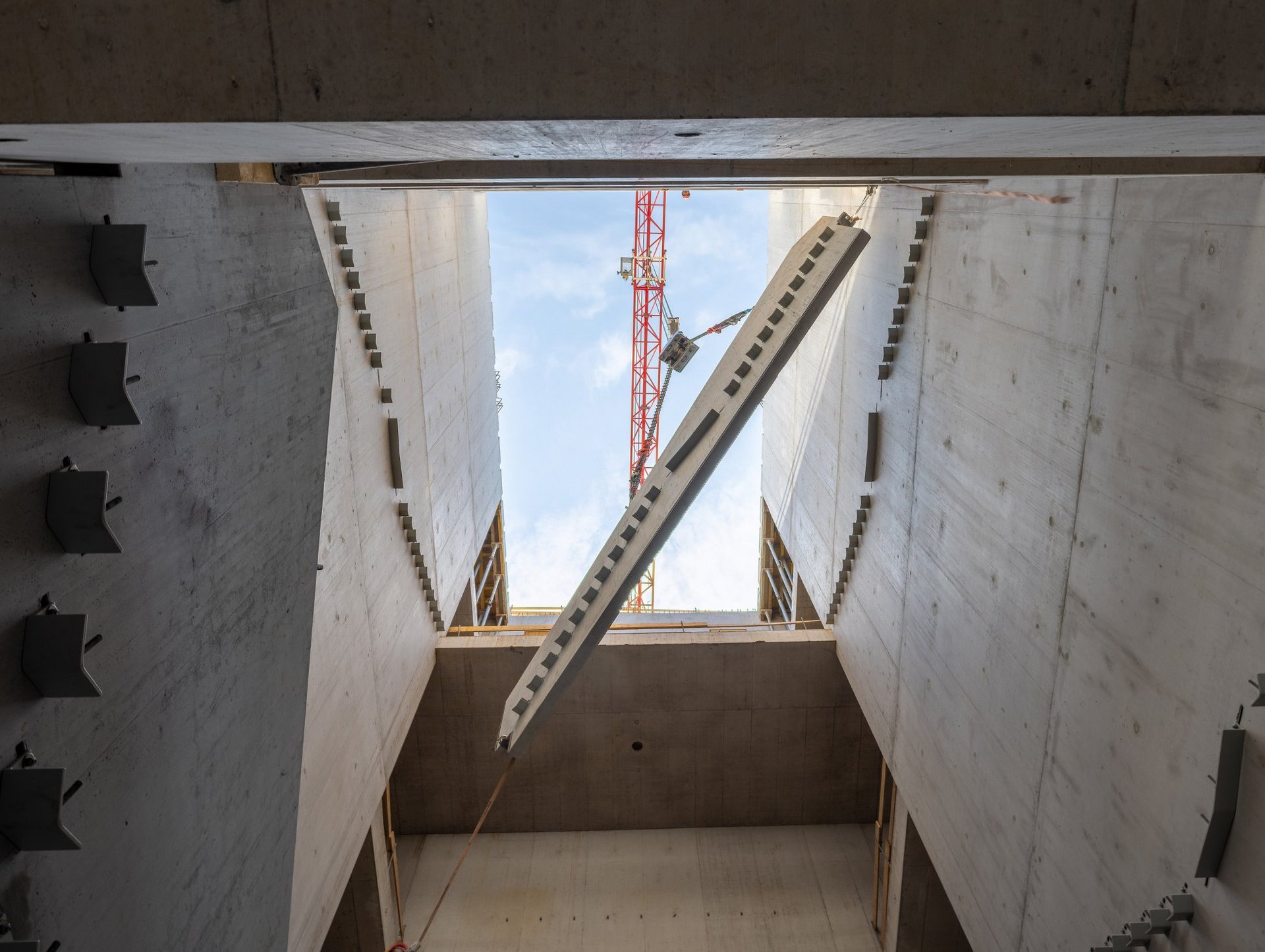
Installing the stair components required the utmost precision: Using a crane, the team maneuvered the side stringers and each individual step piece by piece into the stairwell until they could be positioned with millimeter precision in their intended locations.
A remote-controlled 20-metric-ton balancing crossbeam was used to ensure safer installation. Thanks to the integrated radio-controlled release system, the team was able to release the load hooks at the push of a button after the components were set in place. This meant that no one had to enter the danger zone to unhook them.
The result: a more efficient installation process, shorter installation times, and a significant improvement in safety on the construction site.
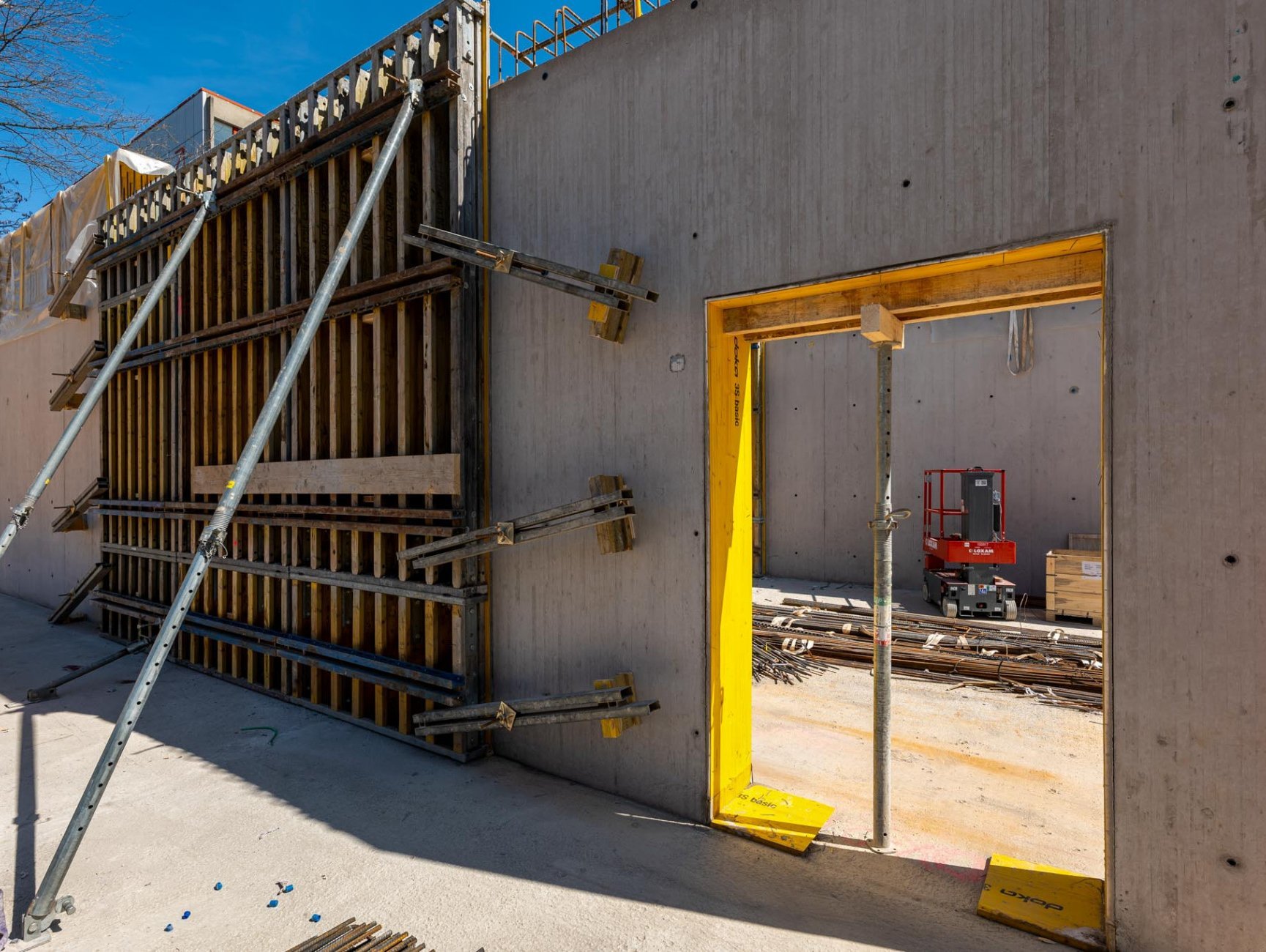
New building complex with high technical precision
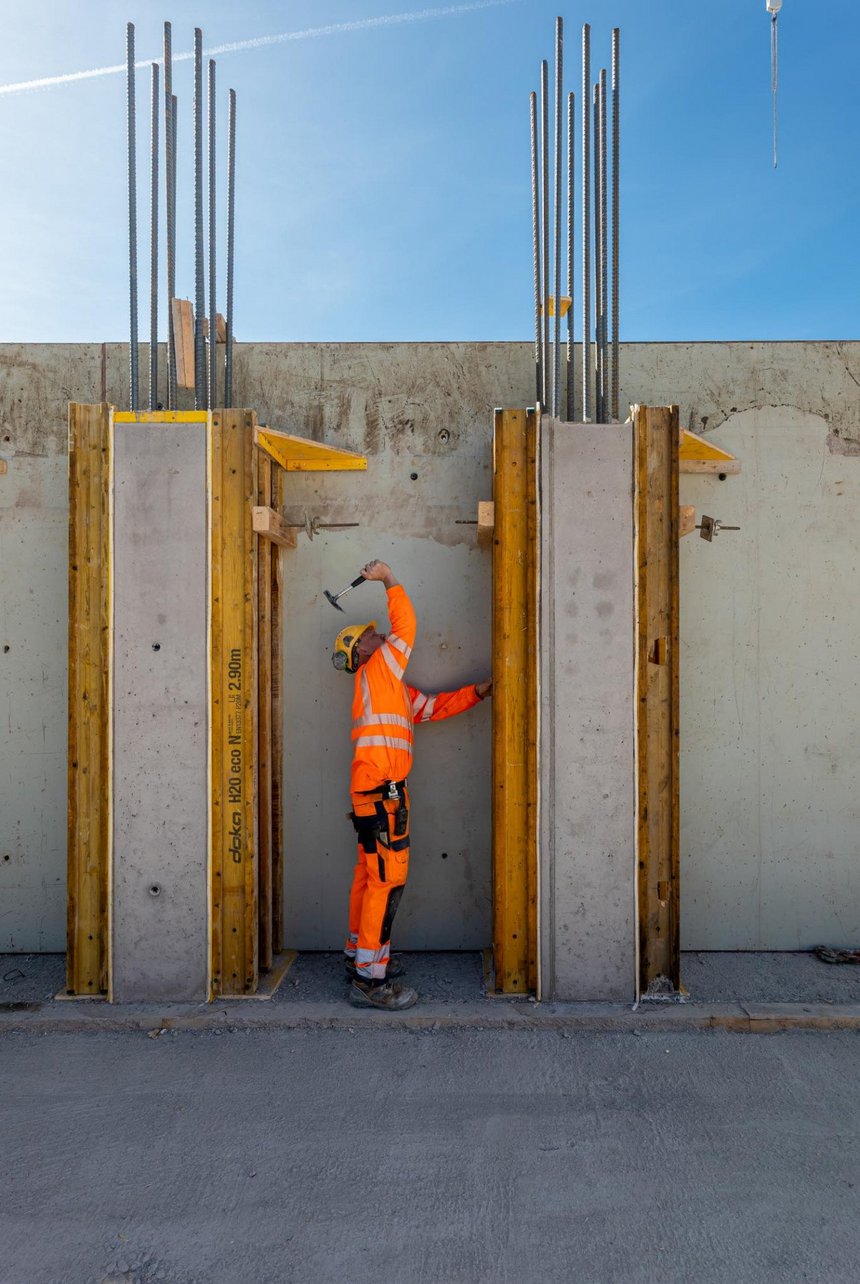
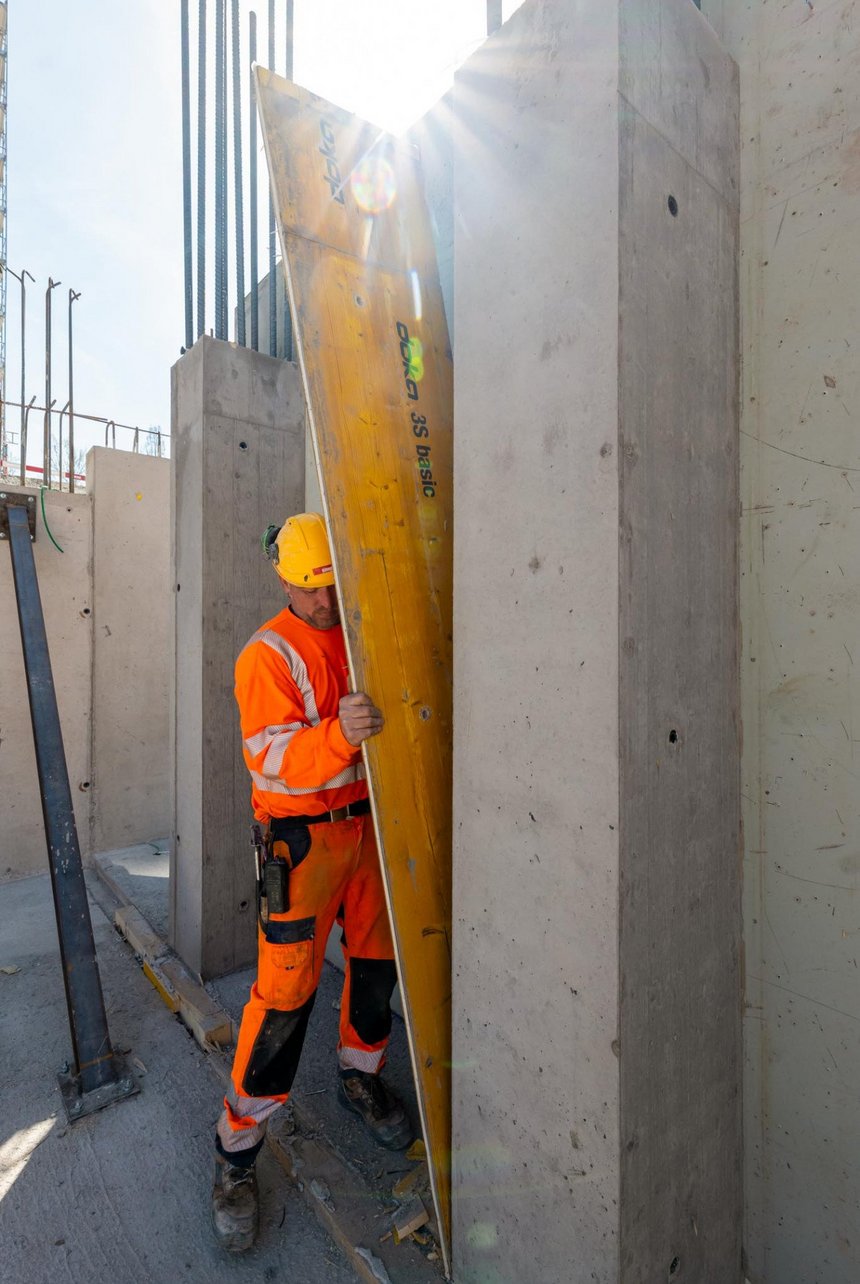
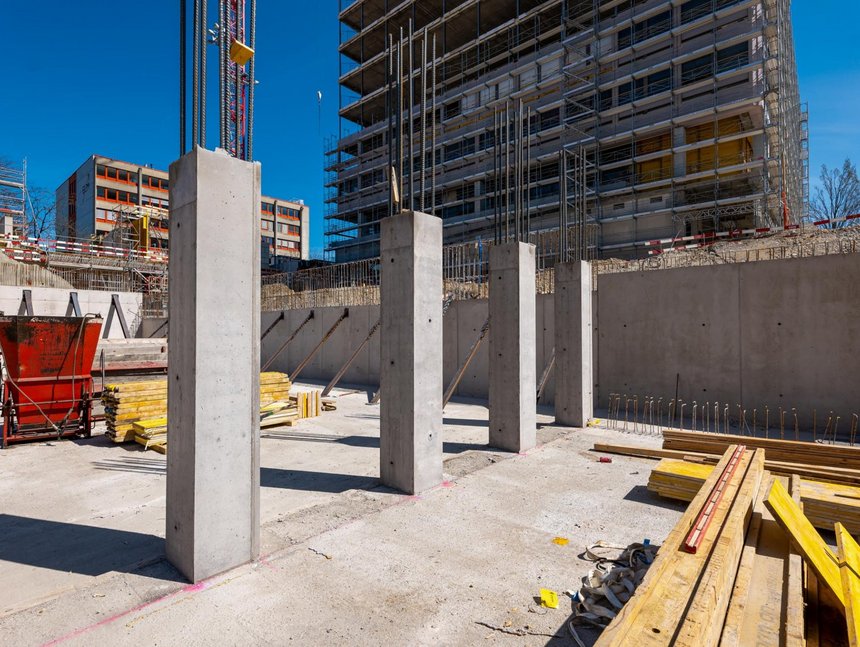
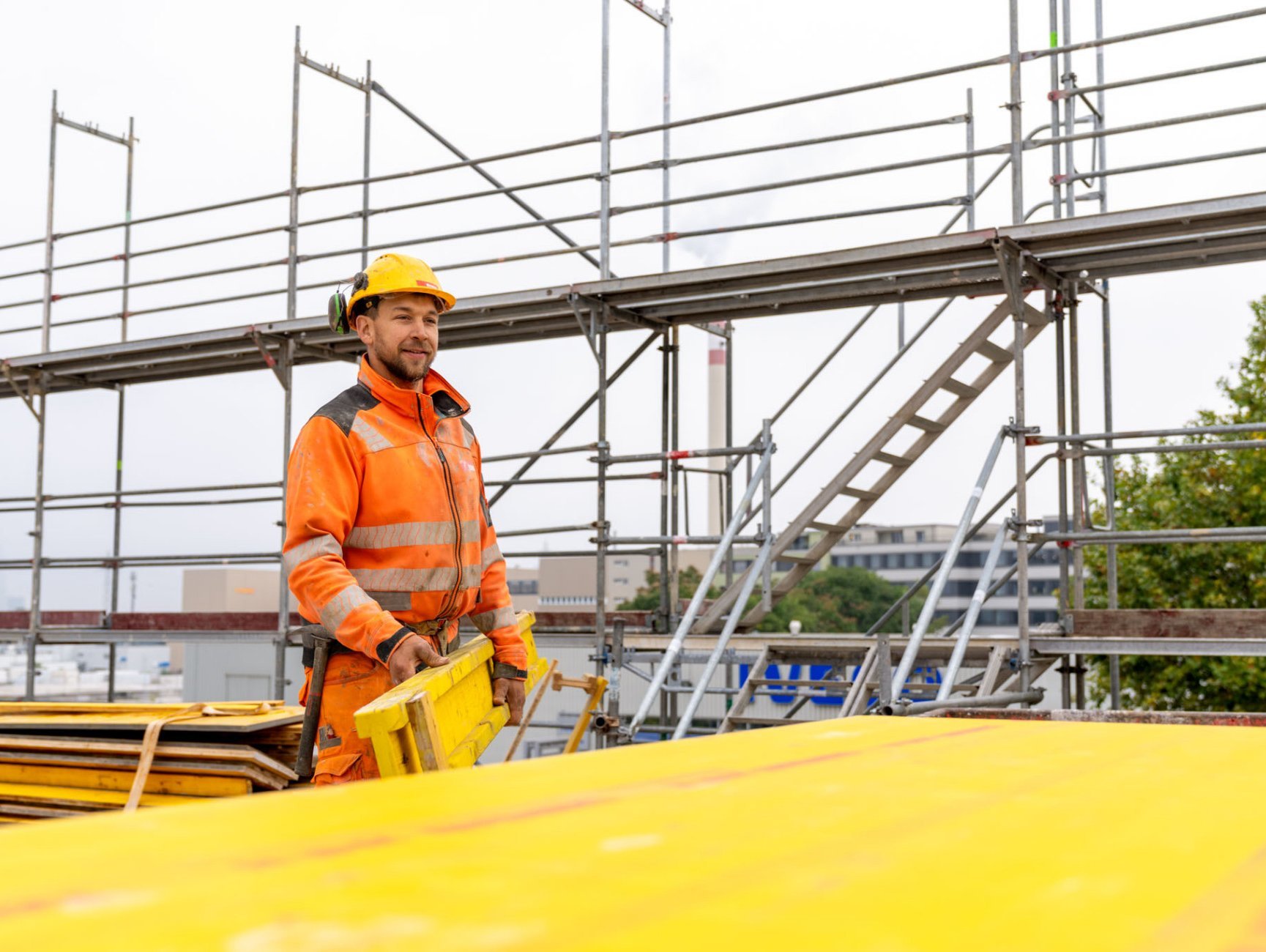
All buildings in stage 1 - BBZ will be constructed in high-quality exposed concrete. A special exposed concrete concept is used to ensure a smooth, even and uniform concrete surface throughout. Precise execution and concreting stages of exactly the same size create a harmonious and uniform appearance. The special formwork required for this is produced by our sister company HUSNER AG Holzbau on a project-specific basis.
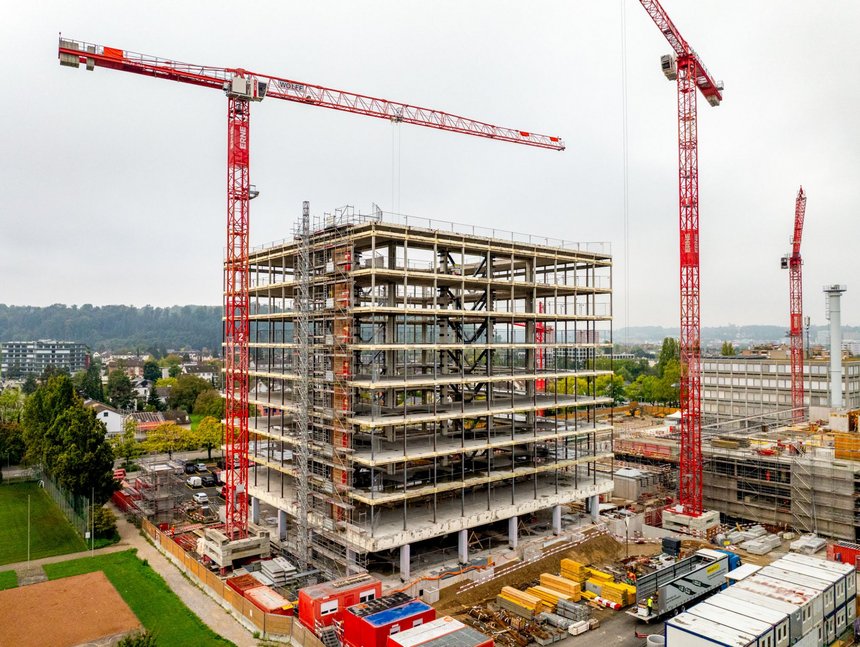
The new 55 meter long and 26 meter wide workshop building is being constructed in three stages. The staging concept allows simultaneous processing of walls, columns, earthquake walls and ceilings per storey - an efficient construction operation that combines precision and speed.
At the same time, the new modern triple sports hall is being built, which is characterized by a complex structural solution: A total of 25 prestressed prestressed concrete beams are being installed - including 21 single beams and two double beams. In the area of the double girders, the hall can later be flexibly divided into three smaller units. ERNE AG's VDC department created a detailed 3D model for optimal planning and execution.
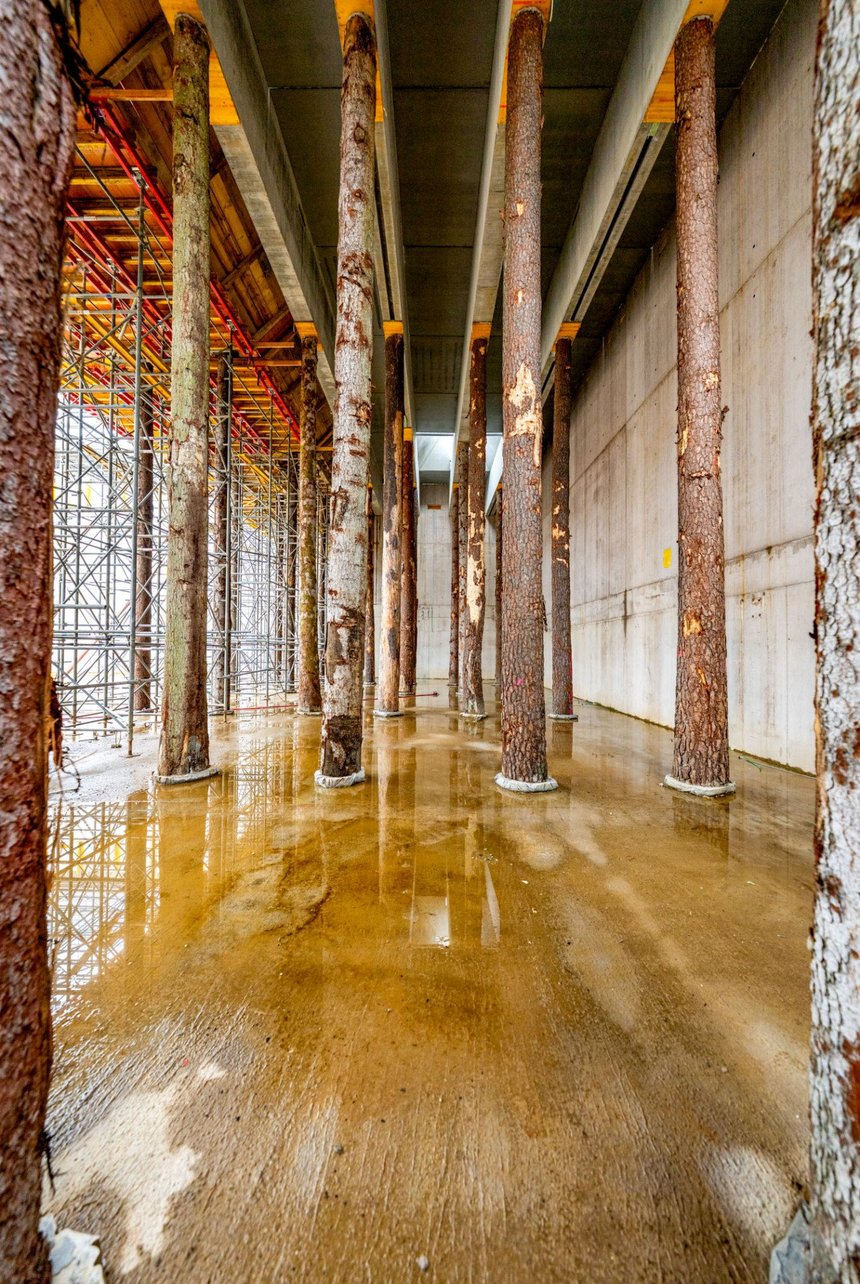
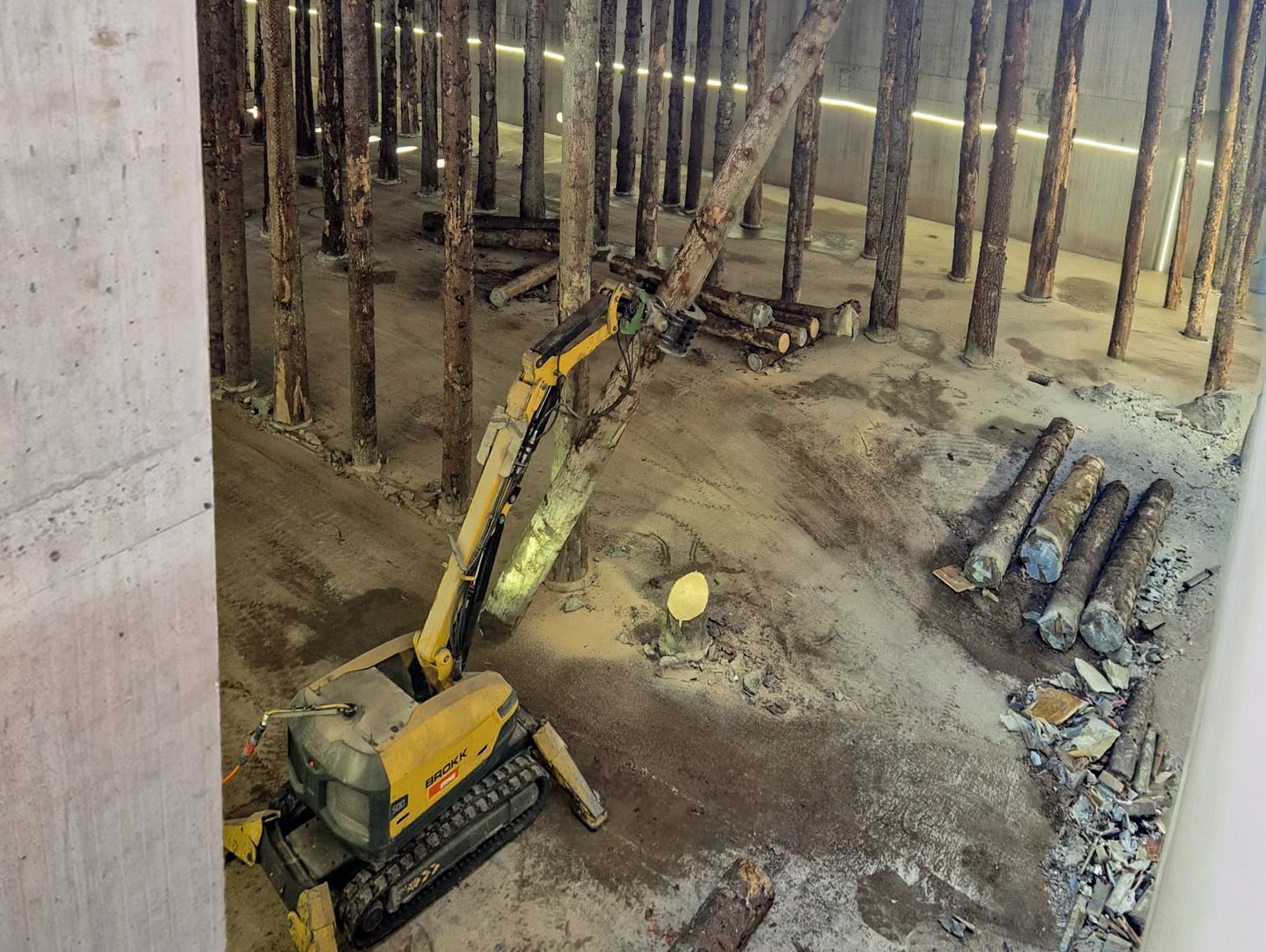
The girders are constructed in sections: The structural engineering team builds two girders on the left and two on the right simultaneously. Once all girders are complete, the slab is poured and temporarily supported with logs. The prestressed concrete girders are then prestressed, giving the entire structure its final stability.
In the first step, the ceiling of one half of the hall was assembled and prestressed using twelve girders. The support scaffolding system was then moved to the second half of the hall, where the remaining girders were installed and also prestressed. Another architectural highlight of the sports hall is the exterior spiral staircase. Its construction will utilize a specially developed formwork system that is precisely tailored to the staircase’s specific requirements.
Work on the auditorium building is visibly progressing: The installation of the massive precast concrete columns and beams is laying the foundation for the long-span ceiling structure, which is designed as a wood-concrete composite system (HBV).
The prefabricated wood elements are manufactured by ERNE AG Holzbau and are being assembled in collaboration with our team.
Safely planned—safely dismantled:
Triple-purpose sports hall
Beneath the outdoor lounge area, which is located in the center of all the buildings, the triple-purpose sports hall has already been completed. It is illuminated by six large skylights that are permanently integrated into the central plaza. The hall is connected to all surrounding buildings via an underground passage.
Thanks to thorough work planning (AVOR), the team developed a safe and efficient procedure for dismantling the temporary shoring made of tree trunks. Depending on their location and load, 100 of the total 125 logs, each 9.5 meters long, had to be pre-cut before being felled. The team carried out the dismantling from a safe distance using the remote-controlled Brock 500.
The entire work sequence was documented in advance and communicated to all employees as part of a safety briefing (“Toolbox”). This ensured that no one was in the danger zone during the dismantling work.